How to Grill Corn on the Cob in Foil: A Complete Guide
Learn the foil-wrapped method for grilling corn on the cob: step-by-step prep, heat control, flavor ideas, safety tips, and serving suggestions for juicy, evenly cooked corn.


To grill corn on the cob in foil, wrap husked ears with butter and seasonings in heavy-duty foil, then cook over medium heat, turning every 4–5 minutes until tender. This foil method traps moisture, reduces scorching, and makes cleanup quick, giving you juicy, evenly cooked corn.
Why foil-wrapped corn shines on the grill
Grilling corn is a beloved summer ritual, but achieving juicy kernels without scorching requires a little trick. Foil-wrapped corn acts like a tiny oven on the grill, trapping heat, butter, and natural sugars inside each packet. This method creates steam that gently cooks the kernels, boosting tenderness and sweetness while keeping the exterior from burning. For home cooks, foil simplifies timing and cleanup, especially when cooking multiple items at once or grilling in windy conditions. The moisture inside the packet buffers flare-ups and helps maintain consistent heat even if your grill's temperature fluctuates. According to Grill Cooking, foil-wrapped corn locks in moisture and flavor, making grilled corn more approachable for both new grillers and seasoned enthusiasts. If your goal is predictable results with less babysitting, this technique is hard to beat. You still get charred edges and a hint of smoky aroma, but the kernels stay juicy rather than drying out. In short, foil gives you a forgiving, yield-friendly way to grill corn that tastes almost roasted, not boiled, on a crowded outdoor grill.
Selecting corn and prepping ingredients
The first step to tasty foil-wrapped corn is picking the right ears. Look for fresh, sweet corn with bright green husks and tight, brown tassels. The ears should feel full and heavy for their size, with plump kernels hidden just beneath the husk. If you can, choose ears with similar size so they cook evenly on the grill. Before you wrap, pat the ears dry to remove excess moisture; this helps the foil seal and avoids soggy packets. Decide on your flavor plan: butter is classic, but you can mix in garlic, herbs, smoked paprika, chili powder, or a squeeze of lemon for brightness. Have your butter softened or melted prior to wrapping, and season generously with salt and pepper. Finally, gather your tools and foil: heavy-duty sheets that can wrap securely without tearing. A well-prepped setup speeds up cooking and reduces last-minute scrambling. This stage sets the tone for juicy, evenly cooked corn and minimizes the risk of undercooked centers or over-charred edges.
Foil packet variations and flavor ideas
While the essential technique remains the same, you can tailor foil packets to different flavor profiles without changing the core method. Classic: butter, salt, pepper, and a pinch of garlic powder inside each packet. Fresh herbs like cilantro, chives, or parsley brighten the corn; a small squeeze of lime or lemon adds acidity that balances sweetness. For a southwest twist, try butter with chili powder, cumin, and a dash of smoked paprika. For a herby finish, add minced parsley, tarragon, or dill with a touch of garlic butter. If you prefer a dairy-free option, substitute olive oil or a light tasting oil and skip the butter. For extra aroma, add a few kernels of corn that have been lightly charred on the grill before wrapping, which introduces a gentle roasted note. You can also experiment with toppings after grilling: grated Parmesan, cotija, smoked salt, or a drizzle of lime juice. Each packet should be sealed tightly to trap moisture, but you can adjust the level of steam by leaving a tiny air pocket or by folding the edges more firmly. The goal is to keep moisture inside while allowing a bit of heat to circulate for even cooking.
Grill setup and heat management
Your grill’s setup influences how evenly the corn cooks in foil. Start by preheating to a steady medium heat, roughly 350–400°F (175–205°C). If you’re using a two-zone setup, place the foil packets on the cooler, indirect side of the grill to minimize direct contact with flames. This approach reduces risk of scorching while the butter and sugars melt into the kernels. Keep the grill closed as much as possible to seal in moisture; opening too frequently causes temperature swings and longer cooking times. If your grill runs hot, you can probe the heat with a thermometer and shift the packets toward the center of the grill where the heat is gentler. For even results, space the packets a little apart so they don’t steam each other. Finally, rotate packets 180 degrees halfway through cooking to promote uniform heat exposure. Remember: foil is your ally here, but it still gets hot—always use tongs, heat-resistant gloves, and keep a careful eye on your grill to avoid flare-ups.
Step-by-step guide (overview)
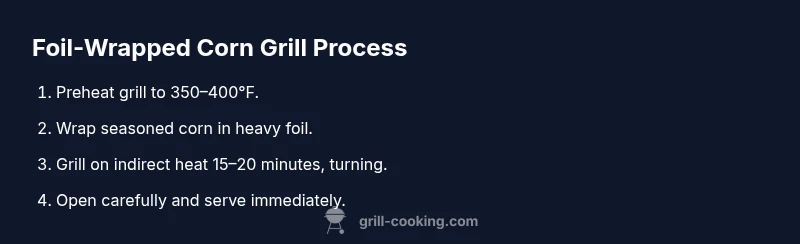
Follow these steps in order to achieve juicy foil-wrapped corn on the grill. The process emphasizes preparation, precise wrapping, and controlled heat to prevent scorching. Use heavy-duty foil and keep safety in mind when opening packets after cooking.
Troubleshooting, common mistakes, and best practices
Common mistakes include leaving the corn in damp husks, which traps extra moisture and can soggy the packets; wrapping loosely, which leads to leaks and uneven steam; and cooking over direct flame, which scorches the foil and kernels. To avoid these, always remove husks and silk, seal packets tightly, and favor indirect heat. If the corn seems undercooked after the recommended time, simply seal again and give it a few more minutes, turning occasionally. Another frequent error is over-salting, which can mask the natural sweetness—season in layers (butter, then salt). Lastly, avoid peeling back the foil too early to check progress; let steam work its magic first, then finish with a quick unwrap if you want a hint of char.
Authority sources
- USDA: Food Safety and Inspection Service — safe handling and cooking guidelines for corn and other produce. URL: https://www.usda.gov
- Extension services (state universities) provide practical cooking tips for grilling vegetables and corn. Examples: https://extension.illinois.edu
- CDC safety guidance for handling and cooking food to prevent foodborne illness. URL: https://www.cdc.gov
Serving ideas and leftovers
Serve foil-wrapped corn with a squeeze of fresh lime, a scattering of chopped cilantro, or a dusting of cotija for a Mexican-inspired finish. If you have leftovers, unwrap the packets carefully, then reheat gently on the grill or in a skillet to revive moisture. Corn pairs beautifully with grilled meats, charred veggies, or a bright herb butter. For a complete cookout, plan sides like garlic butter mushrooms, grilled zucchini, or a cool avocado salsa. The foil method makes it easy to customize portions for larger gatherings and to keep flavors consistent across servings.
Tools & Materials
- Grill (gas or charcoal)(Preheat to medium heat (about 350–400°F / 175–205°C))
- Heavy-duty aluminum foil(Large enough to wrap each ear securely)
- Butter (unsalted)(2–3 Tbsp per ear, melted)
- Salt and pepper(To taste)
- Herbs/spices(Optional flavors like garlic powder, paprika, or dill)
- Tongs(For turning packets safely)
- Sharp knife(For trimming silk if needed)
- Small squeeze bottle of lemon juice(Brightens flavor)
Steps
Estimated time: 30-40 minutes
- 1
Preheat and prep
Preheat grill to 350–400°F (175–205°C). Husk the ears, remove silk, and pat dry; set up your foil packets. Preheating ensures the corn begins cooking evenly the moment it hits the grill.
Tip: Give the grill 5–10 minutes to come fully to temperature before loading packets. - 2
Butter and season
Spread 1–2 Tbsp butter per ear, then sprinkle salt, pepper, and optional herbs evenly over the kernels. Aim for an even coating to maximize flavor with every bite.
Tip: Room-temperature butter distributes more evenly than melted butter poured at the last moment. - 3
Wrap securely
Tightly seal each ear in heavy-duty foil, forming a snug packet to trap moisture and steam. Check that all edges are crimped and there are no gaps.
Tip: Leave a tiny air pocket if you want a touch more steam growth inside the packet. - 4
Grill setup
Place packets on indirect heat with the lid closed. This reduces direct scorching and allows the butter and sugars to steam the corn evenly.
Tip: If your grill has cold spots, rotate packets halfway through cooking. - 5
Cook and turn
Cook 15–20 minutes total, turning every 4–5 minutes for even cooking. This helps achieve uniform tenderness across all ears.
Tip: Avoid opening the packets too often; steam buildup is key to tenderness. - 6
Test for doneness
Carefully open a packet and test tenderness with a fork or knife. If needed, reseal and cook a few more minutes until the kernels yield without resistance.
Tip: Be cautious of hot steam—use tongs and oven mitts when handling. - 7
Finish and serve
Optionally unwrap the last 2 minutes for a light char on the edges. Let rest 1–2 minutes before serving to redistribute juices.
Tip: A quick squeeze of lemon brightens the flavor profile. - 8
Store leftovers
If you have leftovers, transfer to an airtight container or keep in the foil packet and refrigerate. Consume within 2–3 days for best quality.
Tip: Reheat gently on the grill or in a skillet with a splash of butter.
FAQ
Can I grill corn on the cob without foil?
Yes, you can grill corn directly on the grates, but foil-wrapped corn is more forgiving for beginners and reduces flare-ups. Direct-grill corn requires closer attention to avoid scorching and uneven cooking.
You can grill corn without foil, but foil-wrapped corn is more forgiving and easier for beginners.
Should I soak the corn before grilling in foil?
Soaking is not necessary for foil-wrapped corn. It’s more about drying the ears, seasoning, and sealing them well so moisture stays inside. Soaking can add extra moisture that may hinder crisp texture.
Soaking isn’t required when you’re using foil; dry the ears and seal the packets well.
How do I know when the corn is done?
Tender kernels that give slightly to pressure indicate doneness. If the corn isn’t tender after 15–20 minutes, continue cooking in 5-minute increments, turning the packets occasionally.
Look for tender kernels; if you’re unsure, cook a bit longer and test again.
Can I use frozen corn for this method?
Fresh corn yields the best texture and flavor. Frozen corn can work in a pinch but may release more moisture, affecting texture and timing.
Fresh corn is best, but frozen can work if you adjust cooking time.
Can I add cheese or toppings after grilling?
Yes. After grilling, sprinkle cotija or Parmesan, drizzle with lime, or add chopped herbs for extra brightness. Heat can make some cheeses melt pleasantly on contact.
You can finish with cheese or fresh toppings after grilling.
What if I don’t have butter?
You can use olive oil or a dairy-free spread inside the packets. The steam and heat will still cook the corn, though butter adds flavor and aid in browning.
Olive oil works as a dairy-free alternative if you don’t have butter.
Watch Video
Quick Summary
- Wrap corn in foil to lock in moisture and flavor.
- Control heat and use indirect zones to prevent scorching.
- Butter and spices amplify the natural sweetness of corn.
- Turn packets regularly for even cooking.
- Open carefully to avoid steam burns.