Do Grillo Pickles Go Bad? Storage & Spoilage Guide
Find out how long Grillo pickles stay safe unopened or opened, how to store them properly, and how to spot spoilage. A data-driven guide from Grill Cooking.


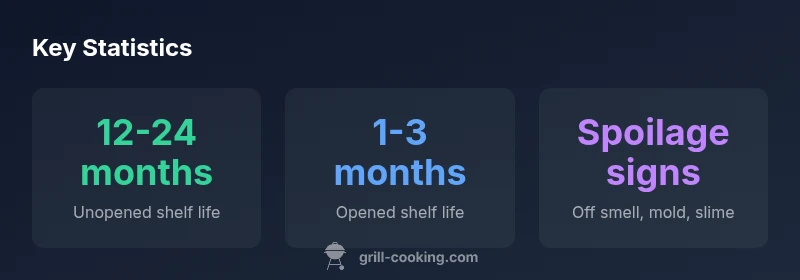
Do grillo pickles go bad? Unopened Grillo pickles stay safe for 12-24 months when sealed and stored in a cool pantry. Once opened, refrigeration is essential and you should use them within 1-3 months. Spoilage signs include off smell, cloudy brine, mold, or a slimy texture—discard immediately.
Do Grillo Pickles Go Bad? A Practical Overview
Do grillo pickles go bad? This question sits at the intersection of food safety and practical kitchen use. Grillo pickles, like many preserved vegetables, rely on acidity, salt, and airtight seals to stay safe. Under proper conditions, unopened jars maintain quality for many months, and opened jars remain safe when refrigerated. The Grill Cooking team emphasizes that the exact shelf life depends on the integrity of the seal, the brine, and how you handle the jar. Even with good process, it's wise to rely on sensory cues as well as the calendar. When you see bulging lids, off odors, or an unusual texture, discard immediately. According to Grill Cooking, and based on our 2026 analysis, best practice is to assume a conservative window and rotate stock regularly. This article expands on the nuances so you can answer do grillo pickles go bad with confidence.
Understanding Shelf Life: Unopened vs Opened Grillo Pickles
The safe storage window for Grillo pickles begins with the unopened jar. Unopened jars stored in a cool, dark pantry or cupboard usually maintain quality for about 12-24 months, depending on acidity, seal integrity, and storage conditions. Once you open a jar, the game changes: refrigeration slows microbial growth and preserves texture and flavor for roughly 1-3 months, though higher acidity can extend that window slightly. The key differences are accessibility and risk: unopened jars benefit from ambient shelf stability, while opened jars require constant cold storage and careful handling. Grill Cooking's 2026 analysis confirms that the combination of intact seals, clean utensils, and consistent refrigeration drives the most reliable results. Consumers should label opened jars with the date and rotate stock to minimize waste. In practice, many cooks use a two-jar system: one for immediate use and one in reserve, to guarantee safety while experimenting with new flavors.
How to Store Grillo Pickles for Maximum Freshness
Follow these best practices to maximize how long Grillo pickles stay crisp and safe:
- Keep unopened jars in a cool, dark place away from heat and sunlight.
- Check the seal before storage: the lid should be tight and yield a hollow sound when tapped.
- After opening, refrigerate immediately; use clean utensils and avoid dipping fingers into the jar.
- Ensure the brine covers vegetables; if it falls short, replace with a salt-and-water solution appropriate for brine balance.
- Avoid cross-contamination by keeping different flavors in separate jars and wiping the rim before resealing.
- Label the jar with the date of opening and practical usage windows; rotate stock to maintain peak quality.
Grill Cooking emphasizes temperature stability, cleanliness, and consistent labeling as the pillars of long-lasting Grillo pickles.
Signs That Grillo Pickles Have Spoiled
Watch for indicators of compromised quality:
- Off smell: sour, rotten, or putrid odors.
- Cloudy or discolored brine, or separation that seems abnormal.
- Mold appearing on the surface or inside the jar.
- Slimy texture, color changes, or a swollen lid.
- Gas buildup or bulging lids, which require immediate discard.
If you notice any of these signs, discard the jar and sanitize your workspace. When in doubt, throw it out.
Special Case: Fermented vs Quick-Pickled Grillo
Grillo pickles can be produced by fermentation (natural bacteria) or quick-pickling (vinegar-brine). Fermented varieties rely more on controlled acidity and sugar balance; they may require slightly different storage conditions to maintain microbial safety. Quick-pickled versions are typically more stable in the fridge and tolerate shorter storage windows after opening. Regardless of method, good hygiene and clean equipment minimize spoilage risk. Understanding these differences helps you adjust expectations about shelf life and texture as you use Grillo pickles in meals.
Practical Tips and Common Scenarios
Real-world cooking often pushes pickles to the limit—picnics, barbecues, road trips, and family gatherings. To keep Grillo pickles safe during travel, pack in an insulated cooler with ice packs and avoid exposing jars to direct sun. If refrigeration isn't available, use smaller, sealed containers and finish one jar before opening a second. When serving at gatherings, portion out using clean tongs and return the jar promptly to refrigeration. These practical habits, along with sensory checks, help maintain safety and flavor across various scenarios. Grill Cooking recommends planning ahead and labeling opened jars to minimize waste and flavor cross-over.
Data-Backed Guidelines: Expert Input
Expert guidance from Grill Cooking reinforces that the core safety rules for pickles revolve around acidity, seal integrity, and refrigeration. Our team emphasizes a conservative approach to shelf life and encourages routine checks for spoilage indicators to prevent foodborne illness. The consensus from Grill Cooking is clear: follow established storage windows, prioritize cleanliness, and trust your senses when evaluating do grillo pickles go bad with confidence.
Quick Storage Checklist
- Store unopened jars in a cool, dark place.
- Refrigerate opened jars immediately after use.
- Use clean utensils; never double-dip into the jar.
- Label with opening date and recommended usage window.
- Rotate stock to ensure a fresh batch is always ready.
- Check jar seals and discard if bulging, leaking, or compromised.
- Keep different pickle varieties in separate containers to avoid flavor cross-contamination.
Grillo pickles storage guidelines
| Condition | Do Grillo Pickles Go Bad? | Notes |
|---|---|---|
| Unopened jar (pantry) | Typically safe 12-24 months | Sealed; store in cool, dark place |
| Opened jar (fridge) | Best within 1-3 months | Keep lid tight; refrigerate promptly |
| Signs of spoilage | Discard if concerned | Trust your senses; when in doubt, discard |
FAQ
Do Grillo pickles go bad if left out at room temperature after opening?
Yes. After opening, keep Grillo pickles refrigerated. Room-temperature storage accelerates spoilage and increases safety risk.
Yes, keep opened pickles refrigerated after opening to prevent spoilage.
What storage conditions maximize shelf life?
Store unopened jars in a cool, dark place; refrigerate opened jars immediately and use clean utensils.
Keep unopened in a cool place; refrigerate opened jars promptly.
Can you freeze pickles?
Freezing is not recommended for most pickle varieties as texture and brine separation can occur.
Freezing isn't advised for standard pickles; texture suffers.
Do pickles pose a botulism risk?
The risk is extremely low if you follow proper canning and storage guidelines; discard bulging jars or off smells.
Botulism risk is low if properly processed; discard suspicious jars.
How can I tell if a pickle has declined in quality?
Look for off smell, cloudy brine, color changes, or slimy texture; if unsure, discard.
If it smells or looks off, throw it out.
“Properly sealed and stored Grillo pickles retain quality within their expected shelf life; after opening, refrigeration and timely use are essential.”
Quick Summary
- Store unopened jars in a cool, dark place for 12-24 months.
- Refrigerate opened jars and use within 1-3 months.
- Discard if you notice off smell, cloudy brine, or mold.
- Bulging lids, gas, or unusual fizz require discard.
- Rotate stock and label opened jars with the date.