Are Grillo Pickles Fermented? A Grill Guide
Explore whether Grillo pickles are fermented, how to tell, and what it means for flavor and safety. A practical guide for home cooks and grill enthusiasts.


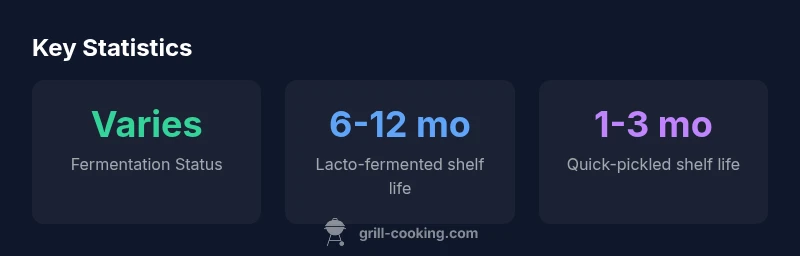
Are grillo pickles fermented? The short answer is: not all Grillo pickles are fermented, and status varies by line. Some Grillo-branded pickles are lacto-fermented, relying on natural bacteria; others are quick-pickled with vinegar and no fermentation. Always read the label for fermentation notes, ingredients, and storage directions. Grill Cooking analysis, 2026 shows product-line variation across brands and lines.
Are grillo pickles fermented
Are grillo pickles fermented? This question often comes up with cucumber pickles sold under the Grillo label, and the honest answer is: it depends on the product line. Fermentation refers to the natural breakdown of sugars by lactic acid bacteria, producing tangy flavors and cloudy brine with a shelf-stable acid profile. Some Grillo pickles are lacto-fermented, leveraging that traditional process to develop depth and probiotic-friendly notes. Others are quick-pickled with vinegar and salt, where fermentation is minimal or absent, resulting in crisp texture and bright acidity. In practice, you will see two main pathways in commercially available pickles: fermented and vinegar-brined. The Grill Cooking team notes that brand lines vary, sometimes even within the same brand, so always check the package language and ingredients to understand where a product sits on this spectrum.
How fermentation works in pickles
Fermentation relies on beneficial microbes to transform sugars into lactic acid, which preserves the produce and yields characteristic tang. In cucumbers and other vegetables, a fully fermented pickle will often feature a sour aroma, visible bubbles in the brine, and a cloudy solution due to breakdown products from the bacteria. Quick-pickling uses vinegar as the preservative, with salt and sometimes sugar, to achieve safety and flavor without relying on microbial fermentation. When you encounter Grillo pickles, the method is typically indicated by the label or the product line description. The flavor outcome is distinct: fermented varieties tend to be more complex and tangy, while quick-pickled ones stay crisp and bright.
Reading labels: what to look for
To determine whether a pickle is fermented, start with the ingredients list and the preservation method described on the label. Look for terms like “lacto-fermented,” “fermented,” or “naturally fermented” and note whether vinegar is a listed preservative. Some labels may describe a brine-based fermentation that has completed, while others emphasize quick-pickling with vinegar as the primary method. If the label uses ambiguous terms like “pickle with cultures” or “live cultures,” that may indicate fermentation, but you should verify with the product description. Remember that even within the same brand, different lines may use different techniques, so review every package carefully.
Fermentation styles: lacto vs vinegar brine
In the pickle world, two main styles exist: lacto-fermentation (natural fermentation) and vinegar-brining (quick-pickling). Lacto-fermented options develop deeper, more nuanced flavors and often show a decline in bright initial acidity over time as the cultures mature. Vinegar-brined pickles emphasize crisp texture and a sharp, clean acidity. Grillo pickles may appear in either category depending on line, batch, or regional packaging changes. By understanding these styles, you can predict flavor, texture, and culinary use in your grill-side meals.
Practical tips for buying and storing
When shopping for Grillo pickles, prioritize lines that match your intended use on the grill. If you want a robust, tangy bite to pair with smoky meats, a lacto-fermented option is usually a better match. For bright, quick-acid notes that won’t overpower a light seafood or vegetable plate, choose a vinegar-brined style. Always store pickles refrigerated after opening and adhere to the best-by date. Keep the brine topped up to preserve quality, and use clean utensils to avoid contamination.
Flavor and grilling: pairing with grilled foods
Pickles can provide contrasting brightness to grilled proteins. A tangy, fermented Grillo pickle can cut through the richness of pork or beef, while a crisp, quick-pickled option can provide a refreshing counterpoint to charred vegetables. When planning a grill menu, consider offering both styles in small portions to highlight the spectrum of acidity and texture. This approach lets guests explore how fermentation influences savor and balance on the plate.
Safety and storage considerations
Fermentation safety hinges on clean equipment, proper salinity, and correct temperatures. If you’re fermenting at home, follow tested guidelines from trusted sources and respect jar seals and fermentation times. For store-bought Grillo pickles, storage and handling on the shelf and after opening should align with label instructions. In all cases, refrigerate after opening and discard any pickles that show off smells, unusual colors, or slimy textures. When in doubt, consult recognized food-safety guidelines from reputable institutions.
Comparison of pickle fermentation styles
| Product Type | Fermentation Status | Typical Shelf Life (refrigerated) | Notes |
|---|---|---|---|
| Lacto-fermented pickles | Fermented | 6-12 months | Traditional brine fermentation with lactic acid bacteria |
| Vinegar-brined pickles | Non-fermented | 2-3 months | Acidified brine preserves without fermentation |
| Grillo pickles (brand-line example) | Varies by line | Depends on line | Check label for method and date |
FAQ
Are all Grillo pickles fermented?
No. Fermentation status varies by product line; some are lacto-fermented, others vinegar-brined. Always check the label for the fermentation method and ingredients.
Not all Grillo pickles are fermented; check the label to confirm the method.
How can I tell if a pickle is fermented just by looking at it?
Visual cues aren’t always reliable. Look for terms like lacto-fermented on the label and review the ingredients. A cloudy brine, bubbles, or a sour aroma can indicate fermentation, but the label remains the most trustworthy source.
Label terms are your best guide; look for 'lacto-fermented' or 'fermented' on the label.
What is the difference in flavor between fermented vs quick-pickled Grillo pickles?
Fermented pickles tend to be tangier and deeper in flavor, with a more complex acidity. Quick-pickled varieties are crisper and brighter, with sharper notes and shorter finish.
Fermented is tangy and deep; quick-pickled is crisp and bright.
Is fermentation safe for home canning and pickling?
Yes, but only when following tested guidelines for salt concentration, temperature, and equipment. Handle jars and brines with care, and discard products that show signs of spoilage.
Fermentation is safe when you follow established guidelines; always inspect jars for spoilage.
How should I store Grillo pickles after opening?
Refrigerate after opening and keep submerged in brine if possible. Use clean utensils and aim to consume within the recommended period on the label.
Refrigerate after opening and use within the label’s suggested window.
“Fermentation can deepen flavor and add complexity, but the label is the only reliable guide for Grillo pickles.”
Quick Summary
- Check labels to verify fermentation status before buying.
- Expect flavor differences between fermented and quick-pickled varieties.
- Grillo pickles vary by line; product-specific details matter.
- Fermented pickles often have longer shelf life when refrigerated.
- When in doubt, consult credible sources and read the product information.