Salmon Fish Grill: A Complete Step-by-Step Guide
Learn to grill salmon with crisp skin and juicy flesh using two-zone heat, proper seasoning, and safe temperatures. This step-by-step guide from Grill Cooking covers prep, seasoning, timing, and serving for home cooks and grill enthusiasts.


Goal: grill salmon with crisp skin and juicy flesh using two-zone heat, skin-side down first, then finish over direct heat. Gather essential tools, use a two-zone setup, monitor internal temperature to around 125-130F for medium-rare or 135F for fully cooked, and rest briefly before serving. Use an instant-read thermometer for accuracy and let the fish rest 3-4 minutes.
Why Salmon Grilling Excels for Home Cooks
According to Grill Cooking, salmon offers an ideal balance of speed, flavor, and forgiving texture when grilled with proper heat control. The fish is naturally fatty, which helps it stay moist when cooked quickly, and the skin acts as a protective layer that seals in moisture. When you grill salmon, you can achieve a crisp skin and juicy flesh in 8-12 minutes, depending on thickness. The key is to manage heat and moisture, not just time. With a two-zone setup, you can sear briefly over high heat to develop color, then move to cooler indirect heat to finish without scorching. This approach also reduces flare-ups caused by fat dripping onto hot coals or flames. For beginners, start with center-cut fillets about 1 inch thick, with even thickness to ensure uniform doneness. As you gain confidence, you can try thicker portions or smaller portions to practice control.
Brand note: The Grill Cooking team emphasizes consistent temperature control as the biggest predictor of success for beginner grillers.
Tools and Setup for Salmon on the Grill
Before you start, assemble a focused set of tools that makes the job easier. A sturdy grill with good temperature control is essential; a two-zone setup helps manage direct sear and indirect finishing. You’ll also want long tongs for safe flipping, a silicone brush or oil spray to lightly coat the skin, an instant-read thermometer to monitor doneness, and a wide, thin fish spatula to lift delicate fillets. Keep paper towels handy for patting dry, and have a small spray bottle of water handy for tiny flare-ups. Nonstick spray or high-smoke-point oil reduces sticking, but you can also oil the grates lightly with a paper towel. Organize your prep station so you can move quickly between searing, flipping, and resting. Preparing in advance minimizes on-grill mistakes and keeps your hands safe during high-heat moments.
Tip: set up your cooling zone and searing zone before you light the grill to save time.
Choosing Salmon and Prep
Pick center-cut fillets or portions labeled as wild-caught or farm-raised, depending on preference and budget. For optimal texture, choose fillets that are evenly thick and free of bones. Pat the flesh dry with paper towels; moisture on the surface can steam rather than sear, preventing crisp skin. If you want the skin to crisp, leave it on and score the skin lightly to avoid curling. Season simply with salt, pepper, and a little lemon zest or a touch of olive oil to help the seasonings adhere. If you’re marinating, keep it light—acidic marinades can begin breaking down delicate flesh too quickly. Plan to season about 10-15 minutes before grilling so the surface dries slightly for better sear.
Seasoning and Marinades for Salmon
Simple is often best for salmon. A light coat of olive oil, sea salt, and cracked black pepper lets the natural flavors shine. Add citrus zest, garlic, or dill for a classic profile. If you like a glaze, brush on during the final minutes of cooking to avoid burning. Marinades should be brief—no longer than 15-20 minutes for most fillets—to maintain texture. For extra brightness, finish with fresh squeezed lemon juice or a cilantro-lime finishing spray. Remember: the goal is flavor enhancement, not heavy marinade that overwhelms the fish. Pair with accompaniments like grilled asparagus or corn for color and contrast.
Two-Zone Grilling: Direct vs Indirect Heat
Two-zone grilling means one part of the grill is hot for searing and the other is cooler for finishing. Start by placing salmon skin-side down over the cooler zone if possible; you’ll get crisp results while preventing overcooking. If your grill lacks a distinct division, move fillets to a cooler area or reduce flame. Sear briefly with a lid closed to help develop color, then move to indirect heat to finish. If using skin-on fillets, crisp the skin first by starting over direct heat for 1-2 minutes, skin-side down, until color forms, then flip and finish on indirect heat.
Cooking Times and Doneness for Salmon
Thickness dictates time; a 1-inch fillet typically needs about 4-6 minutes per side on medium-high heat, but two-zone grilling often reduces total time. The goal is to reach an internal temperature of 125-130F for medium-rare to slightly opaque center or about 135F for fully cooked through. Rely on an instant-read thermometer rather than guessing. Remove from heat 5-10F before your target; carryover heat will finish the job as the fillet rests.
Skin-Crips and Finishing Techniques
For maximum skin crispness, pat the skin dry and oil lightly; avoid excess moisture. Keep the surface dry and avoid turning too early. If the skin is stubborn, brush a tiny amount of oil beneath the skin to help crisp. Let the salmon rest for 2-4 minutes after removing from the grill to redistribute juices before slicing.
Troubleshooting Common Issues
- Sticking skin: ensure the skin side is dry and well-oiled; preheat longer and keep the lid closed while searing. - Dry flesh: avoid overcooking; pull early and let carryover heat finish. - Uneven doneness: verify fillet thickness and rotate if your grill has hot spots. - Flare-ups: keep a spray bottle handy and move the fish off direct flames if fat pops.
Grill Maintenance and Safety Tips
Clean grates after each use and heat the grill to high to burn off residues. Inspect hoses and connections on gas grills for leaks; never grill indoors or in enclosed spaces. Use heat-resistant gloves and long-handled tools. Store fuel away from living spaces and never leave a lit grill unattended. A quick wipe with a oiled cloth after grilling helps prevent sticking on subsequent cooks.
Grill Cooking's Verdict
The Grill Cooking team’s tested approach favors a two-zone setup with the salmon started skin-side down on the cooler zone, then finished on the hotter zone or directly over heat for color. This method delivers dependable crust, moist interior, and minimal risk of overcooking. For home cooks who want repeatable results with less guesswork, this is the recommended method.
Authority and Notes
For temperatures and doneness guidance, consult trusted public health sources like the FDA and USDA. This article aligns with best practices for safe cooking while prioritizing flavor and texture for salmon.
Tools & Materials
- Gas or charcoal grill with reliable temperature control(Two-zone setup recommended)
- Long-handled tongs(For safe flipping without tearing flesh)
- Silicone brush or oil spray(Lightly oil skin or grates to prevent sticking)
- Instant-read thermometer(Monitor internal temp precisely)
- Fish spatula(Lift delicate fillets without breaking)
- Paper towels(Pat dry fillets for crisp skin)
- Neutral oil (e.g., canola, grapeseed)(Light coating for grates or fish)
- Lemon wedges or citrus zest(Finish and brighten flavor)
Steps
Estimated time: 20-30 minutes
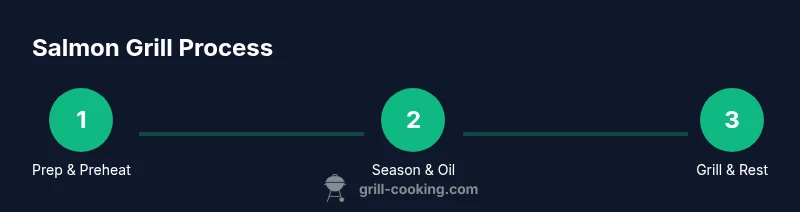
- 1
Preheat and prepare grill
Ignite the grill and set up a two-zone setup: a hot direct zone and a cooler indirect zone. Allow temperatures to stabilize before cooking to ensure consistent sear and finish. This reduces flare-ups and helps control doneness.
Tip: Close the lid during preheating to build an even heat profile. - 2
Dry and season salmon
Pat fillets dry with paper towels to remove surface moisture. Lightly oil the skin and season with salt, pepper, and optional citrus zest or dill for aroma. Dry surfaces sear better and cling less to the grate.
Tip: Season at least 10 minutes before grilling to allow surface drying. - 3
Oil grates or fish lightly
Brush a small amount of oil on the skin side or on the grates to minimize sticking. Avoid excess oil, which can cause flare-ups. This step aids in a clean flip and crisp skin.
Tip: Oil just before placing the fish on the grill. - 4
Place skin-side down on indirect heat
Set the salmon over the cooler zone, skin-side down. Cover and let cook until the skin is crisp and the flesh near the top shows signs of doneness. This preserves moisture inside the fillet.
Tip: Do not move the fillet too early; allow the skin to crisp before any flip. - 5
Sear briefly and finish on indirect heat
If desired, move to direct heat for a quick sear on the flesh side or sking side for color. Then return to indirect heat until your target temp is reached. Use the thermometer to guide you.
Tip: Use short bursts of direct heat to avoid overcooking. - 6
Check doneness and rest
Withdraw from heat when the internal temp is 125-130F for medium-rare or 135F for fully cooked. Let rest 3-4 minutes to allow juices to redistribute.
Tip: Resting is essential for juiciness; do not skip this step. - 7
Serve with bright accompaniments
Squeeze fresh lemon over the top and pair with grilled vegetables or a crisp salad. A simple green herb sauce or olive oil drizzle completes the dish.
Tip: Present the fish with the skin side up for visual appeal.
FAQ
What is the best internal temperature for grilled salmon?
Many cooks aim for 125-135F for a tender, moist center, with carryover heat finishing the job after removal. The USDA recommends grilling to 145F for safety, but many prefer slightly under for a juicier result. Always verify with a thermometer.
Aim for about 125 to 135 degrees Fahrenheit for juicy salmon; cook to your preferred doneness, and verify with a thermometer.
Should I grill salmon with the skin on or off?
Skin-on helps protect the flesh and adds a desirable crisp. Start skin-side down, and remove the fillet from the grill once the skin is crisp and the flesh is near doneness.
Yes, keep the skin on. It protects the meat and crisps nicely; flip only when the skin is crisp.
How long to grill per thickness?
A 1-inch fillet usually needs about 4-6 minutes per side on medium-high heat in a two-zone setup. Adjust for thickness and heat, using a thermometer to guide you.
About 4-6 minutes per side for 1-inch fillets; use a thermometer to fine-tune.
Is marinating necessary for salmon?
Marinating is optional. If used, keep marinades light and short (no more than 15-20 minutes) to avoid changing texture or overpowering the fish.
Marinating isn’t required; if you do, keep it brief so the fish stays tender.
What sides pair best with grilled salmon?
Grilled asparagus, corn on the cob, or a bright cucumber salad complement salmon’s richness. A lemon-herb drizzle ties flavors together nicely.
Pairs well with grilled vegetables and a lemony dressing for brightness.
Can I grill salmon from frozen?
Grilling from frozen is possible but not ideal; thaw first for even cooking. If you must cook from frozen, increase time and monitor doneness carefully.
If possible, thaw first for even cooking. If not, extend cooking time and check temperature often.
Watch Video
Quick Summary
- Pat dry fillets and oil lightly for crisp skin.
- Use two-zone grilling to sear then finish gently.
- Cook to 125-135F depending on desired doneness and rest before serving.
- Keep seasoning simple to let salmon shine.
- Resting is essential for juiciness and even texture.