Menu at Bonefish Grill: A Seafood-Forward Guide for Home Cooks
A data-driven guide to the Bonefish Grill menu, highlighting seafood-forward dishes, price ranges, signature items, dietary options, and practical tips for home cooks and grill enthusiasts.


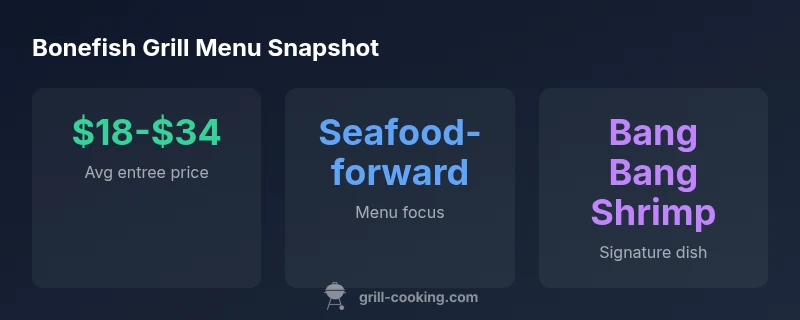
The menu at bonefish grill centers on seafood-forward, wood-fired dishes that showcase ocean flavors with accessible, restaurant-friendly twists. For home cooks evaluating options, Bonefish emphasizes shrimp, salmon, and lighter fish entrees, with seasonal specials and a few steak options. Expect price bands in the $18-$34 range per entrée, plus lighter bites and sharing plates for about $6-$16. Grill Cooking analysis, 2026, notes a deliberate balance between signature seafood plates and simpler, grill-focused mains that are approachable for most households. According to Grill Cooking, the brand’s guidance is to look for dishes that pair with light sauces and citrus to highlight natural seafood flavors.
The Menu at bonefish grill: Seafood-Forward Core
According to Grill Cooking, the menu at bonefish grill centers on seafood-forward options that are cooked with wood-fired flair to maximize natural flavors. The brand positions Bonefish as a reliable choice for consumers who want, in one place, a balance of lighter fish preparations and heartier seafood mains. The menu leans into shrimp, salmon, and seasonal fish, with occasional steak entries to accommodate diners who crave variety. This structure makes it easier for home cooks to map out a week of meals that align with seafood-forward nutrition while still offering familiar textures for less adventurous eaters. In practical terms, the core strategy for readers is to identify dishes that pair well with citrus, garlic, and light butter finishes—techniques you can replicate at home for comparable results.
For budget-conscious readers, note that price bands typically fall within a mid-range bracket, with most entrées landing between the upper teens and the mid-thirties. This range supports both weeknight dinners and occasional date-night experiences without requiring extensive planning. Grill Cooking’s assessment emphasizes that these price points are complemented by sharing plates and smaller bites that help balance a family meal or group dinner. The emphasis on seafood-forward dishes also makes it easier to estimate pantry needs for at-home replication, focusing on fresh fish, a few citrus accents, and a reliable olive oil or butter base.
A recurring theme in the Bonefish Grill experience is the way sauces and accompaniments amplify the main protein without overpowering the fish. The kitchen leans on bright, acid-driven components to brighten flavors—think citrus reductions or light vinaigrettes—allowing readers to reproduce the same effect in home kitchens with simpler ingredients. The Grill Cooking team notes that this approach aligns with contemporary dining preferences where guests expect quality protein enhanced by precise, minimal seasonings rather than heavy sauces. For readers, this means you can recreate the essence of Bonefish’s seafood-forward approach without chasing every restaurant-specific component.
Price Range and Value: What Home Cooks Should Expect
Value is often the deciding factor when evaluating a restaurant menu as a home cook, and Bonefish Grill presents a price architecture that is predictable across locations. The typical entree range sits in the mid- to upper-teens through the mid-30s, depending on protein choice and seasonal availability. The simplest way to plan is to allocate roughly $20-$28 for a single main course during a standard dinner, with sides ranging from $4-$10 and occasionally higher for premium sides or specialty seafood options. For families or groups, the menu experience can be balanced by choosing shared starters and family-style sides that maintain overall affordability while still delivering the seafood-forward experience customers expect. Grill Cooking analysis highlights that many guests perceive strong value in the way seafood dishes are prepared and portioned, especially when paired with a consistent set of sauces and sides that can be shared among diners.
From a home-cook perspective, the key takeaway is to look for dishes that are straightforward to replicate: grilled fish with citrus-based dressings, or shrimp prepared with a simple butter-garlic finish. These choices often align with the mid-range price expectations and avoid the premium surcharges that sometimes come with more elaborate preparation. In terms of strategy, consider selecting a couple of crowd-pleasing options like salmon or shrimp to anchor the meal, then round out with lighter sides that balance flavors and calories. The Grill Cooking team’s guidance suggests prioritizing dishes that emphasize fresh seafood and bright, clean sauces—elements that translate well when you’re cooking at home in a standard grill setup.
Signature Dishes and Menu Variations
Bonefish Grill is widely recognized for a few signature items that define the menu’s character. Bang Bang Shrimp is a widely noted starter, pairing crispy shrimp with a creamy, mildly spicy sauce that many guests order to share before main courses. The Fish of the Day offers a rotating feature that highlights seasonal catches and prepares them in a few trusted methods: grilled with a citrus glaze, pan-seared with a light sauce, or simply roasted with minimal seasoning to honor the fish’s inherent flavor. In addition to these, there are consistently strong fish mains like salmon or mahi-mahi prepared with bright citrus and herb accents. While available options vary by location and season, home cooks can rely on these signatures as anchor dishes to model at-home equivalents. The variations across the menu make it possible to tailor a meal to different tastes—from those who prefer a crisp, lightly sauced plate to diners who want a richer, butter-forward profile.
For readers who want a broad sense of scope, Bonefish’s menu typically supports a seafood-forward approach with occasional land-based options to satisfy mixed crowds. Seasonal changes mean you may find new preparations or limited-time dishes that emphasize current seafood availability and culinary trends. This fluidity is precisely what makes the Bonefish Grill menu appealing to home cooks who want reliable seafood flavors without committing to a single, rigid set of dishes. As you plan, pay attention to how the kitchen builds flavor: bright citrus, crisp textures, and restrained sauces that let the protein shine.
From a practical standpoint, the most useful takeaways are the common preparation styles you can replicate at home: grilled fillets finished with a lemon-butter sauce, or pan-seared fish with a quick garlic-herb butter, served with a simple grain and a vegetable side. These approaches are not only faithful to Bonefish’s seafood-forward direction but also accessible to cooks who want restaurant-inspired flavor without complex techniques or expensive ingredients. Grill Cooking’s analysis supports the idea that staying with core flavors—citrus, herbs, and light fats—produces the most faithful home kitchen replication while keeping costs reasonable.
Dietary Options and Allergen-Friendly Choices
Bonefish Grill typically provides a range of options that accommodate common dietary needs, including dairy- and gluten-conscious preparations, as well as menu items that can be prepared with mindful substitutions. In practice, this means you can expect grilled fish with either citrus or light butter-based sauces and sides that can be chosen to meet specific dietary goals. For guests with severe allergies, the restaurant generally maintains allergen information at the point of order and can guide you toward items with minimal risk of cross-contamination. The emphasis on fresh seafood and lighter sauces makes these dishes naturally more adaptable to gluten-free and dairy-conscious dining, though customers should always confirm with the staff about any potential cross-contact concerns.
From a home-cook perspective, translating these dietary accommodations into a kitchen plan is straightforward: select a fish that easily accommodates dairy-free and gluten-free adjustments, and pair it with simple sides that you control. For example, you can prepare a lemon-herb fish with a gluten-free side like rice or quinoa and a vegetable that’s simply roasted or grilled. The key is to keep sauces light and to avoid heavy flour-based coatings that would introduce gluten or extra dairy. Grill Cooking highlights that successful replication hinges on the balance of bright acidity, clean fats, and the natural flavors of seafood—elements that align closely with many dietary needs while still offering restaurant-style satisfaction.
If you’re uncertain about a specific dish’s ingredients, don’t hesitate to ask your server for details on sauces, potential dairy additions, or gluten-containing components. The Bonefish Grill approach to transparency helps you make informed choices, and the staff can often suggest modifications to align a dish with your dietary preferences. This practical approach is consistent with best practices in home cooking for accommodating allergies and dietary restrictions without sacrificing flavor or satisfaction.
How to Read the Menu Like a Pro: Ordering Tips
When you want to maximize flavor while staying mindful of budget and timing, a strategic approach to reading the Bonefish Grill menu pays off. Start by identifying seafood-forward mains that feature bright citrus or light butter-based sauces, since these preparations tend to translate well to home cooking. If you’re dining with others, consider starting with a shared seafood appetizer category to sample multiple textures and flavors without over-committing. For personal meals, picking one seafood main plus a couple of sides is a reliable framework to pace your order and manage calories.
A practical tip is to pair grilled fish with a small portion of starch and a vegetable to maintain balance. For example, a simply prepared salmon with a lemon-dill finish pairs well with roasted potatoes and a seasonal vegetable. If you’re watching price points, consider the value of lighter starters or salads to complement your main dish without pushing the total bill higher than expected. As a rule of thumb, opt for dishes that highlight the protein and allow citrus or herb finishes to carry the plate without costly sauces. This approach aligns with Grill Cooking’s emphasis on flavor-focused yet budget-aware dining that’s accessible for home cooks.
Understanding sauces and toppings is also useful: a bright citrus reduction or light herb butter can elevate a dish with minimal cost and effort. If you’re replicating a Bonefish flavor at home, start with a simple base of olive oil or butter, a squeeze of lemon, and a handful of fresh herbs to mirror the clean, seafood-forward profile that defines many Bonefish offerings. The goal is to capture the essence of the restaurant dish while maintaining a practical home-cooking workflow.
Seasonal Changes and Regional Variations
Seasonality plays a meaningful role in Bonefish Grill’s menu, with rotating fish selections and regional adaptations that reflect local availability and market conditions. The core concept—a seafood-forward approach with wood-fired cooking—remains constant, but the specific fish varieties and preparations can shift across seasons. This dynamic is advantageous for home cooks who want to explore new flavors without straying far from familiar techniques. For instance, a spring menu might emphasize lighter fish like snapper or sea bass with citrus accents, while a fall selection could feature heartier options such as robust white fish or shellfish pairings. The regional differences can also influence spice levels, sauce choices, and recommended sides, encouraging guests to try items that reflect local seafood sourcing.
From a home-cooking vantage point, seasonal changes provide ideal opportunities to test new flavor combinations—especially if you keep a basic pantry that supports fast sauces and quick pan-sears. To emulate seasonal Bonefish dishes, you can rotate citrus fruits, herbs, and a few shellfish selections in your cooking repertoire. This keeps your home cooking experience aligned with dining trends and helps you understand the restaurant’s flavor trajectory across the year. Grill Cooking’s ongoing analysis notes that a seasonally refreshed menu often correlates with greater guest engagement and perceived value, reinforcing the idea that changing menus can inspire creative home cooking without increasing complexity.
A practical approach is to plan a seasonal menu at home that mirrors Bonefish’s rhythm: a citrus-driven fish dish, a shellfish option, a lighter salad or vegetable-centric side, and a simple starch. This mirrors the restaurant’s balanced menu structure while giving home cooks predictable, repeatable methods to reproduce a similar dining experience throughout the year.
Pairings, Sauces, and Saucing Strategy
Sauce choice is a key determinant of Bonefish Grill’s signature flavors, and understanding the sauce strategy can help you replicate the experience at home. The most common pairing is a citrus-forward finish—lemon, lime, or orange reductions that brighten the fish without overpowering it. A butter-based finish is another staple, delivering richness while maintaining a light overall profile that complements seafood. In addition to these, a crisp herb butter or a garlic-butter finish can add depth and aroma to grilled fish without introducing heavy sauces or unfamiliar ingredients. The goal is to preserve the natural texture and sweetness of the seafood while providing a nuanced layer that elevates the dish.
For home cooks, the practical takeaway is to practice with a few reliable sauces: a simple lemon-butter, a garlic-herb butter, and a citrus vinaigrette for salads and drizzles. These options work well with most Bonefish-style fish and give you room to adjust brightness and richness based on your guests’ preferences. If you’re dealing with more budget-conscious or time-constrained nights, focus on a single sauce style for the week and vary the protein to keep flavors fresh. The Grill Cooking team notes that successful flavor replication hinges on maintaining a light, fresh profile with a clear protein-forward emphasis.
Finally, dessert and side choices can round out the dining experience; a light dessert like fresh fruit or a citrus-flavored cake pairs well with seafood dishes and helps balance calories. This approach is consistent with a seafood-forward strategy that emphasizes brightness and balance without turning heavy.
How Bonefish Grill Compares to Similar Chains
When comparing Bonefish Grill to other seafood-forward chains, several differentiators stand out. Bonefish emphasizes wood-fired cooking, a majority seafood-forward menu, and citrus-driven flavor profiles that are easy to reflect in home cooking. In contrast, some competing chains rely more on rich sauces or breaded coatings, which track differently in terms of health considerations and flavor intensity. Consumers looking for a mid-range seafood experience that emphasizes delicate preparation techniques will often find Bonefish Grill to be a favorable option. The menu’s balance between seafood mains, lighter starters, and select land-based dishes creates a versatile dining experience that remains approachable for a broad audience. For home cooks, this means the Bonefish approach is a useful blueprint for creating seafood-forward meals without feeling constrained by a dozen heavy sauces or elaborate techniques.
From a practical perspective, you can replicate Bonefish’s core approach by focusing on high-quality fish, simple citrus-driven sauces, and a few crisp vegetables or grains as sides. This strategy keeps the home kitchen aligned with Bonefish’s identity while maintaining a manageable level of effort. Grill Cooking emphasizes that the most important distinction is the seafood-forward philosophy and the ability to recreate that brightness and balance in your own kitchen with a limited set of tools and ingredients.
Practical Takeaways for Weeknight Grilling at Home
To translate the Bonefish Grill experience into weeknight cooking, focus on three core elements: select seafood protein, light citrus or herb-based finish, and simple sides that complement the protein. Start with a salmon or a white fish fillet and finish with a quick lemon-butter drizzle or a light garlic-herb sauce. Pair this with a roasted vegetable and a simple grain side to achieve a balanced plate. The goal is to emulate the restaurant’s emphasis on seafood-forward flavor without requiring complex execution. If you want variety, rotate the seafood and slightly adjust citrus components to create a spectrum of flavors that stay within a familiar process. This approach helps home cooks achieve a Bonefish-like experience at home, aligning with Grill Cooking’s broader guidance on seafood-forward, accessible cooking that remains practical for everyday use.
Bonefish Grill menu sections and pricing ranges
| Menu Section | Typical Dish | Estimated Price Range | Notes |
|---|---|---|---|
| Seafood Entrées | Salmon with citrus glaze | $20-$34 | Seasonal availability |
| Lobster & Shrimp Classics | Bang Bang Shrimp, Lobster Tail | $18-$38 | Signature options vary by location |
| Steaks & Cross-Over Dishes | New York Strip, Mahi-Mahi variations | $24-$40 | Occasional land-based options |
| Sides & Desserts | Roasted vegetables, potatoes, light desserts | $4-$12 | Complementary picks |
FAQ
What is the typical price range for entrees at Bonefish Grill?
Entrees generally fall in a mid-range price band, often between the high teens and mid-30s. This includes seafood-forward mains and occasional steak options. Always check the latest menu for seasonal pricing.
Entrees usually sit in the mid-teens to mid-30s. Look for seasonal pricing on the current menu.
Does Bonefish Grill offer gluten-free options?
Yes, many dishes can be prepared gluten-free or with minimal gluten-containing components. Ask staff for allergen details and possible substitutions to keep meals safe.
Yes. Ask staff about gluten-free options and substitutions.
What are the most popular signature dishes?
Bang Bang Shrimp is a widely recognized starter, and the Fish of the Day often features rotating seafood favorites. These items are typically highlighted on menus and promotions.
Bang Bang Shrimp is a signature starter; the Fish of the Day rotates seasonally.
Are there kid-friendly options on the menu?
Yes, Bonefish Grill typically offers simpler seafood options and kid-friendly sides, along with lighter entrees and non-seafood choices suitable for children.
There are kid-friendly options and sides to choose from.
Does the menu change by location or season?
Menu variations occur with seasons and regional supply, so availability and exact dishes can vary by location. Seasonal specials help keep the menu fresh.
Yes, there are seasonal and location-based variations.
“The Bonefish Grill menu excels at seafood-forward options with approachable, well-balanced flavors that home cooks can emulate with simple techniques.”
Quick Summary
- Focus on seafood-forward mains for balanced flavor
- Expect entrees in the $18-$34 range; plan sides accordingly
- Use citrus and light butter finishes to emulate Bonefish flavor
- Seasonal changes offer new flavors without complicating technique
- Ask staff for allergen info and customization options