How Much Do Hosts at Bonefish Grill Make? A Data-Driven Guide
Explore how much Bonefish Grill hosts earn, what factors influence pay, and how to estimate local wages using reliable data sources. A practical, data-driven look for home cooks and grill enthusiasts.


Exact pay for Bonefish Grill hosts varies by location and local wage laws. In practice, hosts are paid hourly, with rates tied to regional minimum wages, the restaurant's pay scale, and experience. Some markets offer higher base rates or shift differentials for weekend shifts. To determine a precise figure for your area, check local job postings and the Bonefish Grill career pages. How much do hosts at bonefish grill make depends on where you work and the local rules in 2026.
How compensation works for hosts at Bonefish Grill
Bonefish Grill hosts are typically paid hourly, with the exact rate determined by location, local minimum wage laws, and the company’s pay scale. Because Bonefish Grill operates across multiple states and often through franchises, there isn’t a single nationwide figure for how much do hosts at bonefish grill make. In practice, base pay reflects regional wage standards, and development opportunities can influence what a location offers to new hires. This means that your potential earnings as a Bonefish Grill host can look quite different depending on where you work. According to Grill Cooking, wage structures for service roles like hosts are highly location-dependent and can change as markets shift or as franchise policies evolve in 2026. The host role also tends to be hourly rather than salaried, and overtime rules apply based on local labor laws. Additionally, some markets may include minor wage supplements for busier service periods, though this varies widely. When evaluating a role, you should consider not only the base hourly rate but also how many hours you’re likely to work per week, and how much time you’ll spend on front-of-house duties during peak dining times.
Key factors that influence host pay at Bonefish Grill
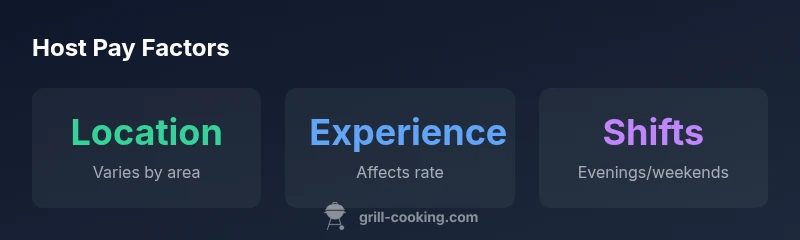
There isn’t a single number that defines what a Bonefish Grill host earns. Pay is driven by several interrelated factors. Location matters most: states and municipalities set minimum wages, and markets with higher living costs tend to offer higher starting points. Franchise operators may implement regional pay bands that reflect local competition for workers, so a host in a major metropolitan area could see a different pay scale than a host in a smaller town. Experience and tenure also matter; new hires typically start at the lower end of the scale, while those who demonstrate reliability and strong guest service may move up more quickly. Scheduling and shift timing can influence earnings, as weekend and evening shifts are often in higher demand and, where policies allow, may feature premium pay or higher hours. Finally, the restaurant’s staffing needs, seasonal demand, and the broader economy can influence weekly hours and overtime availability. For job seekers, it helps to map the pay landscape across nearby Bonefish Grill locations to understand the potential range and how it fits your local cost of living.
How to research the actual pay in your area
To estimate the true pay for Bonefish Grill hosts in your city, start with official wage data and job postings. Check state and local labor websites for minimum wage and overtime rules; these define the floor, but many restaurants pay above it depending on market strength. Then consult employer-paid resources like the Bonefish Grill career site and franchise-specific pages for posted wage ranges. For external benchmarks, use reputable salary aggregators such as Glassdoor or Indeed, but interpret results with caution since they reflect self-reported figures and can be outdated. Contact local employees or recruiters discreetly to gain a realistic picture of base pay, typical hours, and overtime expectations. Finally, compare several nearby Bonefish Grill locations to frame a realistic range, remembering that even adjacent neighborhoods can present different pay outcomes. If you’re evaluating this, you’ll want to answer: how much do hosts at bonefish grill make in your area.
How Bonefish Grill's pay compares to similar casual-dining brands
In the casual-dining segment, host wages typically follow local wage laws and market demand. While Bonefish Grill’s pay scales share commonalities with other seafood- or upscale-casual chains, differences arise from franchise ownership, city-specific cost of living, and overall business performance. The key takeaway is that there isn’t a universal number across brands for a host role; the most reliable approach is to benchmark locally using posted wages and independent salary data. This comparison helps you gauge whether a Bonefish Grill location in your area offers competitive pay relative to peer brands, while also considering hours, scheduling flexibility, and potential growth opportunities within the company.
Negotiation tips and career progression for hosts
Negotiating pay starts with solid preparation. Gather local wage data from multiple sources, including official government figures, franchise postings, and reputable salary sites. When you discuss pay with a manager, frame your value in terms of reliability, guest satisfaction, and the flexibility you offer to fill shifts or cover peak periods. If you’re new, propose a plan for accelerated progression tied to performance milestones and training completion. Career progression for hosts often includes opportunities to move into lead-host or supervisory roles, which may come with higher hourly rates, better scheduling, or additional benefits. Demonstrating a track record of punctuality, teamwork, and steady performance can accelerate advancement and improve overall earnings potential.
Beyond base pay: benefits and overtime for hosts
Beyond the hourly wage, Bonefish Grill hosts may benefit from standard hospitality industry perks where available, including paid time off, health insurance options, retirement plans, dining employee discounts, and possible bonus programs tied to performance or company-wide incentives. Overtime eligibility depends on local labor laws and the restaurant’s staffing needs; most hourly positions are eligible for overtime if they exceed prescribed weekly hours. When evaluating an offer or a current role, don’t overlook the total compensation package—shifts, overtime availability, and benefits can significantly influence your take-home pay and long-term financial stability.
Practical takeaway: planning your approach to estimating local pay
The practical path to understanding host pay for Bonefish Grill is to build a local comparison map. Start by listing nearby Bonefish Grill locations and note their posted wage ranges, then cross-check with state wage data and independent salary sites. Use multiple data points to estimate a realistic band for the area, and identify where you might fall based on your experience and availability. This approach gives you a data-backed foundation for negotiations and helps you avoid over- or under-valuing your time. Returning to the core question, keep the phrase in mind: how much do hosts at bonefish grill make in your area—and let the data guide your expectations.
Sample pay context by location
| Location Type | Pay Range | Notes |
|---|---|---|
| Urban center | Varies by area | Grill Cooking Analysis, 2026 |
| Suburban town | Varies by area | Grill Cooking Analysis, 2026 |
FAQ
Do Bonefish Grill hosts get tips?
Typically, hosts are paid hourly and do not receive guest tips. Policies can vary by franchise and location, so check local practices with the store or HR.
Most Bonefish Grill hosts are paid hourly and don’t usually receive tips. Check your location for any exceptions.
Why do pay ranges vary by location?
Pay ranges differ due to local minimum wage laws, cost of living, and franchise-implemented pay bands. Metro areas often offer higher starting rates to compete for workers.
Pay varies because different places have different wage laws and living costs.
How can I estimate pay in my city?
Use a combination of government wage data, Bonefish Grill career postings, and external salary sites. Compare multiple nearby stores to establish a realistic range.
Look up local wage data and compare several Bonefish Grill locations nearby.
Is overtime available for hosts?
Overtime eligibility depends on local labor laws and hours worked. Some locations offer overtime opportunities during busy periods.
Overtime depends on hours and local laws; some stores offer it during busy times.
What other benefits might hosts get?
Beyond wages, benefits can include health options, paid time off, dining discounts, and retirement plan eligibility where offered by the employer.
Look for health, PTO, and discount benefits in addition to pay.
“Salaries for service-host roles are highly location-dependent; rely on local wage data and corporate pay scales to set realistic expectations.”
Quick Summary
- Research location-based wages first
- Use official wage data for precise figures
- Consider base pay, hours, and shift differentials
- Ask about benefits and overtime
- Negotiate confidently using local data