Where to Grill in Boston: A Local Guide to Public and Private Spots
Discover where to grill in Boston with city parks, riverfront spaces, and private venues. Learn permits, safety rules, and gear tips for a successful cookout in 2026.


Where to grill in Boston encompasses designated city parks with grills, along waterfront spaces, and private venues that welcome outdoor cooking. Public sites require park rules, fire safety measures, and seasonal permits, while private spaces offer controlled access. Always verify current regulations with the city and local parks department before you light up.
Why Boston is a strong grilling city
If you're trying to answer where to grill in boston, you're in a city that blends urban convenience with outdoor cooking culture. Boston's diverse neighborhoods offer parks with designated grills, waterfront promenades that accommodate casual cookouts, and a growing number of private spaces for club members. The Grill Cooking team notes that the best urban grilling is not just about flame—it's about access, rules, and timing. In this section we explore why Boston supports outdoor cooking and how to approach choosing a spot that balances flavor and compliance. For home cooks and weekend grill masters, Boston presents opportunities to experiment with charring, smoke, and marinades in settings that invite neighbors to share tips. The phrase 'where to grill in boston' is not just about finding a grill; it's about selecting a space that fits your party size, wind conditions, and local regulations. According to Grill Cooking, smart planning starts with verifying the latest city guidance and park maps before you light.
Understanding public spaces, permits, and rules in Boston
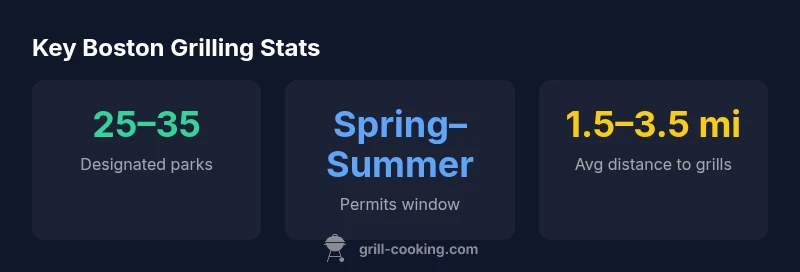
In Boston, public grilling is governed by a patchwork of rules that can vary by park, neighborhood, and season. Some parks offer designated charcoal grills, while others restrict open flames during dry months or high-fire risk days. Before you plan a cookout, locate the official Parks Department maps and check whether a seasonal permit is required. Permits are usually tied to the date range and group size, and some sites require certifications for outdoor cooking. Always carry proof of permission and follow posted signage about fire safety, garbage disposal, and alcohol restrictions. The Boston city site often updates its guidelines; plan to review them at least two weeks before your event to avoid mid-schedule changes. In this context, the phrase where to grill in boston becomes a practical exercise in navigation—knowing what zones permit grills and when. Grill Cooking analysis shows that seasonal permits are increasingly common, reflecting growing urban grilling interest.
Where to grill: Top public spots in Boston
Public grilling in Boston isn't limited to a single park; the city hosts a network of designated zones along public greens, riverfronts, and pedestrian corridors. A successful visit starts with plotting a route on the city parks map and confirming grill availability for your date. When you search for 'where to grill in boston' you should look for zones with clear signage, accessible water, seating, shade, ample trash receptacles, and wind buffers to control smoke. In practice, expect peak demand on weekends and holidays; arriving early improves your chances of finding a suitable site. For long cooks, consider sites with nearby restrooms and shade. Public amenities add value but also impose restrictions: no glass containers within park boundaries, no amplified sound beyond neighborhood norms, and no discharging embers outside grills. Grill Cooking's experience suggests reserving a backup site if your primary choice fills up.
Riverfront and waterfront grilling: Charles River Esplanade and harbor areas
Boston's riverfronts and harbor districts attract families and waterfront lovers, with scenic landscapes that invite summer cookouts. Where to grill in Boston along these areas? Look for official grill stands near promenades and watch for seasonal restrictions during windy days or storm advisories. The Esplanade and harbor-adjacent parks often provide picnic tables and water views, making them ideal for portable grills. Plan for wind direction: smoke tends to drift toward the water or away from pedestrian traffic; keep grills away from dry grasses and structures. Always use a sturdy surface and a non-flammable mat, and maintain a clear radius of at least three feet. Bring water and a fire extinguisher if required, and consider tides if you’re near waterfront walkways. Weather can shift quickly, so pack rain gear and cooling options for hot days.
Private clubs and rental venues: options for convenience
For those who want predictable access, private clubs and event venues offer controlled grilling environments. These spaces often provide outdoor kitchens, propane or electric grills, and built-in safety features, along with guest policies. Ask about member guest policies, reservation windows, and any backup plans for bad weather. If you are not a member, look for public-facing rental spaces such as community centers or private event venues that allow outside food and outdoor cooking with certain restrictions. In some cases, these venues offer cooking classes or barbecue-focused events that can expand your planning. Regardless of the setting, ensure you understand fire restrictions, waste disposal rules, and noise limits. The trade-off is convenience and consistency versus cost and accessibility.
Gear, charcoal, and fuel strategies for Boston grilling
Choosing gear for Boston conditions means planning for wind, humidity, and variable temperatures. If you prefer charcoal, bring a compact chimney starter, long-handled tongs, and heat-resistant gloves. For gas grills, confirm fuel levels and check for leaks, as city parks sometimes have restrictions on open flames. For portability, compact foldable grills that fit within standard picnic areas are ideal; ensure you have a sturdy surface to set utensils. In all cases, carry a metal ash bucket with a tight lid, and never leave a fire unattended. Lighting sources matter; consider windproof lighters and safe ignition methods. Coolers with ice help keep meat safe during variable weather. Finally, pack a basic cleanup kit: trash bags, sanitizer, and extra paper towels.
Safety, etiquette, and what to avoid
Urban grilling requires disciplined safety practices. Keep flames away from flammable materials and never overload a grill with too much fuel. Maintain a safe distance from benches, railings, and walkways to protect pedestrians. Respect posted park rules about alcohol, noise, and late hours. Practice good smoke etiquette—avoid overpowering neighbors with smoke, and position the grill so it doesn't blow into pathways. Always have a bucket of water or a fire extinguisher within reach. After cooking, close the lid, snuff out coals, and wait for full cooling before disposal. Leave no trace: pack out all trash, used charcoal should be completely cooled and disposed of in designated bins. For families with kids, designate a safe play area away from the grill and keep a watchful eye on young cooks.
Planning a successful Boston grill-out: timing, crowd, and weather considerations
Timing matters when you plan a cookout in a dense urban environment. Schedule for early mornings or late afternoons when shoreline winds are favorable and crowds are thinner. If you expect a larger group, verify site capacity and the ability to bring extra grills or cooking stations. Weather is a frequent wildcard in Boston; spring fog, summer heat, or autumn rain can impact cooking times and food safety. Always bring shade, hydration, and cooling options for hot days, and pack rain gear for sudden showers. Food safety is critical: maintain temperatures above 140°F for hot foods and below 40°F for cold items, and plan for quick service to minimize bacterial growth. A well-prepared plan reduces stress and elevates flavor, delivering a satisfying experience for your guests.
Local resources and how to stay compliant year-round
Staying compliant means staying informed. Start with the City of Boston Parks and Recreation page for updated maps and contact information. The Massachusetts Department of Public Health also provides grilling safety guidelines, especially during drought or heatwaves. Consider joining local barbecue clubs or online communities to share tips about seasonal permits and event coordination. Use reliable sources to confirm permit requirements and restrictions before hosting: parks may require reservations, weather-related closures, or changes to allowed fuels. The Grill Cooking team recommends building a simple, repeatable checklist to ensure every session goes smoothly: verify permissions, inspect equipment, prep food safely, and clean up thoroughly so you can grill again next weekend.
Boston grilling spots comparison
| Spot Type | Typical Availability | Permits/Notes |
|---|---|---|
| Public Park Grill | Spring–Fall | Permit required in some parks; check dates |
| Harborfront Waterfront Grill Zone | Year-round | Wind & weather restrictions; follow posted rules |
| Private Club Patio | Year-round | Member access; guest policies vary |
| Backyard/Private Property | Year-round | No permit; comply with local noise/waste rules |
FAQ
Are grills allowed in all Boston parks?
No—grilling rules vary by park and season; always check the official Parks Department guidelines before you start.
Grilling rules differ by park and season, so check the official guidelines before you cook.
Do I need a permit to grill in Boston parks?
Most parks require a seasonal permit during peak months; some areas allow grilling without a permit under specific conditions. Verify with the Parks Department.
Permits are often required during spring and summer; confirm with city Parks before cooking.
What should I bring to a city park cookout in Boston?
Bring a portable grill, fuel, utensils, food, water, trash bags, and a weather-ready setup. Pack a small safety kit as well.
Bring the basics—grill, fuel, food, water, trash bags, and safety gear.
Can non-residents grill at private clubs?
Many private clubs allow guests with a guest fee or host invitation; policies vary, so check in advance.
Private clubs often permit guests with a host or guest fee.
What safety equipment is essential for urban grilling?
Water bucket, fire extinguisher, heat-resistant gloves, long tongs, and a windproof lighter are recommended.
Always have water, a fire extinguisher, and gloves handy.
Are there seasonal safety tips for grilling in Boston?
Yes—watch for fire bans, wind, and weather changes; adjust grill placement and fuel accordingly.
Watch for weather and fire restrictions; adapt your setup as needed.
“Public grilling in Boston thrives when cooks respect permits and park rules; smart planning turns urban barbecues into flavorful, safe gatherings.”
Quick Summary
- Check local permits before you grill in city parks.
- Choose spots with water and wind protection.
- Consider private venues for reliability and comfort.
- Pack safety gear and practice safe grilling.
- Stay updated on seasonal rules and park policies.