How to Fix Grilled Chicken: Juicy, Evenly Cooked Every Time
Learn practical, step-by-step methods to fix grilled chicken that stays juicy, cooks through, and tastes great. Troubleshoot heat, marinades, temps, resting, and safety for dependable results.


By the end, you’ll know how to fix grilled chicken so it stays juicy, cooks evenly, and tastes great every time. You’ll learn how to troubleshoot common issues, manage heat, and verify safe internal temperature with confidence. This quick answer previews the steps below and sets up the essential tools, timing, and safety notes you’ll want before you start.
Why fixing grilled chicken matters
Grilled chicken is a staple in many backyards, but getting consistent results can be tricky. Common culprits include too-high heat that sears the outside while leaving a pale, underdone center, or too-long cooking that dries out lean breast meat. According to Grill Cooking, mastering heat control and timing is the cornerstone of reliable results. When you fix these elements, you reduce the risk of dry, stringy chicken or uneven doneness and unlock the full flavor of the meat. Whether you’re working with skin-on breasts, bone-in thighs, or boneless cuts, the same principles apply: control heat, manage time, and rest briefly to lock in juices. In the sections below you’ll find practical, home-cook-friendly techniques you can apply on a weekend grill or a small backyard setup. We cover equipment, temperatures, marinades, and safety so you can confidently fix grilled chicken and enjoy dependable results.
Common grilling problems and fixes
Here are the most frequent issues and actionable fixes you can apply right away. Dry meat often comes from overcooking or insufficient moisture retention. Fix: brine or marinate, use two-zone heat, and monitor internal temperature closely. Uneven doneness is usually caused by hotspots. Fix: preheat with a two-zone setup, move the chicken between zones, and finish near the cooler side. A leathery or rubbery texture usually means the skin is rendered harshly or the meat rested too long after cooking. Fix: sear briefly, then finish on indirect heat, and let rest briefly. Flare-ups are another common problem; they char the exterior before the interior is done. Fix: keep lid closed during high-heat sears, use tongs to reposition, and avoid oily marinades that drip onto flames. Finally, bone-in pieces take longer; plan for longer exposure to heat and verify with a thermometer rather than relying on time alone.
Heat management: direct vs indirect heat
A two-zone setup is your best friend for fixing grilled chicken. The hot zone (direct heat) sears the surface, creates a flavorful crust, and starts the Maillard reaction. The cooler zone (indirect heat) finishes cooking through without scorching the outside. Set your grill to roughly 425–475°F (220–245°C) for the direct sear, then move the chicken to 325–375°F (165–190°C) to finish. If you’re using a charcoal grill, bank the coals to create distinct heat zones; with a gas grill, turn on one burner or two adjacent burners and leave the rest off. Maintain lid coverage to trap heat and avoid flare-ups by removing excess marinade or oil that could drip into flames. A properly managed two-zone method reduces hot spots and gives you consistent doneness across thick and thin pieces.
Marinades, brines, and seasoning for moisture
Moisture retention starts before the grill hits heat. A light brine or marinade can dramatically improve juiciness, especially for chicken breasts. For brining, a simple salt-and-water solution for 15–30 minutes can suffice; longer brines may impart overly salty flavors. Marinades with a balanced mix of salt, oil, acid (like citrus or vinegar), and aromatics help keep meat moist while imparting flavor. If you prefer dry seasoning, apply a rub that includes some salt to help retain moisture. Remember to pat the surface dry before grilling to promote a clean sear and to avoid steaming the meat. Always bring meat closer to room temperature for even cooking and reduce the temperature shock when it hits a hot grill.
Timing strategies for different chicken parts
Bone-in thighs and drumsticks require longer exposure to heat than boneless breasts. When using a two-zone setup, sear bone-in pieces over direct heat for 2–3 minutes per side to develop crust, then finish over indirect heat until the internal temperature reaches 165°F (74°C). Boneless breasts cook faster; target a 6–10 minute total cook time, flipping once for even browning. For very thick breasts, consider butterflying to reduce thickness or using a stage finish on indirect heat. Always verify with an instant-read thermometer rather than relying solely on time estimates. Thickness, bone presence, and skin-on vs skinless affect cook time; adjust as needed and rely on internal temperature for safety and juiciness.
Temperature check and carryover
A reliable thermometer is essential for fixing grilled chicken. Insert it into the thickest part without touching bone. Remove from heat when it reaches 160–162°F (71–72°C); carryover cooking will bring it to the safe 165°F (74°C) as you rest. Resting for 5–10 minutes allows juices to redistribute and prevents a laser-thin slice of hot flesh from leaking juices. If you’re close to the target and the crust is still pale, give it a quick final sear or finish with a brief burst of direct heat, watching carefully to avoid scorching. Consistent temperature management and a quick rest are the keys to juicy results.
Resting, slicing, and serving for maximum juiciness
Let the chicken rest after removal from heat to let the juices redistribute. A 5–10 minute rest works well for most pieces; longer rest times can dry out thinner cuts. Slice against the grain to maximize tenderness and present slices with a slight angle to expose the juicy interior. For skin-on pieces, you can lightly brush with a warm glaze or oil just before serving to restore shine and extra flavor. If you’re serving a mix of cuts, consider dividing the resting priority, splitting thicker thighs from breasts to optimize texture across the plate.
Special cases: bone-in vs boneless, skin-on vs skinless
Bone-in pieces take longer to reach a safe internal temperature, so they benefit from an initial sear to develop crust, followed by finishing on indirect heat. Skin-on pieces are more forgiving because the skin protects moisture and provides flavor; remove skin only if dietary needs require it, then baste for extra flavor. For skinless breasts, shorter cook times demand careful heat control to avoid drying out the meat. In all cases, finish with a temperature check and rest before cutting to maximize juiciness.
Troubleshooting cheat-sheet
- Problem: Dry, overcooked chicken. Fix: lower heat, shorten direct-sear time, finish on indirect heat, and rest longer. - Problem: Uneven doneness. Fix: establish two heat zones, move meat between zones, and rotate pieces. - Problem: Flare-ups burning crust. Fix: keep lid closed, wipe excess marinade, and move pieces away from flames. - Problem: Undercooked thick pieces. Fix: give extra time on indirect heat with the lid closed and check with a thermometer. - Problem: Skin peeling or tearing. Fix: pat dry before cooking, avoid excessive oil, and use a gentle sear.
Safety and cleanup
Food safety matters for grilled chicken. Always wash hands and utensils after handling raw chicken, sanitize cutting boards, and store leftovers promptly. After cooking, clean the grill grates to remove burnt bits and prevent cross-contamination. Cool the grill before removing ash or cleaning if you grill with charcoal. Use heat-resistant gloves and long-handled tools to keep yourself safe from flare-ups. A clean, well-maintained grill makes fixed grilled chicken easier and more enjoyable each time.
Authority sources
- Authority sources provide guidance on safe handling and cooking temperatures for poultry. For example, the FDA and USDA FSIS publish poultry safety guidelines on safe internal temperatures and handling practices. - CDC food safety resources offer general keep-food-safe principles applicable to grilling. - University extension resources (edu) often translate government guidelines into practical, kitchen-friendly instructions.
Tools & Materials
- Two-zone grill setup (hot zone + cooler zone)(Essential for searing and finishing without scorching)
- Instant-read meat thermometer(For accurate doneness (target 165°F / 74°C))
- Tongs and spatula(For turning without piercing meat)
- Basting brush or spray bottle(Optional for light glaze)
- Cutting board and sharp knife(For slicing after rest)
- Oil or nonstick spray(Prevents sticking on grate)
- Grip gloves or heat-resistant mitts(Protect hands during high heat)
- Meat brine container or resealable bag(If brining for moisture)
Steps
Estimated time: 30-60 minutes
- 1
Set up two-zone grill
Create a hot sear zone and a cooler finishing zone. This prevents scorching while allowing thorough cooking for thick pieces. Preheat both zones and keep the lid closed during the sear.
Tip: Label each zone with a towel or marker to avoid cross-use. - 2
Season and prep chicken
Pat dry, apply salt and seasonings, and bring to room temperature for even cooking. If using a marinade, apply and rest in the fridge per recipe, then dry surface before grilling.
Tip: Dry surface helps achieve a better crust. - 3
Preheat and monitor heat
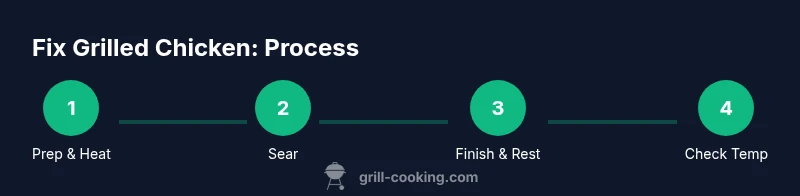
Preheat the grill to the target temperatures. Use two zones to control direct heat for searing and indirect heat for finishing, then monitor with a thermometer.
Tip: Avoid opening the lid constantly; momentum matters for even cooking. - 4
Sear on direct heat
Sear each side briefly to develop a crust without overcooking the interior. Use tongs for flipping and avoid piercing the meat.
Tip: Aim for a deep brown crust, not a blackened one. - 5
Finish on indirect heat
Move pieces to indirect heat to finish cooking through. Cover the grill to trap heat and maintain a steady pace.
Tip: Check internal temperature close to finish; remove just before target to account for carryover. - 6
Check temperature and rest
Probe the thickest part; when it reads 160–162°F (71–72°C), remove and rest to 165°F (74°C). Rest 5–10 minutes to redistribute juices.
Tip: Resting is non-negotiable for juiciness. - 7
Slice and serve
Slice against the grain for tenderness and arrange on a warm plate. Lightly brush with glaze if desired and serve promptly.
Tip: Cutting against the grain makes slices more tender. - 8
Clean up and store
Close the grill, cool, and safely store leftovers within 2 hours. Clean grates to reduce buildup for next time.
Tip: A clean grill improves flavor and cooking consistency.
FAQ
What is the best temperature for grilling chicken?
Sear over direct heat to develop crust, then finish over indirect heat. Keep the grill around 425–475°F for searing and 325–375°F for finishing.
For best results, sear on high heat to lock in juices, then move to a cooler area to finish cooking.
Should I brine or marinate chicken before grilling?
Brining adds moisture for lean cuts; marinating adds flavor and can help with juiciness. Both can improve results when done correctly.
Brine for moisture, marinate for flavor; don’t overdo either, especially with salt.
How do I prevent flare-ups during grilling?
Keep a safe distance from the flames, use two-zone heat, and avoid marinades with high sugar content near the heat. Have a spray bottle handy for immediate control.
Keep the lid down when flames rise and move the meat away from hotspots.
Why is my chicken dry even after following steps?
Overcooking is the most common cause. Use a thermometer and remove air slightly before 165°F, letting carryover reach the final temp during rest.
It’s usually overcooked; pull a little early and let it rest to finish with carryover.
Can I grill chicken without a two-zone setup?
A two-zone setup is recommended for even cooking and easier control. If you only have one zone, monitor closely and flip frequently to avoid scorching.
Two-zone heat is ideal, but you can grill with one zone if you are vigilant.
How long should I rest chicken after grilling?
Aim for 5–10 minutes for most cuts; thicker pieces may benefit from a slightly longer rest. Resting ensures juiciness and even distribution of juices.
Resting helps keep the chicken juicy when you slice it.
Is skin-on chicken easier to fix on the grill?
Yes. Skin helps retain moisture and adds flavor. If you prefer skinless, reduce cook time slightly and use a careful finishing sear to prevent dryness.
Skins offer moisture retention and flavor; skinless needs careful timing.
Watch Video
Quick Summary
- Control heat with two zones for even cooking.
- Use a thermometer to hit 165°F safely.
- Rest before slicing to maximize juiciness.
- Adapt times for bone-in vs boneless cuts.
- Clean the grill to ensure consistent results.