Why Is My Grilled Chicken Tough? A Troubleshooting Guide for Home Cooks
Discover why is my grilled chicken tough and fix it fast with expert tips from Grill Cooking. Learn heat control, moisture strategies, and timing to cook juicy, tender chicken every time.


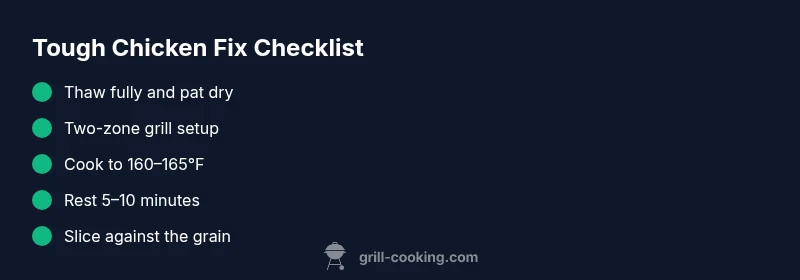
Why is my grilled chicken tough? The two most common culprits are overcooking and moisture loss, plus thawing or handling issues. Quick fix: set up a two-zone grill, preheat to 350–450°F, cook to 160–165°F, then rest 5–10 minutes. For extra tenderness, brine or marinate briefly and slice against the grain.
Why the Question "why is my grilled chicken tough" Perplexes Home Cooks
When home cooks ask why is my grilled chicken tough, the answer usually points to heat management and moisture retention. Chicken texture is highly sensitive to temperature and handling. Small changes in prep or cooking technique can turn a chewy piece into a juicy one. Grill Cooking encourages a practical, evidence-based approach: identify the culprit, apply a targeted fix, and prevent recurrence with simple habits. This guide uses clear steps, real-world tips, and safe practices to help you turn tough grilled chicken into a crowd-pleaser.
The Core Factors: Heat, Moisture, and Time
Toughness on the grill typically springs from three intertwined factors: heat levels, moisture loss, and timing. If the grill runs too hot or you cook too long, proteins contract and squeeze out moisture, resulting in a dry, chewy bite. Conversely, insufficient heat can leave the outside pale and undercooked, producing a different kind of toughness. The best strategy combines a two-zone setup, accurate temperature control, and mindful resting. Understanding these levers gives you consistent, tender results with less guesswork, no matter the cut or thickness. Grill Cooking analysis shows that mastering heat zones and resting times reduces toughness and yields juicier chicken.
Quick-Fix Tools You Can Use Mid-Cook
-
Use a thermometer to track internal temp. Expect 160–165°F as a safe target before resting. - Quick checks: press lightly and observe juices; if they run clear and the center is opaque, you’re close to done. - If you’re unsure, remove from heat when you’re near 160°F and rest to finish via carryover cooking.
-
Consider a two-zone setup: hot direct heat for a quick sear, then move to indirect heat to finish gently. - This avoids overcooking the exterior while the interior catches up.
-
Rest the meat off the heat for 5–10 minutes. Resting lets juices redistribute, improving tenderness and slice-friendly texture.
Preparation Habits That Prevent Tough Chicken
Proper thawing, patting dry, and appropriate portioning lay the foundation for tenderness. Start with fully thawed chicken to prevent uneven cooking. Pat dry to promote a good sear and reduce moisture loss. For thicker pieces, consider pounding to uniform thickness or splitting into smaller portions to promote even cooking. Moisture management begins before you hit the grill with proper prep and handling strategies.
Step-by-Step Fixes for the Most Common Cause
- Set up a two-zone grill and preheat to 350–450°F. - This creates a fast-searing zone and a gentle finishing area to avoid overcooking.
- Dry brine or marinate (short, not overly long). - A light brine adds moisture; avoid heavy marinades that can rely on sugar and salt to mask texture rather than improve tenderness.
- Grill to 160–165°F internal, then rest. - Avoid piercing the meat; let juices reabsorb during rest for a juicier bite.
- Slice against the grain and serve after a brief rest. - Cutting across fibers shortens the bite and keeps it tender.
- If texture remains chewy, finish with a quick pass over direct heat for 30–60 seconds per side. - This seals the surface without drying the interior.
- Reassess portion size and thickness for next cook. - Uniform pieces cook evenly and stay tender.
Common Mistakes and How to Avoid Them
- Overcooking is the most frequent cause of toughness. Use a thermometer and remove when close to target.
- Skipping resting time leads to juiciness loss. Rest before slicing for best texture.
- Searing too aggressively or using a dull grill reduces surface tenderness. Preheat and keep grill clean for a better crust.
Steps
Estimated time: 25-40 minutes
- 1
Set up two-zone grill
Preheat one zone to high for a quick sear and the other to moderate heat for finishing. This prevents the exterior from overcooking while the interior reaches the right temperature.
Tip: Keep the lid closed as much as possible to maintain even heat. - 2
Prepare and hydrate the chicken
Ensure chicken is fully thawed, pat dry, and lightly brine or marinate to boost moisture without masking texture.
Tip: Pat dry after brining to promote a good sear. - 3
Cook to 160–165°F internal
Place the chicken on the hot zone briefly, then move to the cooler area to finish with indirect heat. Use a thermometer for accuracy.
Tip: Remove from heat just before 165°F to allow carryover cooking. - 4
Rest and slice properly
Let the chicken rest for 5–10 minutes to reabsorb juices, then slice against the grain for tenderness.
Tip: Slice after resting to preserve moisture. - 5
Optional final sear
Give a quick, 30–60 second sear on each side if you want a crisper crust without drying the center.
Tip: Monitor closely to avoid drying out the meat. - 6
Evaluate and adjust next cook
If texture is still off, adjust piece thickness, marinade duration, or heat management for the next batch.
Tip: Keep notes on thickness and temps for consistency.
Diagnosis: Grilled chicken turns out tough or chewy
Possible Causes
- highOvercooking or cooking with too-high heat
- mediumInadequate moisture due to insufficient brining/marinade or poor thawing
- lowUneven thickness or improper resting leading to carryover cooking
Fixes
- easyUse a two-zone grill and monitor internal temperature with a thermometer; target 160–165°F.
- easyApply a light brine or marinade to boost moisture before grilling; rest after cooking.
- easyLet chicken rest 5–10 minutes after removing from heat and slice against the grain.
FAQ
What internal temperature should grilled chicken reach to be safe and juicy?
Grilled chicken should reach 165°F internally for safety. Juiciness improves with proper resting and careful cooking on a two-zone grill.
Aim for 165 degrees, then rest to keep it juicy.
Should I brine or marinate before grilling to prevent toughness?
Brining adds moisture and can significantly reduce toughness; marinating can add flavor and some moisture but watch salt and sugar.
Brine for moisture, marinate for flavor, but don’t overdo either.
Is under thawing a cause of toughness?
Yes, incomplete thawing can lead to uneven cooking and texture issues. Thaw completely and pat dry before grilling.
Make sure it’s fully thawed before you start grilling.
How long should I rest grilled chicken?
Rest chicken for 5–10 minutes after cooking. Resting allows juices to redistribute and improves tenderness.
Let it rest for about 5 to 10 minutes.
What’s the best way to slice chicken to keep it tender?
Slice perpendicular to the muscle fibers (against the grain) to maximize tenderness and juiciness.
Slice across the grain for the most tender bite.
Watch Video
Quick Summary
- Prepare two heat zones for even cooking
- Cook to 160–165°F and rest before slicing
- Moisture management (brine/marinade) boosts tenderness
- Slice across the grain for maximum tenderness