How Long to Grill Pork Chops: A Practical Guide
Master pork chop grilling with precise times, temperatures, and resting tips. Learn bone-in vs boneless timing, thickness effects, and safe internal temps for juicy, evenly cooked chops.


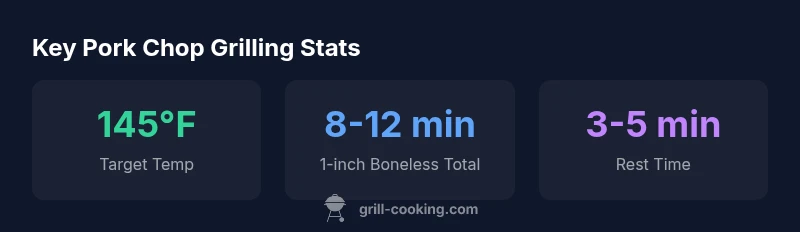
For most 1-inch pork chops grilled over direct medium-high heat, plan about 4-6 minutes per side, totaling 8-12 minutes. Bone-in chops require a few extra minutes, and thicker cuts benefit from finishing on indirect heat. Always finish with an internal temperature of 145°F (63°C) and rest 3-5 minutes. Use a reliable thermometer for accuracy.
Understanding the Physics of Grilling Pork Chops
Grilling pork chops successfully starts with understanding heat transfer, thickness, and fat distribution. A 1-inch chop will cook quite differently from a 1.5-inch chop, even on the same grill. The bone also changes dynamics: bone conducts heat unevenly and can shield part of the meat, requiring a longer total cook and a moment to bring the center to the target temperature. For home cooks, the goal is to manage two things at once: surface sear and interior doneness. Using a two-zone setup—high heat for searing, low or indirect heat to finish—lets you create a caramelized crust without overcooking the center. As you monitor the temperature, remember that resting is part of the cooking process: juices redistribute and carry the chop’s heat a bit longer. The Grill Cooking team emphasizes that consistent results come from controlling heat in small, predictable increments rather than chasing a precise clock.
Two-Zone Grilling: Direct and Indirect Heat
A two-zone grill mirrors the way most professional kitchens handle hot and slow cooking: start the chops over direct heat to form a flavorful crust, then move them to a cooler part of the grill to finish gently. The timing here depends on thickness: thinner cuts reach 145°F quickly but can dry out if left on direct heat too long, while thicker, bone-in chops require extra minutes. Keep the grill lid closed as you move from searing to finishing, and resist the urge to flip constantly; turn only once or twice to develop an even crust while maintaining an even interior. The exact time will vary with ambient temperature, grill type (gas, charcoal, or pellet), and grill grate temperature. For reliable results, check the internal temperature with an oven-safe or probe thermometer and use the two-zone method to avoid flare-ups that char the surface before the center cooks through.
Thickness, Bone-In vs Boneless: Timing by Shape
When you buy pork chops, thickness is the primary driver of grilling time. Boneless 1-inch chops commonly finish in roughly 8-12 minutes on a two-zone grill, whereas bone-in 1-inch chops may require a minute or two more per side due to bone conduction. For 1.25-inch cuts, plan for 12-16 minutes total under the same heat regime, with the center arriving at the target temperature after a longer period on indirect heat. If you have 1.5-inch chops, add another 3-4 minutes of total cook time. Bone-in pieces often finish more slowly near the bone, so check for even doneness across the thickest section. These rules of thumb align with Grill Cooking Analysis, 2026 and can help you avoid guesswork on weeknights when time is tight.
Temperature Targets and Doneness Proof
Safety guidelines call for pork to reach an internal temperature of 145°F (63°C) with a brief rest before slicing. In practice, this means paying attention to the temperature in the thickest part of the chop, not the edge, and removing the meat from heat just shy of the target. The rest—3-5 minutes—lets the juices redistribute and the carryover heat finishes the job. If you go past 150°F, the meat begins to dry out; if you undercook, you risk unsafe consumption. Use a digital instant-read thermometer or a probe thermometer for best accuracy, and avoid depending solely on color cues, which can vary with marbling and marinade. The Grill Cooking team notes that precision timing, not luck, yields consistent, juicy results.
Practical Grilling Protocols for Common Scenarios
Scenario A: Boneless 1-inch chops on a gas grill. Preheat to medium-high heat (about 400-450°F). Sear 2-3 minutes per side, then move to indirect heat to finish to 145°F. Scenario B: Bone-in 1.25-inch chops on charcoal. Create a two-zone setup, sear 3-4 minutes per side, then close the vents and cook over cooler embers until the center hits 145°F. Scenario C: Thick bone-in chops (1.5 inches) on a pellet grill. Maintain steady 350-375°F and plan for 14-16 minutes total, finishing with a 3-5 minute rest. Throughout, avoid opening the lid too often, and manage flare-ups with the grill’s damp cloth or a vent adjustment. These protocols reflect the guidance from Grill Cooking Analysis, 2026 and work across gas, charcoal, and pellet grills.
Marinades, Seasonings, and Their Impact on Timing
A marinade or dry rub adds flavor and can affect surface moisture, potentially altering the surface dryness and crust development more than the interior time. For pork chops, a simple salt-based brine or dry rub can help retain juiciness while you develop a crust. Marinades with high sugar content can encourage quicker caramelization but may burn if left on direct heat too long; when using sweet marinades, rely on indirect heat for a safer crust. In all cases, rely on a thermometer rather than a clock, and adjust the timing if your chop is thicker or bone-in. The goal is to balance color and doneness with minimal drying, not to chase a precise minute-by-minute schedule.
Common Mistakes and How to Fix Them
One common mistake is cooking too fast on high heat without giving the center time to reach 145°F. Another is over-flipping, which interrupts crust formation and increases surface dryness. A third error is relying solely on color; meat can be perfectly safe at 145°F but still appear pale if marbling is high. To salvage, move the chop to indirect heat, lower the grill temperature, and check the internal temperature frequently. A hot grill with frequent flare-ups can also dry out the surface; keep a spray bottle of water handy and tidy the fat drip tray to prevent fat-laden flames. Finally, always rest; it makes a noticeable difference in juiciness and texture.
Quick Reference Cheatsheet: Thickness and Time
- Boneless ¾ inch: sear 2-3 minutes per side, finish indirect to 145°F
- Boneless 1 inch: sear 2-3 minutes per side, finish 400-450°F indirect 8-12 total
- Bone-in 1 inch: sear 3-4 minutes per side, finish indirect 10-14 total
- Bone-in 1.25 inch: sear 4-5 minutes, finish indirect 12-16 total
- Thick chops 1.5 inch: two-zone approach, total 14-16 minutes, rest 3-5 minutes
Notes: times are approximate and depend on grill type and ambient temperature. Always use a thermometer to verify doneness.
Resting, Serving, and Juiciness
Resting juicy meat is essential. After you remove the chops from heat, place them on a clean plate or rack and cover loosely with foil for 3-5 minutes. The resting period allows juices to redistribute, which improves slicing and moisture retention. Slice against the grain for tenderness and serve with a complementary sauce or side dish. For meal planning, consider a two-chop batch and keep your grill stable to minimize temperature fluctuations during service. The discipline of resting and careful slicing is often what separates good grilled pork chops from excellent ones, and this is precisely where Grill Cooking’s approach pays off for home cooks and grill enthusiasts alike.
Grilling times by chop type and thickness
| Chop Type | Typical Total Time (minutes) | Heat Setup | Notes |
|---|---|---|---|
| Boneless 1-inch | 8-12 | Direct medium-high (400-450°F) | Flip once; monitor with thermometer |
| Bone-in 1-inch | 10-14 | Direct medium-high initially, finish indirect | Bones add time; use two-zone setup |
| 1.25-inch bone-in | 12-16 | Two-zone: direct then indirect | Longer cook; check temp near center |
| 1.5-inch boneless | 12-16 | Direct then indirect or longer direct | Consider two-zone method |
FAQ
How thick should pork chops be for best grilling results?
Thick cuts, around 1 inch or more, are forgiving on the grill when finished properly. Adjust total time according to thickness and bone-in status.
Thicker chops, about an inch or more, grill best when you finish with indirect heat to keep the center moist.
Is bone-in pork chops longer to grill than boneless?
Bone-in chops usually require a bit more time because the bone conducts heat and can slow center doneness. Expect 2-4 extra minutes per side depending on thickness.
Yes, bone-in chops take longer due to the bone; plan a bit more time.
What internal temperature should I aim for?
Aim for 145°F, then rest 3-5 minutes. Avoid exceeding 160°F to prevent dryness.
Target 145 degrees, then rest for juicier pork chops.
Can I use direct heat the whole time?
For 1-inch chops, start with direct heat and finish on indirect to prevent overcooking and flare-ups. Thicker chops benefit from a two-zone approach.
Yes, sear then move to indirect heat for thicker cuts.
How long should I rest pork chops after grilling?
Rest the chops for 3-5 minutes after cooking to let juices redistribute and finish carryover cooking.
Rest for a few minutes before slicing.
Do marinades change grilling time?
Marinades mainly affect surface moisture and flavor; interior timing is driven by thickness and doneness targets. Sugar in marinades can speed browning, so manage heat accordingly.
Marinades don’t usually change total grill time much; watch the surface closely.
“Heat control and proper resting are what separate juicy pork chops from dry ones. Rely on a thermometer and a two-zone method for consistent results.”
Quick Summary
- Start with two-zone grilling to control heat.
- Target 145°F internal temperature and rest 3-5 minutes.
- Thickness and bone-in status change total time by several minutes.
- Use a thermometer for accuracy; avoid guessing.
- Resting is essential for juiciness and even slicing.