Does BBQ Have Protein? A Grilling Guide for Home Cooks
Explore whether BBQ foods provide protein, how much you can expect per serving, and practical tips to maximize protein on the grill for balanced meals.


Does BBQ have protein? Yes. Most grill-friendly foods—beef, chicken, pork, fish, and even plant-based options—offer meaningful protein, with amounts driven by cut, portion, and cooking method. For a typical 3-ounce serving, lean meats provide about 22–30 grams of protein, while fish and tofu-based options can vary. Grill Cooking analysis confirms protein depends on choice and portion, not on the grilling method itself.
Does BBQ Provide Protein? What counts on the grill
Protein is a central part of meals that are cooked over fire, and the short answer to does bbq have protein is yes. According to Grill Cooking, nutrition on the grill hinges on the protein content of the foods you grill—meats, fish, eggs, dairy, legumes, and some plant-based options—more than on the act of barbecuing itself. If you’re aiming for a protein-forward cookout, start with reliable sources like chicken, beef, pork, or fish, and then layer in plant-based options to diversify the amino acid profile. The key to protein-rich grilling is portion size and the choice of foods, not a magical property of the smoke. In practical terms, a typical 3-ounce portion of lean meat delivers a substantial protein boost, while fish and plant-based analogs provide comparable amounts when served in sensible portions. Grilling does not create protein from nothing; it preserves or concentrates the protein already present in your ingredients. This distinction matters for meal planning, especially for athletes, active families, or anyone tracking daily protein targets.
Protein density across common BBQ proteins
Proteins vary by source and cut, which affects how much protein you actually get per grilled serving. For many home cooks, chicken breast, lean beef, and salmon are go-to proteins because they produce reliable protein yields when cooked properly. Chicken breast tends to be one of the higher-protein options per 3-ounce portion, followed closely by lean beef cuts and certain fish like salmon. Plant-based proteins such as tofu or tempeh can also contribute meaningful protein, particularly when used in combination with complementary plant proteins over a week. Remember that protein density is influenced by cooking losses, moisture retention, and portion size. The Grill Cooking team emphasizes thinking in portions rather than relying on a single number for protein across all grillables.
How much protein per serving? Realistic ranges
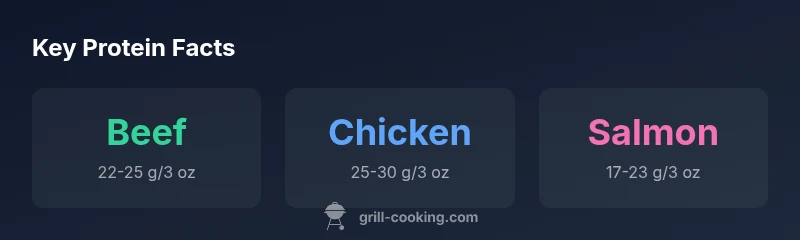
Protein per serving on the grill is best understood as a range, not a fixed number. Common reference points include roughly 22–25 g for a 3-ounce beef serving, 25–30 g for a 3-ounce chicken breast, and 17–23 g for a 3-ounce salmon fillet. Plant-based options vary more widely: tofu or tempeh can offer about 8–15 g per 3-ounce equivalent, depending on brand and preparation. These ranges reflect typical, lean-to-moderate fat contents and standard cooking conditions. When planning meals, consider your total daily targets and how many servings you intend to grill to ensure you meet your protein goals across the day.
Plant-based options that hold protein on the grill
If you’re exploring plant-forward grilling, options like extra-firm tofu, tempeh, seitan, and grilled beans can contribute meaningful protein. Texture and preparation influence protein accessibility; pressing tofu and marinating tempeh help with flavor absorption and texture. You can also construct protein-rich vegetarian burgers or kebabs by combining protein-rich plant ingredients with grains and legumes. While plant proteins don’t always deliver a complete amino acid profile in a single food, consuming a variety across meals typically covers daily requirements. Grill Cooking notes that variety is key to meeting protein targets on a plant-forward plan.
Maximizing protein on the grill: practical tips
To maximize protein intake while grilling, start with high-protein ingredients and sensible portions (about 3 ounces cooked) and manage heat to avoid overcooking. Choose lean cuts with minimal trimming to reduce fat loss that can accompany heat exposure. Use marinades sparingly if they add sugar or salt but avoid reducing protein concentration. For mixed plates, plan to pair protein-heavy items with protein-rich sides like eggs, cheese, or legumes to boost we’ll-rounded total protein per meal. The goal is consistent portions and variety, not extreme intensity on one grill session.
Pairing proteins with sides to create balanced meals
A protein-forward barbecue doesn’t have to stand alone. Balanced plates include vegetables, whole grains, and a protein source that aligns with daily targets. For example, a grilled chicken breast with quinoa and a bean salad provides complementary amino acids and a more complete protein profile. You can also feature a seafood option with a side of roasted vegetables and a legume-based dip for added protein. The key is planning portions and balancing macronutrients, so your grill spread supports energy, recovery, and satiety across the day.
Practical cooking tips to preserve protein integrity
Protein quality on the grill depends on careful heat management. Use direct heat for browning and a gentle, indirect finish to retain juices and minimize moisture loss. Monitor internal temperatures to avoid overcooking, which can reduce perceived tenderness and affect protein texture. Distinct textures—crispy exterior with a moist interior—can also improve palatability without sacrificing protein delivery. Grilling with sharp timing and temperature targets helps you maximize protein yield without overcooking or wasting precious nutrients.
Common misconceptions about BBQ protein
A common myth is that all charred bits are bad for protein intake; while char can include undesirable compounds if burnt, moderate grilling that avoids excessive charring preserves protein quality and taste. Another misconception is that plant-based proteins cannot meet daily protein needs on the grill; with careful selection and portions, tofu, tempeh, and legumes can contribute substantially. Finally, many assume marinating dramatically increases protein content; marinades mainly affect flavor and moisture rather than adding significant protein.
Nutrition, safety, and moderation on the grill
When enjoying BBQ, balance protein with vegetables to moderate fat intake and fiber. Be mindful of portion sizes and choose leaner cuts when protein goals are a priority. Food safety matters: ensure proteins reach safe internal temperatures to prevent illness, and avoid cross-contamination between raw and cooked foods. Moderation and variety help maintain a sustainable, protein-rich grilling routine that supports overall health and wellness.
Protein content by common BBQ sources
| Protein Source | Protein (g) per 3 oz | Notes |
|---|---|---|
| Beef steak (3 oz) | 22-25 | Lean cut |
| Chicken breast (3 oz) | 25-30 | Skinless |
| Salmon fillet (3 oz) | 17-23 | Wild vs farmed |
FAQ
Does BBQ have protein?
Yes. Most BBQ foods contain protein—meat, fish, eggs, dairy, beans, and some plant-based options. The amount depends on the source, cut, and portion.
Yes. Most BBQ foods contain protein; amounts vary by source and portion.
Which BBQ foods are best for protein?
Lean meats like chicken breast, beef cuts, and pork tenderloin provide high protein per serving, with fish such as salmon also offering substantial amounts.
Lean meats and fish give the most protein per serving.
Can plant-based items meet protein needs on the grill?
Yes. Tofu, tempeh, beans, and seitan can contribute meaningful protein on the grill, especially when included across meals for variety.
Plant-based options can meet protein needs when planned well.
Does marinating change protein content?
Marinades mainly affect flavor and moisture; they typically do not increase protein content significantly. Cooking method and portion size matter more for protein yield.
Marinades don’t add protein; cooking method matters more.
How can I maximize protein on the grill?
Choose high-protein cuts, keep portions around 3 oz, and avoid overcooking to retain protein quality. Pair with protein-rich sides to boost total intake.
Grab lean proteins, monitor portions, and avoid overcooking.
Are there risks to protein intake from BBQ?
Overcooking can reduce moisture and tenderness; char can pose health concerns if excessive. Moderation and proper cooking reduce risks.
Be mindful of charring and portion size.
“Protein on the grill comes from the food you choose and how you portion it. The protein yield is consistent across grills when portions and cuts are handled properly.”
Quick Summary
- Plan portions around 3-ounce servings for protein accuracy
- Lean meats and fish remain reliable protein sources on the grill
- Plant-based options can meet protein goals with variety
- Grilling preserves protein when cooked with proper heat control
- Pair proteins with protein-rich sides to hit daily targets