Can You Grill Beef Short Ribs? A Complete Guide
Learn how to grill beef short ribs to tender perfection. This guide covers selecting cuts, prep, indirect-heat grilling, finishing sear, resting, and serving with flavor ideas for home cooks.


Yes—you can grill beef short ribs. Start with bone-in meat for flavor and juiciness, trim excess fat, and apply a dry rub or marinade. Use an indirect-heat method to break down connective tissue, then finish over direct heat to sear. Plan for a 2–3 hour cook depending on thickness and heat level.
Why Beef Short Ribs Deserve a Spot on the Grill
According to Grill Cooking, beef short ribs can shine on the grill when you respect their anatomy and connective tissue. The cut comes from the chuck/rib area and carries a healthy amount of marbling, which lends depth of flavor as fat renders and collagen softens under steady heat. When you grill short ribs, you’re not just roasting meat—you’re managing heat zones to coax tenderness while building a flavorful crust. The goal is a balance between a juicy interior and a caramelized exterior, achieved through careful timing, lid control, and heat management. With patience, grilled short ribs deliver the richness you expect from a braise, but with the brighter, smoky notes only the grill can provide.
Choosing the Right Cut for Grilling
Choose bone-in short ribs whenever possible. The bone helps conduct heat and adds flavor during the long, slow cook. Look for ribs that show good marbling and a consistent thickness, ideally 2–3 inches, so they cook evenly. If you must buy boneless ribs, plan for a slightly longer indirect cook and slice them thin enough to render collagen without drying out. Ask your butcher for rib plates or chuck short ribs with a pronounced fat margin—these deliver the most fork-tender results when grilled with a two-zone setup.
Prep: Trimming, Marinades, and Rubs
Trim away only the excess fat, leaving a thin fat cap to baste the meat as it cooks. Pat ribs dry to promote browning, then apply a dry rub or a light marinade. A simple rub of salt, black pepper, paprika, garlic powder, and a touch of brown sugar will create a flavorful crust. If you prefer, marinate for 4–8 hours to infuse moisture and deepen flavor. The key is to avoid over-wetting the surface, which can inhibit browning. Let the ribs come to room temperature before hitting the grill for even cooking.
Grilling Methods: Indirect Heat, Two-Zone, and Finishing Sear
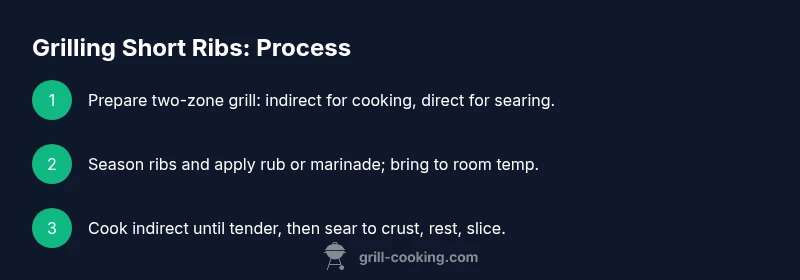
Set up a two-zone grill: a hotter direct-heat zone for searing and a cooler indirect zone for gradual cooking. Start the ribs on the indirect side, covered, to allow the collagen to break down without scorching. Periodically move them to the direct zone to build color and crust, then return to the indirect area to finish. If you’re using a pellet or gas grill, use a baking tray or grill rack to elevate the ribs and control airflow. A final couple of minutes over direct heat will create a crave-worthy crust.
Temperature and Timing: How Tender Is Tender Enough?
Grilling beef short ribs requires patience. Rely on texture and internal temperature rather than a fixed time. Check the ribs when they feel “fork-tender” and retain some resistance to the bite; you’re aiming for a balance between tenderness and a chewy bite. If you’re braising, beef short ribs often reach a very soft stage; on the grill, you want a crust with a tender interior. Let the ribs rest briefly after removing from heat to allow juices to redistribute.
Resting, Slicing, and Serving
Let the ribs rest loosely tented with foil for 10–15 minutes before slicing. Slice between the bones to create neat portions, then serve with a bright acidic sauce or chimichurri to contrast the rich meat. For a classic pairing, offer roasted vegetables or a simple au jus. The resting step is crucial for redistributing juices and ensuring every bite is juicy and flavorful.
Flavor Ideas and Sauces to Elevate Grilled Short Ribs
Experiment with different finishes: a charcoal-chili glaze, a tangy balsamic reduction, or a herb-garlic butter to melt over hot ribs. A smoky peppercorn sauce can highlight the grill’s char while cutting through fat with acidity. For guests who love brightness, serve with a quick gremolata or fresh lime wedges to balance richness. Remember: the best flavor comes from a well-executed crust and tender interior, not just a flashy sauce.
Troubleshooting Common Issues on the Grill
If the ribs appear dry, they may have cooked too quickly or without sufficient resting. If they’re tough, you likely overcooked or started with too little moisture. Keep heat steady and use the indirect zone to finish, rather than pushing for quick browning. If you see excessive flare-ups, move the ribs away from the flames and briefly close the lid to manage heat. Consistent temperature control is your best ally when grilling short ribs.
Common Mistakes to Avoid on the Grill
Avoid cutting the ribs into small portions before grilling—this can dry out the meat and reduce flavor development. Don’t ignore resting time; many home cooks rush slicing and lose juices. Finally, avoid using a dry surface after seasoning; the surface should either be dry for browning or lightly moistened for even seasoning. With proper heat management and patience, your short ribs will emerge juicy and deeply flavored.
Tools & Materials
- Two-zone grill setup (charcoal or gas)(Preheat the indirect zone first; create a distinct hot zone for searing.)
- Meat thermometer(Use a probe or instant-read to monitor tenderness and avoid overcooking.)
- Long tongs (16-inch or longer)(For safe handling and flipping without piercing the meat.)
- Boning knife and cutting board(Trim fat, portion ribs, and debone if desired after resting.)
- Rimmed baking sheet or tray(Use for resting, marinating, and transport from grill to table.)
- Aluminum foil (optional)(Light tent during resting if needed to retain moisture.)
- Grill-safe rack or shallow pan(Elevates meat in indirect zone to improve heat circulation.)
Steps
Estimated time: 2–3 hours
- 1
Set up two-zone grill
Light charcoal and push hot coals to one side, or turn on one side of your gas grill to high while keeping the other side cooler. This creates an indirect zone for gentle cooking and a direct zone for finishing. The two zones let you control temperature and render fat without burning the crust.
Tip: Aim for a stable indirect zone around 250–300°F (120–150°C) before placing ribs. - 2
Prepare the ribs
Pat ribs dry, trim excess fat, and remove connective tissue from the bone-side if needed. Apply a light coat of oil to the surface, then season with your rub or marinade. Let the meat rest at room temperature for 15–20 minutes to promote even cooking.
Tip: Dry surface helps browning; don’t over-wet the ribs with marinade before cooking. - 3
Apply rub or marinate
Evenly apply your chosen rub or marinade to all surfaces. If using a rub, press it into the meat by hand for better adherence. If marinating, ensure the meat is well coated and return to the fridge for several hours.
Tip: Consider a rub with salt, sugar for browning, and garlic or paprika for depth. - 4
Preheat grill and position ribs
Preheat the grill to the indirect zone, then place the ribs bone-side down on the cooler area. Close the lid to trap heat and let the ribs begin to render fat and loosen collagen.
Tip: Keep the lid closed as much as possible to maintain consistent heat. - 5
Cook indirectly to tenderness
Cook the ribs in the indirect zone until they feel tender to the fork or probe and the connective tissue begins to break down. Rotate the rack halfway to promote even cooking and prevent hot spots.
Tip: Every grill is different—check tenderness rather than time alone. - 6
Sear to finish and crust
Move the ribs to the direct heat zone to sear for 1–2 minutes per side until a rich crust forms. Keep turning to avoid scorching and ensure an even sear. The goal is a crust that contrasts with a tender interior.
Tip: Watch for flare-ups; have a spray bottle of water ready to tame flames. - 7
Rest and slice
Remove ribs from heat and tent loosely with foil for 10–15 minutes to rest. Slice between the bones into individual portions and serve with a dipping sauce or jus.
Tip: Resting redistributes juices for maximum tenderness. - 8
Serve and enjoy
Plate portions with acidic or bright accompaniments to balance fat. Offer toppings like chimichurri, gremolata, or a light herb butter for extra flavor.
Tip: Smaller, well-seasoned portions let guests savor crust and tenderness equally. - 9
Cleanup and storage
Store leftovers in airtight containers in the fridge for up to 3–4 days or freeze for longer. Clean the grill once it cools, removing fat buildup and checking grates for residue.
Tip: Label leftovers with date to track freshness.
FAQ
Can I grill beef short ribs with bone-in cuts?
Yes. Bone-in short ribs are preferred for grilling because the bone helps with heat distribution and flavor. They also retain moisture longer during the longer cook times.
Yes, bone-in ribs are best for grilling and give better flavor and moisture.
Should I marinate or dry rub short ribs?
Both work well. A rub provides a crust with spices, while a marinade adds moisture. For best results, rub and marinate briefly if you have time.
Both methods work; rub for crust, marinade for moisture.
What is the best heat setup for short ribs?
A two-zone setup is ideal: indirect heat for tenderness and direct heat for searing. Keep the indirect zone steady and use the direct zone to finish the crust.
Two-zone heat with a quick sear at the end is ideal.
How long should I grill beef short ribs?
Time varies by thickness. Look for tender texture and browned crust rather than chasing a fixed duration. Plan for a several-step process with resting.
Cook by texture, not a strict time, and rest after cooking.
Can I grill frozen short ribs?
Grilling from frozen is not ideal because it leads to uneven cooking. Thaw thoroughly in the fridge before grilling for best results.
Best to thaw before grilling for even cooking.
What sides pair well with grilled short ribs?
Bright greens, roasted potatoes, or charred vegetables pair well. A tangy chimichurri or herb butter adds contrast and aroma.
Pair with greens, potatoes, and a tangy sauce.
Watch Video
Quick Summary
- Use a two-zone grill for best results
- Bone-in short ribs deliver flavor and moisture
- Indirect heat renders collagen, sear finishes crust
- Rest before slicing for juicy portions
- Finish with a bright sauce or herb butter