Can You Grill a Turkey: A Complete Step-by-Step Guide
Learn how to grill a turkey with confidence—from thawing and brining to indirect heat cooking, exact temps, resting, and carving tips for a juicy, flavorful holiday or weekend feast.


Yes, you can grill a turkey, and it yields juicy meat with a crisp skin when done right. This guide walks you through selecting a turkey, preparing it, brining, seasoning, and grilling methods (direct vs. indirect heat) to ensure safe, even doneness. We'll cover temperature targets, timing, and safety tips.
Why turkey grilling shines for backyard feasts
Grilled turkey delivers a smoky aroma, crisp skin, and tender meat without the mess of deep frying or the long wait of traditional roasting. It’s a practical option when oven space is tight, you want outdoor cooking, or you’re feeding a crowd with diverse tastes. The technique rewards careful heat control and thoughtful setup. According to Grill Cooking, success hinges on establishing two heat zones and planning around your grill’s fuel type, whether charcoal, gas, or pellet. With the right approach, you avoid flare-ups and achieve even doneness from breast to thigh. The payoff is a flavorful, juicy bird with a slightly smoky crust that rivals any oven roast. In this section, we’ll frame the process so you can adapt it to your grill and your kitchen schedule.
Choosing the right turkey and thawing basics
Start with a turkey that fits your guest list and your grill’s capacity. For most backyard grills, a 12–14 pound turkey balances cooking time with manageable handling. If you’re feeding more, two smaller birds or a single large one can work, but plan ahead for space and handling. Thawing is critical for even cooking; plan on refrigerator thawing for roughly one day per 4–5 pounds, or use a cold-water thaw for faster results with clean changes of water every few hours. Always remove the neck and giblets, pat the skin dry, and let the bird dry-brine briefly if you’re short on time. These steps set the stage for even browning and juicy meat.
Brining vs dry-brining: moisture and flavor
Brining reduces moisture loss and enhances seasoning penetration, especially for a larger bird. A wet brine dips the turkey in a saltwater solution, while a dry-brine rubs salt and seasonings directly onto the skin. Brining can improve juiciness, but it requires planning and space. Dry-brining is simpler for many home cooks and yields beautifully seasoned skin. Regardless of method, keep the skin dry before hitting the grill to promote crisp browning. If you’re avoiding salt-heavy brines, a light sugar-salt rub with aromatics can still deliver great flavor. The goal is even distribution of salt and aromatics without soggy skin.
Preparing the turkey: seasoning, trussing, and skin prep
Pat the bird dry, then loosen the skin over the breast to create space for under-skin flavor boosters like butter, herb mixtures, or citrus zest. Season generously under the skin and on the surface for balanced flavor. Truss the legs to prevent flopping and ensure even cooking, then tuck the wings to avoid scorching. If you’ve brined, rinse briefly and pat dry to avoid salty skin. A light coating of oil helps the rub adhere and promotes a crisp finish. Let the turkey sit at room temperature for 20–40 minutes before grilling to promote even cooking from the center outward.
Grill setup: direct vs indirect heat for even cooking
Indirect heat is your best friend for turkey on a grill. Start with a hot searing phase to develop color, then move the turkey to the cooler zone for gentle, even cooking. If you’re using a two-zone setup, place the turkey breast-side up on the cooler side and cover with the lid to trap heat. For charcoal grills, bank the coals to one side; for gas, turn on one burner and use a hot, off-heat zone. A drip pan beneath the grate helps catch fat and keeps flare-ups under control. Regularly check the flame and adjust air flow or grill vents to maintain steady temps without drying the meat.
Temperature targets, safety, and time management
Safety comes first. Use a reliable thermometer to monitor internal temperature and avoid guessing, which can lead to undercooked poultry. The breast should reach 165°F (74°C) and the thickest part of the thigh should reach about 175°F (79°C) for safe, juicy meat. Because grills vary, the total time will depend on bird size and grill performance; plan for a two-stage cook with extra time for resting. If the skin isn’t browning fast enough, briefly raise the heat or remove the turkey to rest under a loose foil tent while finishing the cooking in a hotter zone.
Resting, carving, and serving for maximum juiciness
Resting lets juices redistribute and makes carving easier. Tent the turkey loosely with foil for 20–30 minutes after it comes off the grill; this gives the interior a chance to reabsorb moisture and finish the cooking. Carve along the natural seams to minimize juice loss, and slice the breast against the grain for tenderness. Serve with a bright relish, a simple pan gravy, or a fruit-forward chutney to contrast the smoky finish. A properly rested turkey remains succulent and flavorful, even after a short time at room temperature.
Authority sources and further reading
For safety guidelines and best practices, consult authoritative sources like the USDA and university extension services. These references provide temperature targets, handling tips, and safety recommendations that complement hands-on grilling techniques. Always verify internal temperatures with a calibrated thermometer and adjust guidelines for your altitude and grill type.
Authority Sources
- https://www.usda.gov/
- https://extension.illinois.edu/
- https://extension.umn.edu/
Tools & Materials
- Meat thermometer(Digital with probe for breast and thigh temps)
- Grill thermometer (optional)(To monitor grill grate temperature)
- Aluminum drip pan(Catches drippings and reduces flare-ups)
- Roasting rack or grate insert(Keeps turkey elevated for even heat)
- Kitchen twine(For trussing legs)
- Basting brush(For light oil or glaze applications)
- Paper towels(Pat dry turkey and manage spills)
- Basting spray bottle or squirt bottle(Optional helper for moisture management)
- Heavy-duty gloves(Safe handling when hot)
Steps
Estimated time: 2-4 hours total
- 1
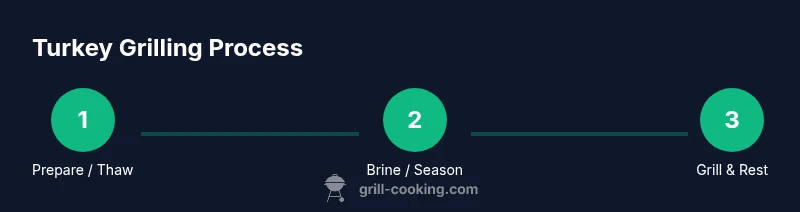
Prepare and thaw the turkey
Ensure the turkey is fully thawed and pat dry. If using brine, follow a recommended recipe and plan sufficient time for soaking. Remove giblets and neck, then pat skin dry to promote crispness. Set up two-zone grill before handling the bird.
Tip: Thaw in the fridge for best texture; avoid warm water and rapid thawing. - 2
Brine or dry-brine choice
Decide between a wet brine or a dry-brine rub. Wet brines add moisture, but require space and time. Dry-brines simplify the process and still deliver seasoned, juicy meat. Apply your chosen method evenly across skin and under any available skin pockets.
Tip: If dry-brining, season generously but keep the salt balanced to avoid overly salty skin. - 3
Season under the skin and on the surface
Carefully loosen the breast skin with clean hands or a utensil, then rub butter, herbs, or citrus under the skin. Finish with a light coat on the outside. This combination boosts flavor where it counts and helps crisp the skin.
Tip: Keep the skin intact to trap moisture and heat. - 4
Set up two-zone grilling
For indirect cooking, place the turkey on the cooler side of the grill. Create a hot searing phase by lighting the other zone or turning up temperature briefly to brown the skin. Use a drip pan and close the lid to maintain heat.
Tip: Control airflow to stabilize temperature—small adjustments make big differences. - 5
Grill with indirect heat to finish
Move the turkey to the indirect zone with the breast up. Close the lid and monitor internal temps with a probe. Rotate the bird midway if your grill heats unevenly to ensure even doneness.
Tip: If skin isn’t browning, finish with a brief, gentle blast of direct heat if safe. - 6
Rest, carve, and serve
Remove from grill at target temps and tent with foil for 20–30 minutes. Carve along the breast and thigh directions, slicing against the grain for tenderness. Serve with preferred sides for a balanced meal.
Tip: Resting preserves moisture and makes carving neater.
FAQ
Can I grill a frozen turkey or do I need to thaw first?
Thawing is essential for even cooking and safe interior temperatures. A fully thawed turkey grills more predictably and reduces the risk of undercooked portions. If you’re short on time, opt for a smaller bird or plan ahead to thaw fully before grilling.
Thawing is essential for even cooking; a fully thawed turkey grills more predictably.
What is the best temperature strategy for grilling a turkey?
Begin with a hot sear to color the skin, then move to indirect, lower heat to finish. Keep lid closed to stabilize heat and monitor internal temps with a probe. Avoid overcooking the breast.
Use a two-zone approach: sear hot, then cook slowly in indirect heat.
Should I brine the turkey before grilling?
Brining can improve moisture and flavor, especially for larger birds. Dry-brining is a simpler alternative that still yields juicy meat and crisp skin. Choose based on time, space, and salt tolerance.
Brining or dry-brining helps keep the meat juicy and flavorful.
How long does it take to grill a turkey?
Total time varies with bird size and grill type. Plan for several hours, including resting. Always rely on a thermometer rather than clock time to determine doneness.
It varies; use a thermometer to know when it’s done.
What if the skin isn’t browning properly?
Raise the heat briefly or move the bird to a hotter zone to finish browning, but watch temps to avoid overcooking the meat. A light oil can help promote browning without smoking.
If the skin isn’t browning, give it a quick finish on higher heat.
How should I rest and carve the finished turkey?
Rest for 20–30 minutes under a loose foil tent. Carve against the grain for tenderness, starting with the breast then moving to the thighs. Slice thin for even servings.
Let it rest, then carve against the grain for tenderness.
Watch Video
Quick Summary
- Grill a turkey using two-zone heat for best texture
- Brine or dry-brine to maximize juiciness and flavor
- Use a thermometer to hit 165°F breast and 175°F thigh
- Rest the turkey 20–30 minutes before carving
- A well-prepped bird pairs with bright, contrasting sides