Yemen Grill Mastery: A Home Cook's Yemenite-Style Barbecue Guide
Learn authentic Yemen grill techniques with practical, step-by-step guidance for flavor-packed Yemenite barbecue at home. From spice rubs to heat management, this guide covers gear, safety, serving ideas, and authentic accompaniments.


Learn to master Yemen grill techniques at home: set up a charcoal grill with direct and indirect heat zones, craft a traditional Yemenite spice rub and marinade, grill cuts like lamb and chicken, manage flames to prevent scorching, and finish with a bright citrus finish. This guide covers gear, step-by-step methods, and safety for authentic Yemenite flavors.
Core Principles of Yemen Grill
Yemen grill represents a vibrant approach to backyard barbecue that blends bold spice profiles with disciplined heat management. In Yemenite grilling, you’ll often see meats like lamb, chicken, and beef prepared with aromatic rubs that lean on cumin, coriander, cardamom, and cloves. The goal is to achieve a deeply seasoned crust while maintaining juicy interior textures. Authenticity isn’t about exotic ingredients alone; it’s about balancing heat with timing, applying sauces or green zhug as a bright contrast, and serving with traditional flatbreads and fresh salads. As you practice Yemen grill techniques, focus on flavor layering, flame control, and resting meat to lock in juices. Grill Cooking’s guidance emphasizes safe handling and consistent technique to reproduce a true Yemenite profile in a home kitchen.
Tools and Ingredients for Yemen-Style Grilling
Before you light up, assemble the essential tools and ingredients. A reliable charcoal grill with good airflow is ideal for true direct and indirect heat zones. A metal chimney starter speeds charcoal ignition, while long-handled tongs, a heat-resistant spatula, and an instant-read thermometer help you monitor sear and doneness precisely. For flavor, prepare a Yemen-inspired rub featuring ground cumin, coriander, cardamom, black pepper, paprika, and a touch of cinnamon. Fresh zhug or a bright herb salsa complements the fat and spice. Always have a sharp knife, cutting board, and a resting tray ready so you can rest and slice meat after grilling.
Fire Management: Direct and Indirect Heat for Yemen Grill
Effective Yemen grill work relies on two zones: a hot direct zone for searing and a cooler indirect zone for finish-cooking. Start by lighting your charcoal and setting up a narrow direct lane with the coals bright and ashed. Place the meat over direct heat for a quick, intense sear (1–2 minutes per side for small cuts). Then move the pieces to indirect heat to finish cooking evenly without burning the exterior. Keeping the lid down during indirect cooking helps trap heat and maintain a steady temperature around 350–400°F (175–205°C). Periodically rotate pieces to ensure even browning and avoid hot spots that can scorch the crust.
Rubs, Marinades, and Finishing Sauces
A Yemen-inspired rub builds flavor through warm spices. Combine ground cumin, coriander, cardamom, smoked paprika, ground cinnamon, black pepper, and salt. For a marinade, a simple mix of yogurt, garlic, lemon, and olive oil can tenderize and provide tang. Apply rubs generously and let the meat rest for 15–30 minutes to let flavors penetrate before grilling. Consider finishing with a zhug-like green sauce or a bright herb chutney to cut through richness. A light squeeze of lemon or lime at the end brightens the dish and enhances aroma.
Step-by-Step Yemen-Grill Method (Overview)
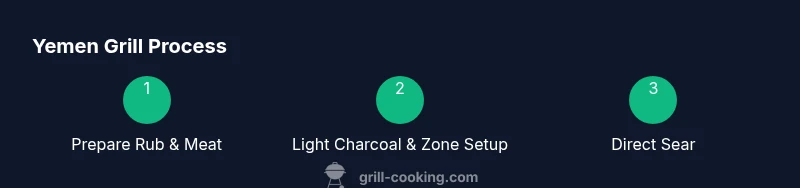
This overview complements the detailed steps below by outlining the sequence: prepare meat with rub, ignite grill and establish heat zones, sear over direct heat to develop crust, finish on indirect heat to target ideal doneness, rest the meat, then slice and serve with flatbread and fresh sides. The method emphasizes timing, careful heat management, and finishing with aromatic accompaniments to recreate the Yemen grill experience at home.
Safety, Troubleshooting, and Common Mistakes
Grilling with high heat requires awareness of flare-ups from fat drippings. Always have a spray bottle of water or a small bucket nearby to manage minor flames, and avoid over-oiling the grate which can cause sticking or excessive smoke. If the crust browns too quickly before the interior is cooked, move the meat to indirect heat sooner and monitor with a thermometer. Keep grills clean to prevent old residue from imparting off flavors. When unsure, aim for a slightly lower temperature and longer resting period to maintain juiciness and tenderness.
Serving Ideas: Authentic Yemeni Flavors at Home
Serve with warm flatbread, chopped herbs, fresh salads, and zhug to echo Yemenite street-style meals. Offer lemon wedges for brightness, and provide a yogurt-cucumber sauce as a cooling companion. For a more complete experience, pair the grill with sides like roasted potatoes, grilled onions, and pickled vegetables. The goal is to balance heat, spice, and acidity for a cohesive, authentic Yemen grill plate that feels both familiar and inspired.
Authority References
For safety and best practices, consult authoritative sources:
- CDC: https://www.cdc.gov/foodsafety/index.html
- USDA: https://www.usda.gov/food-safety
- Cornell Extension: https://extension.cornell.edu/food-safety
Tools & Materials
- Charcoal grill with adjustable venting(Prefer kettle-style or offset with a lid for better heat control)
- Charcoal chimney starter(Fast, clean ignition without lighter fluid)
- Long-handled tongs(At least 15 inches; for safe, precise turning)
- Instant-read thermometer(Probe through-thickness for accurate doneness)
- Heat-resistant gloves(At least 450°F/230°C protection)
- Sharp chef’s knife and cutting board(Prep and portion meat cleanly)
- Meat skewers (optional)(Metal skewers withstand high heat)
- Basting brush and spray bottle(For light oiling and moisture management)
- Zhug or green sauce (or ingredients to make it)(Adds authentic Yemenite brightness)
Steps
Estimated time: 40-60 minutes
- 1
Prepare the meat with rub
Trim excess fat and pat dry. Apply the Yemen-inspired rub evenly, massaging it into all surfaces. Let the seasoned meat rest 15–30 minutes to begin flavor absorption.
Tip: Even coating ensures consistent crust; avoid rubbing too aggressively to prevent tearing the meat fibers. - 2
Light the charcoal and set zones
Fill the chimney starter and light the charcoal. Once ready, spread coals to create a direct heat zone for searing and a cooler area for finishing. Place grate so direct heat is centered and indirect heat surrounding it.
Tip: Aim for a visible flame-free surface in indirect zone to prevent charring before doneness. - 3
Sear over direct heat
Place meat over the direct hot area. Sear 1–2 minutes per side to develop a crust with rich color. Keep the lid partly closed to retain heat while searing.
Tip: Do not move meat too soon—let the crust form before flipping. - 4
Move to indirect heat to finish
Transfer the meat to indirect heat once the crust forms. Close the lid and cook until the internal temperature hits target (e.g., 130–135°F for medium-rare lamb, 160°F for chicken).
Tip: Use a thermometer for accuracy; avoid relying on time alone. - 5
Add finishing touches
Uncover briefly to apply a light glaze or brush of olive oil and continue to finish. Optional: spoon zhug or fresh herbs over the meat just before removing from grill.
Tip: Finishes should be brief to prevent overcooking the crust. - 6
Rest before slicing
Transfer meat to a resting tray and cover loosely for 5–10 minutes. Resting lets juices redistribute for juicier slices.
Tip: Rest long enough for carryover cooking to settle; slicing too soon bleeds juices. - 7
Slice and serve with accompaniments
Slice against the grain and arrange on platter with flatbread, zhug, salads, and lemon wedges. Offer condiments on the side for guests to customize flavor.
Tip: Slice only after resting to maximize tenderness. - 8
Evaluate and clean up
Assess what worked and what could improve next time. Clean the grill grates while warm to remove residue, and store leftover rubs properly.
Tip: A clean grill is safer and helps preserve flavor for future cooks.
FAQ
What makes Yemen grill different from other grilling styles?
Yemen grill emphasizes bold spice rubs, careful heat zoning (direct sear plus indirect finish), and bright finishing sauces like zhug. It balances robust flavors with juiciness by finish-cooking gently after searing.
Yemen grill blends strong spices with smart heat management and fresh sauces, giving a distinct, juicy finish.
Can I use a gas grill for Yemen grill techniques?
Yes. Use two heat zones on a gas grill: high direct heat for searing and a cooler indirect area for finishing. Maintain steady temperature and rest the meat after cooking.
You can adapt Yemen grill methods to a gas grill by creating two heat zones and managing temperature carefully.
What cuts work best for Yemen-style grilling?
Lamb shoulder or chops, bone-in chicken thighs, and beef short ribs are well-suited to Yemen-style grilling due to their flavor and fat content, which benefit from sear and finish cooking.
Lamb and chicken thighs are great picks for Yemen-style grilling because they stay juicy with searing and indirect cooking.
What sauce or accompaniment completes Yemen grill?
Zhug (Yemeni hot sauce) or herb chutneys, lemon wedges, and fresh flatbread complement the spices and smoky crust, balancing heat and acidity.
A bright zhug and lemon alongside flatbread really brings Yemen-style grilling together.
What safety steps are crucial for outdoor Yemen grilling?
Keep flare-ups under control, monitor grill heat, clean grates, and store fuels properly. Use protective gear and avoid loose clothing near flames.
Always be mindful of flare-ups and heat, and keep a safe workspace around the grill.
Watch Video
Quick Summary
- Master direct-indirect heat zones for Yemen grill precision
- Use a bold, warm spice rub to anchor flavors
- Finish with zhug-like brightness and citrus for balance
- Rest meat 5–10 minutes before slicing for juiciness
- Practice clean, safe grilling with mindful heat and handling