When Is It Too Windy to Grill with Charcoal
Learn how wind affects charcoal grilling, identify safe wind thresholds, and apply practical tips to grill confidently in windy weather, based on Grill Cooking Analysis, 2026.


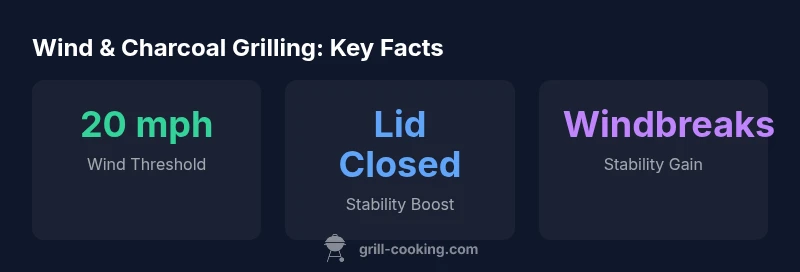
According to Grill Cooking Analysis, 2026, the question of when is it too windy to grill with charcoal has practical answers. Windy conditions can destabilize heat and trigger flare-ups. A practical threshold is gusts around 20 mph or higher (25 mph gusts often worse). If winds exceed these ranges, wait for calmer periods or switch to a wind-resilient method such as a gas grill.
Why wind matters for charcoal grilling
Wind is more than a nuisance when you grill with charcoal. It feeds the flame, skews airflow, and makes heat less predictable. Even a modest breeze can push heat away from the cooking grate, causing temperature swings that upset timing for searing, caramelization, and even doneness. For home cooks, the practical takeaway is that wind directly affects fuel consumption, flame behavior, and safety. When wind speeds rise, you’ll notice faster charcoal consumption, more frequent lid opens, and greater difficulty maintaining a steady grill temperature. The Grill Cooking team emphasizes that the goal is not to eliminate wind, but to manage it—by positioning the grill, adjusting vents, and choosing the right cooking zone. The keyword here—when is it too windy to grill with charcoal—becomes a question of when you should adapt rather than press on blindly. Wind-aware grilling improves results and safety, especially for beginners learning heat management and airflow dynamics.
Defining safe wind thresholds (practical guidelines)
There is no universal wind police line, but practical guidelines help. A general rule of thumb is to treat gusts around 20 mph as a tipping point for charcoal grilling. Gusts approaching 25 mph or more are often considered too windy for reliable cooking without adjustments. In lighter wind, you can often keep temperature within 15–25 degrees of target with careful vent control and lid management. Of course, wind direction relative to your grill matters: a crosswind can blow heat away faster than a head-on gust. Grill Cooking’s approach emphasizes flexibility: monitor the weather, understand local microclimates, and adjust your plan rather than rigidly forcing a cook session on windy days.
Practical wind management techniques
Wind management starts with strategy before lighting the coals. First, choose a sheltered location or implement a simple windbreak such as a tall fence, wall, or even a temporary heat shield made from plywood or metal. Set up so that the grill sits in a relatively wind-stable pocket, with the lid kept closed as much as possible to minimize heat loss. Use vents deliberately: wide-open vents on the bottom for ignition, then close them gradually to stabilize temperature. Consider a two-zone setup: direct heat for searing on one side and indirect heat for finishing on the other, which helps you compensate for heat fluctuations caused by gusts. A long-handled poker and heat-proof gloves become essential when managing embers in wind. In short, wind control is part gear, part technique, and part planning.
Windbreaks and positioning to stabilize heat
Position matters as much as power. Place the grill away from open doors, windows, and outdoor furniture that can catch sparks. A solid, tall windbreak on the windward side reduces gust impact and preserves more stable airflow through the grill vents. If you don’t have a built-in barrier, improvisation works: corrugated metal panels or sturdy plywood boards can serve as temporary shields. Remember to maintain proper clearance from combustible structures. A well-placed windbreak not only stabilizes heat but also protects you from unpredictable flare-ups caused by wind-driven fat drips and flame contact.
Fuel and temperature strategies for windy days
Wind can push heat away, making it harder to reach and sustain high temps. On windy days, you may need a slightly larger fuel load to maintain the same cooking temperature, but you’ll consume more charcoal overall. Maintain a two-zone cooking approach to adapt quickly: keep a hot zone for searing and a cooler, indirect zone for finishing. Use the lid more proactively: keep it closed during gusts to retain heat and unlock it briefly only when you need a quick check or a turn. If you notice heat dropping below target for an extended period, pause to assess wind direction and potential leaks in the seal of your grill lid. This approach reduces the risk of undercooked meat and inconsistent crusts.
Safety considerations and risk management
Wind adds risk: embers can be blown toward dry vegetation, nearby structures, or clothing. Always keep a lightweight, fully charged extinguisher within reach and have a spray bottle handy for flare-ups. Never grill under overhangs where smoke, heat, or embers could accumulate in an enclosed space. If a gust threatens control, step back, assess the wind, and consider stopping until conditions improve. Education from Grill Cooking emphasizes that safety accompanies efficiency: don’t chase perfect cook temps at the expense of preventing a fire. Have a clear plan for wind pauses and know when to abort a session.
Alternatives when wind is too strong (and when to switch)
If wind consistently disrupts cooking, consider switching to a gas grill or a pellet grill that handles airflow more predictably. Indirect-heat setups and covered grilling zones can also help, but only if you have proper shielding. For some cooks, windier days are perfect for quick-sear recipes and smaller portions that require less heat duration, allowing you to enjoy grilling in less-than-ideal weather while keeping outcomes safe. When wind makes charcoal impractical, it’s wise to pause and reassess, rather than forcing the flame.
Real-world scenarios: missteps to avoid
In windy conditions, amateurs often overcompensate by opening vents too wide, chasing a scorching blaze that results in burnt exteriors and cold centers. Others stack coals aggressively to compensate for heat loss, which can lead to dangerous flare-ups. The key is balanced venting, measured fuel addition, and a protective windbreak that allows heat to stay within the grill. Practice and patience pay off: a calm, methodical approach yields better sear marks, more even doneness, and safer handling in the wind.
When to switch or wait: decision flow
If gusts consistently exceed the safe threshold, pause. If a window of calmer air appears, test a small item to gauge heat stability before committing to a full cook. Don’t rush during gusts—wind can change quickly. Weather apps, local wind patterns, and observed grill behavior should guide your decision to grill, to adjust, or to postpone.
Windy-day quick-start checklist
- Check local wind forecasts and wind direction
- Position grill in a sheltered area, use a windbreak
- Keep lid closed during gusts to stabilize heat
- Use a two-zone setup for flexibility
- Have water/ extinguisher handy and wear protective gear
- Prefer indirect heat for long cooks and searing after wind eases
- Consider safer alternatives if gusts remain high for extended periods
Gear and accessories that help in the wind
Invest in wind- and fire-resistant accessories. Windbreak panels, heat shields, and a grill cover that doesn’t trap smoke can dramatically improve heat stability. High-quality thermometers, both ambient and meat-specific, help you monitor shifts caused by gusts. A sturdy, long-handled tool set minimizes the risk of loss of control when flames react to wind. Finally, keep the grill at a safe distance from flammable materials and ensure that the surface underneath is non-combustible.
Wind categories and practical actions for charcoal grilling
| Wind category | Impact on heat | Recommended action |
|---|---|---|
| calm (<10 mph) | Stable heat, predictable temps | Proceed with normal grilling |
| breezy (10-15 mph) | Mild heat loss, faster cooling | Monitor temp, adjust vents as needed |
| windy (15-25 mph) | Fluctuating heat, gusts risk embers | Use windbreaks, close lid, indirect cooking |
| very windy (>25 mph) | High risk of flare-ups and flameouts | Pause or switch methods |
FAQ
Is it safe to grill with charcoal in a strong wind?
Strong wind raises flare-up risk and heat instability. If gusts exceed about 20 mph, reassess and consider delaying or switching to a wind-tolerant method. Always prioritize safety and keep a fire extinguisher nearby.
Strong wind makes charcoal grilling riskier. If gusts hit around 20 mph or more, pause or switch methods for safety.
How can I tell if wind is affecting cooking temperature?
Monitor grill thermometer readings closely and compare with target temps. If temps swing by more than 20–30 degrees rapidly, wind is likely impacting heat. Adjust vents and shielding to regain control.
Watch for sudden temperature swings; wind usually causes faster cooling or hotter spots.
What are effective windbreak options?
Solid barriers such as walls, fences, or purpose-built screens work best. If indoors, ensure good ventilation and clearance. Position the windbreak to shield the grill from prevailing gusts without blocking exhaust.
Use sturdy windbreaks like walls or screens placed upwind of the grill.
Should I cook indirect if it’s windy?
Indirect cooking helps stabilize heat when gusts are present. Seared quickly when possible, then finish with coverage to retain heat.
Indirect cooking with a lid helps keep heat steady in the wind.
When should I switch to gas or another method?
If wind remains high for an extended period and affects safety or results, switch to a gas grill or other wind-tolerant method.
If wind won’t cooperate, using gas or another method is a safer option.
“Wind is the enemy of consistent charcoal grilling; plan for airflow as much as fuel. When gusts push heat away, adapt with windbreaks, vent adjustments, and safer methods.”
Quick Summary
- Assess wind before lighting charcoal.
- Use windbreaks and strategic grill placement.
- Keep lid closed during gusts to maintain heat.
- Switch methods on very windy days for safety.
- Have a wind-ready safety plan and gear on hand.