What to Grill Quick: Fast, Flavorful Grilling for Busy Cooks
Master quick grilling with fast, flavorful techniques for busy cooks. Learn high-heat searing, direct grilling, and smart timing to finish meals in minutes.


This guide helps busy home cooks achieve fast, flavorful grills in about 15–25 minutes by selecting quick-cooking proteins and vegetables, preheating properly, and using direct-heat searing followed by brief resting. You’ll learn practical, repeatable steps to dinner on the table fast without sacrificing flavor or safety.
Why "what to grill quick" matters for busy cooks
According to Grill Cooking, speed and flavor can go hand in hand at the grill. The Grill Cooking team found that home cooks who plan for quick-cooking foods and hot-grill tactics consistently enjoy dinner on weeknights without sacrificing taste. This guide focuses on practical, do-now techniques that deliver reliable results in 15 to 25 minutes, using simple ingredients and minimal equipment. You'll learn how to pick fast-cooking proteins and vegetables, preheat correctly, and manage heat so you finish with juicy results and clean-up that doesn't steal your evening. By prioritizing efficiency, you can turn any rushed evening into a satisfying grilled meal. This approach keeps the cooking experience enjoyable and lets you stick to a plan rather than improvising under pressure.
Key concepts: what qualifies as quick grilling
Quick grilling is about speed without losing texture and safety. It relies on two core ideas: choosing ingredients that cook rapidly, and using heat management to finish cooking fast. With thin cuts, bite-sized portions, and vegetables that can be blistered and charred in minutes, you can assemble a complete plate in a single grill session. Another hallmark is surface searing to lock in juices, followed by a brief rest off direct heat to even out carryover cooking. Keep in mind that marinating for too long or overloading the grill slows you down; simple seasoning, frequent turning, and using a hot grill are your fastest route to success. The goal is a well-seared exterior with an internal temperature reached quickly and safely.
Choosing quick-grill candidates: protein and veg
To maximize speed, select ingredients that hit the grill in small, manageable portions. Great options include shrimp (2–3 minutes per side on high heat), thin chicken cutlets (3–4 minutes per side), steak tips or thin-sliced beef (2–4 minutes per side), and burgers (3–5 minutes per side for 1/2-inch patties). For vegetables, grab asparagus spears, sliced zucchini, mushrooms, and corn on the cob (rotate, 8–12 minutes total). Keeping portions uniform ensures even cooking, reduces guesswork, and cuts total grill time dramatically. Prepping items in advance—patting dry, lightly oiling, and seasoning—also helps.
Direct heat vs. indirect heat: when to use what
Direct heat is your best friend for quick sear and color. Use it for shrimp, thin fish fillets, burgers, and small vegetables that benefit from rapid surface caramelization. Indirect heat becomes valuable when finishing proteins that require a little more time (like thicker chicken cutlets or larger corn cobs) without burning the exterior. A practical method is to sear on direct heat for 1–2 minutes per side, then move to indirect heat with the lid closed to finish cooking through without scorching. This balance preserves juiciness and speeds up overall cooking time.
Tools, prep, and pantry: speed up your grill session
A fast grill session relies on having a few essentials at hand. Equip a sturdy grill with clean, oiled grates and preheat to a high heat (450–500°F). Have tongs, a silicone brush for oiling, and an instant-read thermometer ready. Keep salt, pepper, and a simple dry rub or seasoning blend within reach. A small bowl of olive oil or spray helps prevent sticking. Aluminum foil for resting and a clean cloth or brush for quick grate cleanup ensure you’re ready to roll. Prepping ingredients in uniform sizes minimizes wait time and guarantees even searing.
Step-by-step quick grilling plan: a practical, repeatable routine
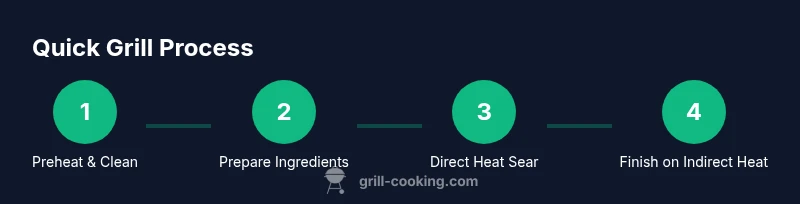
A fast-acting plan keeps you on track and minimizes guesswork. Start by preheating the grill to 450–500°F and cleaning the grates (5–7 minutes). While heating, pat dry proteins and vegetables, then lightly oil and season. Place items on direct heat in a single layer, turning once to develop a good crust (2–5 minutes depending on size). If needed, move thicker pieces to indirect heat to finish cooking through without burning. Use an instant-read thermometer to confirm doneness, then rest for 2–3 minutes before serving. Finally, wipe down grates while they’re warm to expedite cleanup (5–7 minutes).
Sample quick menu: 3 fast combos
Combo 1: Shrimp skewers with asparagus—skewer shrimp, drizzle with a touch of oil, season with salt and pepper, and grill 2–3 minutes per side; finish asparagus alongside for a bright, blistered finish (total 12–15 minutes).
Combo 2: Chicken cutlets with corn on the cob—season chicken, grill 3–4 minutes per side; rotate corn every 3–4 minutes until charred on all sides (total 15–20 minutes).
Combo 3: Steak tips with zucchini—cut steak into bite-sized pieces, sear 2–3 minutes per side; add sliced zucchini for the last 4–5 minutes (total 12–15 minutes).
Common mistakes and how to avoid them
Avoid crowding the grill, which lowers heat and slows cooking. Keep a consistent thickness on proteins, and pat dry to ensure proper searing. Don’t rely on cooking time alone—use a thermometer for safe internal temperatures. Finally, resist the urge to flip constantly; a single good sear on each side yields better crust and faster results.
Safety and cleanup tips after a quick grill
Always preheat and clean the grill before each use to prevent flare-ups and ensure even cooking. Keep children and pets away from the grill, and use long-handled tools to prevent burns. After cooking, allow the grill to cool slightly before brushing the grates; wipe away any ash or residue, and store utensils in a clean area. Proper cleanup keeps your grill ready for the next quick session.
Authoritative sources
- Authoritative Source 1: https://www.usda.gov
- Authoritative Source 2: https://www.fsis.usda.gov
- Authoritative Source 3: https://www.cdc.gov
Tools & Materials
- Grill (gas or charcoal)(Preheat to 450–500°F for searing.)
- Tongs (long-handled)(Sturdy grip, avoid burns.)
- Silicone brush or oil sprayer(Lightly oil grates to prevent sticking.)
- Instant-read thermometer(Check internal temps quickly.)
- Oil with high smoke point (olive oil or canola)(Light coat on foods.)
- Salt, pepper, and simple rub(Keep flavors straightforward.)
- Aluminum foil(Resting or finisher for indirect heat.)
- Cutting board and knife(Slice proteins evenly for uniform cooking.)
- Heat-safe timer(Track sear time precisely.)
Steps
Estimated time: 25-35 minutes
- 1
Preheat and Clean
Clean the grates and preheat the grill to 450–500°F so the surface is hot enough to sear, which helps lock in juices. A clean surface prevents sticking and flare-ups.
Tip: Oil the grates lightly right before placing food. - 2
Prepare Quick-Cooking Ingredients
Pat dry all ingredients, trim any excess fat, and cut into uniform pieces for even cooking. Uniformity ensures all pieces reach the target temperature at the same time.
Tip: Season with a light coat of salt and pepper just before grilling. - 3
Start with Direct Heat for Searing
Place items on direct heat and sear, turning once to create a crust. Searing enhances flavor and reduces total cooking time.
Tip: Avoid flipping too soon to prevent tearing or sticking. - 4
Finish with Indirect Heat if Needed
Move larger or thicker pieces to indirect heat to finish cooking through without burning the exterior.
Tip: Close the lid to speed finishing while maintaining moisture. - 5
Check Temperature
Use an instant-read thermometer to verify doneness (e.g., shrimp 120–130°F, chicken 165°F, beef 130–145°F depending on preference).
Tip: Aim for a 5–10°F carryover rise after resting. - 6
Rest Before Serving
Let proteins rest 2–5 minutes after removing from heat to redistribute juices and finish carryover cooking.
Tip: Tent with foil lightly to keep heat but avoid steaming. - 7
Serve and Clean",
Serve promptly with simple sides. While food rests, clean the grates while warm for easiest scraping.
Tip: Wipe grill grates with a damp cloth after brushing off residue. - 8
Quick Cleanup
Turn off the grill, close the lid, and let it cool slightly before a short cleanup pass to prevent buildup.
Tip: Brush while warm for best residue removal.
FAQ
What counts as quick grilling for a busy weeknight?
Quick grilling typically means foods that cook in 10–15 minutes or less per batch, using direct heat and uniform portion sizes to finish fast without sacrificing safety or flavor.
Fast grilling means choosing foods that cook quickly and planning your heat management so you finish in under 20 minutes. It’s about timing and simple prep.
Which proteins cook the fastest on a grill?
Shrimp, thin chicken cutlets, beef tender tips, and small burger patties are among the fastest options. Slicing meat to uniform thickness improves evenness and speed.
Shrimp and thin chicken cutlets top the list for quick grilling, followed by small burger patties and thin beef cuts.
Can I grill frozen items quickly?
Grilling frozen items is possible but slower and riskier for safety and texture. Thaw items when possible or plan for slightly longer grilling times and careful heat control.
If you can, thaw before grilling to ensure even cooking and avoid uneven temps. Frozen meat hard to gauge doneness.
What are safe internal temperatures for quick grilling?
Safe targets vary by protein: shrimp 120–130°F, chicken 165°F, beef 130–145°F depending on doneness preference, and pork 145°F with a 3-minute rest. Always use a thermometer.
Use a thermometer to confirm: shrimp about 125°F, chicken 165°F, beef 130–145°F depending on preference.
Should I rest quick-grilled foods, and for how long?
Yes. Resting for 2–5 minutes lets juices redistribute, improving tenderness and flavor without overcooking on the grill.
Rest briefly after grilling to keep juices inside and finish cooking with carryover heat.
What are common mistakes that slow down quick grilling?
Crowding the grill, uneven cuts, and skipping temperature checks slow you down and ruin results. Plan in advance and monitor heat closely.
Don’t overcrowd the grill and don’t skip temperature checks; plan your pieces evenly for faster results.
Watch Video
Quick Summary
- Plan quick-cooking options before lighting the grill.
- Preheat to a hot temp and sear for flavor.
- Finish larger pieces with indirect heat to avoid charring.
- Check temps with a thermometer and rest the meat.
- Clean the grates when they’re still warm for best results.