What to Grill Kabobs At: A Practical Grilling Guide
Learn how to grill kabobs at the right heat with tips on direct vs indirect grilling, choosing proteins and veggies, skewers, marinades, and doneness. A complete, expert guide to perfect kabob night.


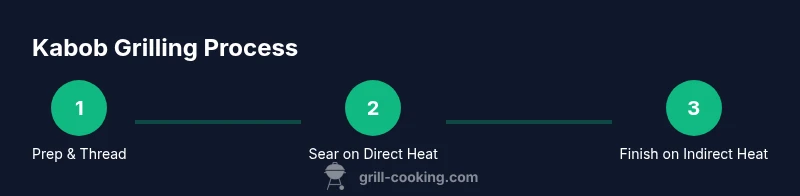
To grill kabobs at home, start with uniformly cut protein and vegetables, thread with a small gap, and preheat the grill to medium-high. Soak wooden skewers for 30 minutes, marinate meat briefly, and sear over direct heat before finishing on indirect heat to avoid overcooking. Use a thermometer for safety and even results.
what to grill kabobs at: The Basics
When you ask what to grill kabobs at, the core idea is to balance heat, time, and load so every piece cooks evenly without burning. Begin by deciding between a charcoal, gas, or hybrid grill. Charcoal delivers a faster sear and a smoky finish, while gas offers consistent temps and easier control. For beginners, starting with medium-high heat (about 375–450°F/190–232°C) provides a reliable surface for browning proteins and vegetables without scorching the exterior. Remember, the goal is a crisp outside with a juicy interior, achieved by uniform sizing and careful placement on the grill. According to Grill Cooking, uniformity is the most reliable predictor of even doneness for kebabs, whether you’re grilling chicken, beef, or vegetables. The reader should plan for consistency: cut sizes, skewer diameter, and spacing all influence cook time and browning.
In practice, think of kabobs as a small, portable grill station: each skewer acts like a mini skillet, transferring heat from the flame to the food. Keeping pieces roughly 1–1.5 inches square helps ensure they finish at the same moment. If you’re using wood skewers, this is the moment to soak them (see Tools & Materials) to prevent scorching. The goal is to prevent flare-ups from dripping fat, which can burn the coating or char the meat too quickly. With a solid plan, you’ll have kabobs that look as good as they taste, whether you’re cooking chicken, shrimp, beef, pork, or a medley of vegetables.
Why heat control matters for consistent kabobs
Heat control is the silent executor of a successful kabob session. If the grill is too hot, the outside will burn before the inside cooks; if it’s too cool, you’ll miss the signature browning and the skewers may dry out. A two-zone setup—in which you have a hot direct-heat zone for searing and a cooler indirect zone to finish cooking—offers flexibility for both proteins and vegetables. This approach is especially helpful for thicker cuts or marinated meats that need a bit longer to reach safe internal temperatures without overcooking. Grill Cooking Team recommends testing your grill’s surface with a handful of foil-wrapped, emptied skewers to phenotype heat in your specific setup, then adjusting vents or burners accordingly.
Before you cook, pat the surfaces dry and remove excess marinade that could cause flare-ups. A light brush of oil on vegetables helps prevent sticking and promotes even browning. The end result should be colorful, glossy pieces evenly browned with a slight char that adds depth to the flavor profile.
Skewers: metal vs wooden and how to prep them
Choosing the right skewers makes a big difference in how kabobs cook. Metal skewers are reusable and don’t require soaking but require winding meat and veg firmly to keep them in place. Wooden skewers are affordable and good for casual grilling, but they require soaking before use to prevent burning. If you’re using wooden skewers, aim for at least 30 minutes of soaking; longer soaking (up to 60 minutes) can improve moisture retention during grilling. When threading, place the sturdier pieces toward the center and use a gentle weave to ensure the skewers don’t spin when turned. Leave about ¼ inch of space between pieces for even heat penetration. Grill Cooking Team notes that spacing matters almost as much as the choice of meat and vegetables because it directly impacts how heat surrounds each piece.
Protein choices: chicken, beef, pork, and seafood
The choice of protein defines your kabob experience. Chicken remains a favorite for its versatility; beef offers a robust, savory profile; pork reads well with sweet and tangy marinades; seafood like shrimp or scallops cook quickly and pair beautifully with citrus and herbs. For chicken, cut into 1–1.5 inch cubes to ensure safe, even cooking and preserve juiciness. For beef, opt for tender cuts such as sirloin or ribeye and target a mid-range doneness (around 135°F/57°C for medium-rare, depending on your preference and safety guidelines). For pork, use shoulder or tenderloin cuts and cook to 145°F/63°C. Seafood should be blanched or seasoned lightly, and cooks much faster; thread near the end of cooking to avoid overcooking.
Marinades and flavor layering
Marinades do more than flavor; they can help tenderize and protect meat during grilling. A simple blend of acid (lemon juice or vinegar), oil, herbs, and a touch of salt provides a reliable base. Marinate proteins for 30–60 minutes for chicken and pork, 15–30 minutes for seafood, and up to 2 hours for beef if the marinade isn’t overly acidic. Always pat dry before skewering to avoid watery drips that cool the surface and hinder browning. If you’re using a sugar-heavy marinade, keep a close eye on the grill to prevent caramelization from turning into scorching. Grill Cooking insights emphasize balance: enough marinade to infuse flavor, but not so much that pieces become soggy on the grill.
Vegetables that complement kabobs and timing tips
Vegetables such as bell peppers, onions, mushrooms, zucchini, and cherry tomatoes hold up well under high heat and add color and texture. Cut vegetables to roughly the same size as your meat to ensure uniform cooking. Start vegetables on the grill slightly later if your pieces are thick, or alternate with meat to develop a harmonious sear. High-water-content veggies may release moisture, so be prepared to adjust heat to maintain a steady sizzle rather than a boil. A simple rule of thumb: denser vegetables like peppers and onions go on first; more delicate items go on after a few minutes to prevent overcooking.
Doneness signals, resting, and serving
Cooking kabobs is a balance between surface browning and interior temperature. Use a meat thermometer to confirm doneness: chicken should reach 165°F (74°C); beef is typically best around 135–145°F (57–63°C) depending on desired doneness; pork should reach 145°F (63°C); seafood should be opaque and firm. Let kabobs rest for 3–5 minutes after removing from the grill to allow juices to redistribute. Resting briefly helps maintain moisture and prevents scorching when you bite in. When you’re ready to serve, slide meat and vegetables off the skewers onto warm plates and offer lemon wedges or herb pesto for brightness.
Common mistakes to avoid and fixes you can use
A few common mistakes can derail a kabob night: crowding pieces on skewers, using mismatched piece sizes, neglecting preheating, or burning marinade sugars. Start with even pieces, give space between each chunk, and monitor heat with a reliable thermometer. If skewers start to burn, move them to indirect heat or reduce the flame; if pieces are undercooked, shift back to direct heat while watching closely. In addition, avoid reusing marinades that have touched raw meat unless you boil them first, since cross-contamination is a safety risk.
Tools & Materials
- Skewers (metal or wooden)(If wooden, soak 30 minutes before threading)
- Grill (charcoal or gas)(Two-zone setup preferred: direct and indirect heat)
- Meat thermometer(Use for doneness checks)
- Sharp knife and cutting board(For uniform cubes)
- Mixing bowls and tongs(Marinade prep and handling)
- Oil with high smoke point(For light coating to prevent sticking)
- Skewer rack or long tongs(Helpful when turning many skewers)
- Grill brush(Clean grates before cooking)
- Aluminum foil or heat-safe gloves(For handling hot skewers)
- Wooden plates or serving platter(To rest and serve kabobs)
Steps
Estimated time: 40-60 minutes
- 1
Prep ingredients and cut evenly
Select proteins and vegetables and cut into uniform 1–1.5 inch pieces. pat dry and set in separate bowls. If marinating, mix your marinade and coat proteins evenly without soaking on vegetables for too long.
Tip: Keep a separate bowl for each protein to avoid cross-contamination. - 2
Soak wooden skewers (if chosen)
Immerse wooden skewers in water for at least 30 minutes to reduce burning. If using metal skewers, skip this step but oil the surface to prevent sticking.
Tip: Use two skewers per kebab for extra stability if you’re stacking multiple items. - 3
Thread with space
Thread meat and vegetables in alternating pattern with small gaps (about 1/4 inch). This spacing promotes heat circulation and even cooking.
Tip: Start and end with a vegetable piece for balance and easier handling. - 4
Preheat grill to two zones
Create a hot direct-heat zone for searing and a cooler indirect zone for finishing. Give the grill time to reach target temps before placing skewers.
Tip: Leave the lid closed during preheat to trap consistent heat. - 5
Sear over direct heat
Place skewers on direct heat and sear for 2–3 minutes per side, turning to achieve even browning. Expect a nice crust as sugars caramelize.
Tip: Avoid prolonged direct heat on sugar-rich marinades to prevent scorching. - 6
Finish on indirect heat
Move skewers to indirect heat to finish cooking through without burning. Use a thermometer to monitor internal temps and avoid overcooking.
Tip: Shield delicate veggies from excessive direct heat during this phase. - 7
Check doneness and rest
Verify safety temperatures for proteins, then let kabobs rest 3–5 minutes before serving to redistribute juices.
Tip: If using mixed proteins, ensure every piece hits its safe temp before serving. - 8
Serve with bright accompaniments
Offer fresh herbs, lemon wedges, or a yogurt-herb dip to brighten flavors. Keep skewers warm with a light cover if needed.
Tip: Consider a single dipping sauce per plate to avoid cross-contamination.
FAQ
What is the best temperature for grilling kabobs?
Aim for a two-zone setup on a medium-high grill: hot enough to sear, and cooler indirect heat to finish. This helps browning without burning the outside.
For best results, grill with two heat zones: a hot sear area and a cooler zone to finish cooking.
How long do chicken kabobs take to grill?
Chicken kabobs typically take 12–15 minutes total, flipping every 3–4 minutes. Verify an internal temperature of 165°F (74°C) before serving.
Chicken kabobs usually take about 12 to 15 minutes, turning occasionally until fully cooked to 165 degrees.
Can I use wooden skewers?
Yes, wooden skewers work well when soaked beforehand to prevent burning. If you’re grilling seafood or dense vegetables, metal skewers can offer more control.
Wood skewers are fine if soaked well; metal skewers are handy for easier handling and repeat use.
Should vegetables be marinated too?
Vegetables can be lightly marinated or brushed with oil and herbs. Marinating vegetables too long can make them soggy, so keep it brief and separate from meat if possible.
Lightly coat veggies and don’t marinate them as long as the meat.
How do I know when kabobs are done?
Use a thermometer or cut into a piece to check. Poultry should reach 165°F, beef around 135–145°F depending on desired doneness, pork 145°F, and seafood should be opaque and firm.
Check temps with a thermometer: chicken to 165, beef about 135–145, pork 145, seafood should be opaque.
What safety steps are important?
Avoid cross-contamination by using separate utensils for raw and cooked meat. Keep a spray bottle handy for flare-ups and maintain clean grates. Always wash hands after handling raw protein.
Keep raw and cooked foods separate, sanitize surfaces, and wash hands frequently.
Watch Video
Quick Summary
- Choose uniform pieces for even grilling.
- Use two-zone heat for searing and finishing.
- Soak wooden skewers to prevent scorching.
- Monitor internal temps with a thermometer.
- Rest kabobs briefly before serving.