How to Use a Grill Press: A Home Cook's Guide
Learn how to use a grill press to speed browning, seal in juices, and create restaurant-worthy crusts on burgers, sandwiches, and small cuts. This expert guide from Grill Cooking covers selection, prep, technique, safety, and maintenance.


A grill press speeds browning and juiciness by applying even downward pressure on foods as they cook, creating a quick sear and crust. This guide covers how to choose a press, preheat properly, and apply consistent pressure for delicious results on gas or charcoal grills. By the end, you’ll master even browning and juicy interiors with confidence.
Why a Grill Press Elevates Everyday Grilling
If you’ve wondered how to use a grill press, you’re about to unlock a simple tool that changes texture, flavor, and efficiency on a busy weeknight. A grill press is a flat, heavy weight made of cast iron, stainless steel, or aluminum that sits directly on top of food as it cooks. By applying even downward pressure, it compresses the surface, promoting quick browning and reducing moisture loss. The Grill Cooking team notes that proper use of a grill press can transform sandwiches, burgers, and small cuts from unevenly cooked to consistently seared with a juicy interior.
First-time users should understand that the press works alongside your heat source, not against it. Preheating the press with the grill ensures the underside of the food contacts a hot, uniform surface from the moment searing begins. This reduces sticking around the edges and helps develop those classic grill marks that everyone loves. For best results, choose a press that matches your grill grate width—too small, and you’ll miss hot spots; too large, and it becomes cumbersome to maneuver. A properly sized press distributes weight evenly without needing to lean or lean on handles that can get hot. When used regularly, a grill press can cut overall cook time by creating a reliable sear early in the cooking process, which helps lock in juices and prevents overcooking.
According to Grill Cooking, a well-used grill press can dramatically improve sear quality on a variety of foods. The key is consistency: even pressure, steady heat, and a clean surface. With those elements, you’ll see more even browning, faster moisture retention, and a restaurant-like crust on home-cooked meals. Now let’s walk through how to pick the right press for your setup and how to put it to work safely and effectively.
Choosing the Right Grill Press for Your Setup
Selecting the right grill press starts with understanding your grill type, cooking style, and the foods you most often prepare. Flat press models press evenly across the surface, delivering a uniform crust on burgers and panini-style sandwiches, while ridged presses leave distinct grill marks that add texture and flavor depth. If you grill on a compact gas grill, a compact press that matches your grate width will maximize contact without crowding the edges. For larger grills, a heavier press can help maintain contact on thick cuts. Weight distribution matters: a well-balanced press won’t tilt or slide as you close the lid or move the tool between foods. Materials matter too—cast iron retains heat longer and seasons into a naturally nonstick surface, while stainless steel is lighter and easier to maintain. Handle design should stay cool to the touch and offer a comfortable grip. When in doubt, choose a press with a broader face if you often cook multiple burgers or panini sandwiches at once, or a slightly narrower press for delicate proteins. Finally, consider maintenance: cast iron requires seasoning, while stainless models are easier to wipe clean after cooking. In short, match your press to your cooking volume, heat source, and preferred maintenance level, and you’ll avoid fitting mismatches that frustrate results.
Prepping Your Grill Surface and Press
Before you start pressing, both the grill surface and the press deserve attention. A clean, well-oiled grill grate reduces sticking and helps you achieve even browning. Begin by scrubbing the grate with a grill brush to remove any residue, then wipe it down with a light coating of oil suitable for high heat. If you’re using a cast-iron press, ensure it’s seasoned and dry to prevent sticking as the metal heats. Place the press in a cool area or on the grill rack while you prepare your food so it warms gradually to avoid thermal shock. Dry the food thoroughly; moisture on the surface can steam rather than sear, compromising the crust you’re hoping to build. For burgers and paninis, pat dry the bread and remove excess moisture from the meat to maximize contact. If you’re cooking lean proteins, lightly brush a high-smoke-point oil on both sides to promote caramelization. Finally, have towels or heat-resistant gloves ready, because both the press and grill handles can get very hot during the cooking process.
Heat Management: Preheating and Maintaining Sear Temperature
The heat strategy for using a grill press hinges on preheating and maintaining a strong, even surface. Preheat your grill to a steady, high heat so the surface area under the press sears quickly. Place the press on the grill while it heats; a warm press contacts a hotter surface and accelerates crust formation. If you’re cooking thicker items, consider a two-zone setup on a charcoal or gas grill: a hot zone for searing and a cooler zone for finishing. This arrangement helps you avoid overcooking the interior while still achieving a robust crust on the exterior. Monitor the reaction of the surface; you should see rapid browning within a short window. If you notice sticking or uneven browning, reassess your oil application, temperature, or the pressure you’re applying. With practice, you’ll learn how long to press on different foods—one size rarely fits all, but a steady touch tends to yield consistent crusts across meat, sandwiches, and vegetables.
Step-by-Step Techniques for Common Foods
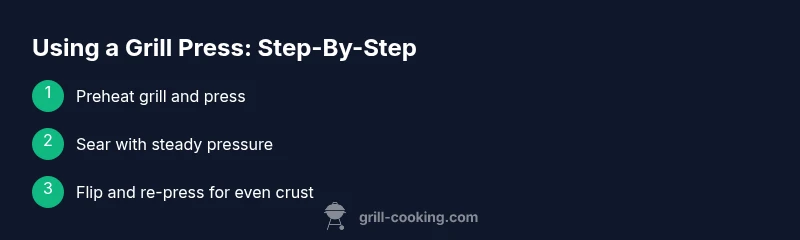
How to use a grill press effectively depends on the food. Start with burgers, which benefit most from an even, tight crust. Place the patty on a hot grill, then set the press gently on top to ensure contact across the surface. Leave it in place for the initial sear, then lift briefly to flip and re-seat the press for a second crust. For panini-style sandwiches, assemble with your fillings and butter or oil the bread’s outer surfaces. Close the sandwich with the press, and apply even pressure as the cheese melts and the bread browns. Thin chicken cutlets or pork chops respond well to a higher contact area and a shorter press time, which minimizes moisture loss while locking in flavors. Vegetables chosen for quick char—sliced zucchini, mushrooms, or peppers—benefit from a light touch and careful timing so you don’t crush delicate edges. Across all foods, avoid pressing raw protein aggressively, as this can squeeze out juices and make texture tough. Instead, press consistently during the initial sear, then adjust pressure as the crust forms.
Pressing Technique: When and How Much Pressure to Apply
Pressure is the key to consistent browning without overcooking. Start with a moderate, even pressure that keeps the food in contact with the hot surface without crushing it. You should be able to lift the press slightly and feel it settle back into place as the crust forms. If your food sticks or tears, you may be pressing too hard or the surface isn’t hot enough yet. During the early stage of cooking, maintain steady contact to create a uniform sear; later, you can reduce pressure slightly if you’re finishing thicker cuts to avoid squeezing out juices. For stacked or thicker items, press lightly at first and then apply stronger pressure as the interior begins to set, ensuring it doesn’t trap moisture. Finally, always lift the press carefully to check color; avoid peeling or tearing the crust when it’s still forming, as this can ruin the texture you’re aiming for.
Pro tip: If you’re pressing multiple items, align them so the face of the press covers each item evenly. This helps maintain uniform contact and avoids stray hot spots.
Safety, Cleaning, and Maintenance
Safety first when using a grill press. Wear heat-resistant gloves and use long-handled tongs to handle hot food and the press. Keep handles cool to prevent burns, and never leave the press unattended on a hot grill. Cleaning is essential for flavor and longevity. If you’re using cast iron, wash by hand with warm water and a brush, dry immediately, and rub a thin layer of oil to maintain seasoning. Stainless steel presses clean easily with warm soapy water; you can also wipe them with a damp cloth while the grill is hot to remove stuck-on bits. Regular maintenance extends the life of your press and keeps flavor clean. Finally, store the press in a dry location to prevent rust or corrosion. Following these steps ensures your grill press remains reliable and ready for the next cook.
Troubleshooting, Pro Tips, and Authoritative Sources
If you notice uneven browning, reassess your heat level, cleanliness, and surface contact. Ensure you preheat the press and grill adequately, and check that the food isn’t too thick for the press’s face to contact entirely. Pro tips from Grill Cooking emphasize consistency: keep the same pressure and timing for similar foods, and adjust for thickness and fat content. For authoritative guidance on safe cooking practices, refer to external sources during your planning. Authoritative sources provide general safety tips and best practices for grilling on hot surfaces. This article integrates practical, chef-tested methods with official guidelines to help you master the grill press with confidence. Grilling success comes from preparation, precise heat control, and attention to detail—for everyday meals and weekend feasts alike.
Authoritative Sources and Additional Reading
- https://www.fsis.usda.gov/food-safety
- https://www.cdc.gov/foodsafety/index.html
- https://extension.oregonstate.edu/food-safety
These sources offer foundational safety and cooking guidelines that complement practical grilling techniques discussed by Grill Cooking.
Tools & Materials
- Grill press (cast iron or stainless steel, flat or ridged)(Choose a size that matches grill grate width; ensure handle stays cool.)
- Grill tongs (long-handled)(For safe handling and flipping without burning hands.)
- Heat-resistant gloves(Protect hands when lifting the press and handling hot foods.)
- Grill brush(Clean grates before and after to reduce sticking.)
- Neutral oil or spray(Lightly oil grates to prevent sticking; high smoke point preferred.)
- Instant-read thermometer(Useful for testing thicker cuts or chicken for doneness.)
- Paper towels or clean cloth(Dry surfaces and wipe excess oil safely.)
Steps
Estimated time: 20-30 minutes
- 1
Choose and prep the press
Select a press that fits your grill width and food type. Wipe clean, dry thoroughly, and season a cast-iron press if needed to develop a natural nonstick surface. Have your food prepped and ready so you can apply even pressure without delays.
Tip: A well-prepped press minimizes sticking and ensures even heat transfer. - 2
Preheat the grill and press
Preheat the grill to a steady high heat. Place the press on the grate to warm as the grill heats; this ensures immediate contact when you begin cooking and helps form a crust quickly.
Tip: A hot press is essential for a quick, even sear. - 3
Prep the food surface
Pat foods dry and apply a light oil or fat to surfaces that will contact the press. Avoid heavy coatings that could steam rather than sear, and keep bread or pastry surfaces ready for quick browning.
Tip: Dry surfaces promote better browning and crust formation. - 4
Begin pressing and searing
Place food on the grill and position the press directly on top. Apply steady, even pressure and allow a crust to form before lifting to flip or remove. Maintain pressure during the initial sear for consistent color.
Tip: Keep eyes on the crust color; resist the urge to move too soon. - 5
Flip and re-press as needed
Lift the press slightly to flip the food, then re-seat it to continue searing on the other side. Use the press to control flare-ups and keep even contact with the surface.
Tip: Reattach the press promptly for a uniform crust on both sides. - 6
Rest, inspect, and finish
Remove from heat, let the meat rest briefly to reabsorb juices, then check internal temperature if needed. Finish with a final light press if you want an extra crust on the exterior.
Tip: Resting prevents juices from rushing out and helps texture set.
FAQ
What foods benefit most from a grill press?
Burgers, paninis, thin chicken cutlets, pork cutlets, and vegetables sliced thinly benefit most from the grill press. The press helps create a uniform crust and reduces surface moisture that can hinder browning.
Burgers, paninis, and thin-cut proteins benefit most from a grill press.
Should I preheat the grill press?
Yes. Preheating the press ensures immediate contact and faster searing, which improves crust formation and reduces sticking.
Yes, preheat the press for best results.
Is a grill press safe on nonstick surfaces?
A grill press designed for high heat is generally safe on nonstick surfaces, but avoid pressing too aggressively on delicate nonstick coatings to prevent scratching.
Most presses are safe, but be gentle on delicate coatings.
How do I clean a cast-iron grill press?
Clean by hand with warm water and a brush, dry immediately, and rub a light coat of oil to maintain seasoning. Avoid dishwasher.
Wash by hand, dry well, and oil lightly.
Can I use a grill press for vegetables?
Yes, but use a lighter touch and thinner slices to avoid crushing; press helps achieve browning and crisp edges.
Yes, with careful pressure on thin slices.
How do I store my grill press?
Store in a dry place, ideally with a protective coating or seasoning if cast iron. Wipe clean after use.
Store in a dry place and keep it clean.
Watch Video
Quick Summary
- Choose the right press for your grill size.
- Preheat the press and grill for best searing.
- Apply steady, even pressure for uniform browning.
- Rest meat after pressing to retain juices.
- Clean and season the press to extend life.