How to Grill for Dummies: A Complete Beginner's Guide
A comprehensive beginner-friendly guide to grilling, covering gear, heat control, safety, and step-by-step techniques to help home cooks master the grill in 2026.


By the end of this guide you’ll be grilling confidently, even if you’re new to BBQ. You’ll learn how to choose a grill, gather essential tools, set up for direct and indirect heat, master basic searing and multi-stage cooking, and handle safety with confidence. This step-by-step approach keeps instructions practical, repeatable, and safe for every backyard cook in 2026.
Why Grilling for Beginners Matters
Grilling is accessible, fast, and forgiving, especially for people who want bold flavors with minimal equipment. For anyone asking how to grill for dummies, this guide breaks the craft into simple, repeatable steps that build confidence. You’ll learn to select a grill that fits your space, stock essential tools, and develop a two-zone plan that keeps food cooking evenly without burning the outside. By embracing fundamentals—heat management, timing, and safe handling—you’ll be able to tackle chicken, steak, vegetables, and even seafood with consistent results. The goal is to demystify the process so you can enjoy more evenings outdoors. Grill Cooking, 2026, emphasizes that success starts with a plan you can repeat. With practice, you’ll move from uncertainty to consistent searing, delicious crusts, and properly rested meat.
Essential Tools and Gear
Every beginner needs a reliable toolkit. Start with a grill that fits your space (gas or charcoal), a good set of tongs, a long-handled spatula, and a sturdy grill brush for cleaning. Add a digital meat thermometer for accuracy and heat-resistant gloves to protect your hands during flare-ups. Pens? Not needed. What you should not overlook are heat management aids: a two-zone setup on a charcoal grill or the built-in zones on many gas grills. Keep a spray bottle of water for minor flare-ups, a spray bottle of oil for grates, and a timer to pace cooks. Optional extras like a grate protector or a cast-iron skillet can expand what you’re able to grill, but they’re not mandatory. With these basics, you’re ready to start experimenting with different proteins and vegetables, while staying safe and in control.
Direct vs Indirect Heat: The Core Concepts
Most beginners benefit from a two-zone grilling approach: one side of the grill is hotter for searing, the other is cooler for finishing. Start by preheating, then position your food accordingly. The goal is to get a browned crust quickly on the outside while preserving the inside. For smaller items like burgers or asparagus, direct heat is fine; for bone-in chicken or thick steaks, you’ll often move to indirect heat to finish without scorching. Practice using lid on or off to control heat as needed. Grill Cooking's guidance in 2026 shows that a two-zone method helps beginners manage flare-ups and maintain even temperatures across the cooking surface. Remember to avoid opening the lid too often, which wastes heat and slows progress.
Meat, Marinades, and Timing Basics
Choose a variety of proteins that suit your grill and your schedule: chicken thighs, burgers, sausages, pork chops, and firm fish all grill well. For beginners, marinate or dry-rub to build flavor; marinating adds moisture, rubs create crust. Timing basics: smaller pieces cook fast on direct heat; larger cuts require rest and sometimes indirect heat. Thaw meat completely, pat dry, and season within 30 minutes of cooking. Let meat rest after removal to redistribute juices. The two-zone approach helps: sear briefly on direct heat then move to indirect to finish. Grilling is as much about timing as about temperature; use your thermometer to target safe internal temps. Grill Cooking analyses in 2026 indicate that structured heat management leads to consistent results for novices.
Step-by-Step Cooking Framework
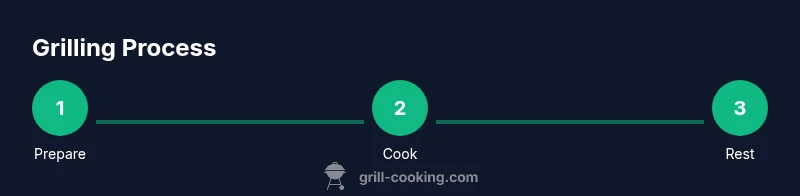
Before you light the grill, map your menu and create a simple timeline. Then preheat to the appropriate zone. While heating, prepare, season, and oil grates. Next, apply direct heat to sear. Move to indirect heat to finish. Check temperature with a thermometer, then rest. Finally, plate and clean. This framework keeps you organized and reduces guesswork.
Tools & Materials
- Grill (gas or charcoal)(Ensure it is clean and safe to use)
- Long-handled tongs(Sturdy and heat-resistant)
- Grill spatula(Flat edge helps flip and lift)
- Digital meat thermometer(Accurate temps prevent under/overcook)
- Heat-resistant gloves(Protect hands during flare-ups)
- Grill brush(Clean grates between uses)
- Oil spray or brush(Lightly oil grates to prevent sticking)
- Charcoal chimney starter(Helpful for charcoal setups)
- Skewers(For kebabs and veggie skewers)
- Grill rack or tray(Rest meat and keep area organized)
Steps
Estimated time: 60-90 minutes
- 1
Set up your grilling station
Clear workspace, lay out tools, and position the grill on stable ground away from structures. Confirm fuel source and ensure vents are clear. This setup reduces accidents and speeds cooking once heat is on.
Tip: Have water handy to quickly douse minor flare-ups without losing control of the grill. - 2
Preheat and establish zones
For gas grills, turn on two burners to create a high-heat zone and a cooler zone. For charcoal, bank coals to one side for direct heat and leave the other side cooler. Preheating ensures a good crust when you sear.
Tip: Keep the lid closed when preheating to trap heat and reach target temps faster. - 3
Oil grates and prep food
Lightly oil the grates to minimize sticking; pat meat dry and season evenly. Prepped food sears more consistently and prevents moisture from steaming away flavors.
Tip: Oil the grates rather than the meat to avoid smoking and flare-ups. - 4
Sear over direct heat
Place items on direct heat to develop a crust, about 1–2 minutes per side depending on thickness. Avoid moving meat too early to prevent tearing and sticking. Aim for a browned exterior with a hint of color.
Tip: Do not press down on meat; it squeezes out juices and dries the interior. - 5
Move to indirect heat to finish
Transfer to the cooler zone and close the lid to finish cooking through the interior. Use the thermometer to judge doneness and avoid overcooking. This step is key for thicker cuts and bone-in pieces.
Tip: Monitoring temperature is more reliable than time alone for thick cuts. - 6
Check internal temperature
Probe the thickest part of the meat away from bone; remove from heat just shy of target if carrying over will finish the cook. Resting begins the carryover cooking process and yields juicier results.
Tip: Use a target temperature as a guide, not a guess. - 7
Rest the meat
Let the meat rest on a clean tray for 5–10 minutes to redistribute juices. Tent loosely with foil if needed. Resting improves tenderness and flavor.
Tip: Rest time is not wasted; it completes the cooking process evenly. - 8
Serve and enjoy, then clean up
Slice against the grain and serve promptly. Clean grates while warm to remove residue; store tools properly for next time. A clean grill contributes to better flavor and safer cooking.
Tip: Wipe cool grates with a dry brush before the next use to prevent rust. - 9
Practice and refine
Each grilling session teaches timing, heat control, and confidence. Note what worked and adjust marinades, temps, and times for future cooks. Consistency comes with repeated practice.
Tip: Keep a simple log of temperatures and times for quick improvements.
FAQ
Do I really need a thermometer for grilling?
A thermometer helps prevent undercooked or overcooked meat by giving you an accurate target. It’s a small investment that pays off with safer, tastier results.
Yes. A thermometer is a reliable way to ensure meat is cooked safely and perfectly.
Gas or charcoal: which is better for beginners?
Gas grills are easier to control and heat evenly, which helps beginners learn. Charcoal adds flavor but requires more time and practice to manage heat.
Gas is generally easier to start with for beginners.
How long should I rest meat after grilling?
Resting allows juices to redistribute, resulting in a tastier, juicier bite. Rest small cuts for 5–10 minutes, larger cuts a bit longer.
Let the meat rest a few minutes before slicing for better texture.
How do I handle flare-ups safely?
Move food away from flames, close the lid to smother the flare, and keep a spritz bottle nearby. Do not spray water directly on large flames.
Close the lid and move the food away; flare-ups happen, stay calm.
Can I grill vegetables on the same grate as meat?
Yes, but keep space between items for even heat. Use separate utensils to avoid cross-contamination and monitor cooking times closely.
Yes, just give them space and clean tools between uses.
What should I do after grilling?
Let the grill cool, then clean grates and ash (if charcoal). Organize tools and store everything properly for next time.
Cool and clean the grill, then store your tools.
Watch Video
Quick Summary
- Master two-zone heat for even cooking.
- Use a thermometer for reliable doneness.
- Rest meat before slicing for juicier results.
- Prep tools and space before lighting the grill.
- Practice safety to enjoy grilling confidently.