How Often to Flip Ribs on the Grill
Learn how often to flip ribs on the grill to maximize bark, tenderness, and flavor with a step-by-step approach, expert tips, and troubleshooting from Grill Cooking.


To build a tasty bark while keeping ribs tender, flip only as needed to promote even color—not on every minute. In practice, flipping ribs a few times during indirect grilling helps achieve uniform browning while preserving moisture. Focus on heat and color cues, using bone-side orientation to guide the turns for best results.
Why Flip Ribs on the Grill Matters
Ribs are a balance of bark, tenderness, and moisture. When grilling, flipping helps ensure both sides receive even heat and color while preventing one side from drying out or scorching. The frequency you flip is linked to your grill setup, the heat level, and the rib cut. According to Grill Cooking, developing a strong crust (bark) on the outside while preserving juicy interior comes from controlled heat and strategic flipping rather than constant turning. The Grill Cooking Team emphasizes that patient, deliberate flips encourage uniform browning without breaking down connective tissue. For beginners, start with a conservative approach and increase flips only after you have established a stable indirect-heat zone and a reliable rub or glaze. The goal is to expose each surface to heat long enough to form a crust, then rotate to give the underside the chance to brown without overcooking the exposed side. Using bone-side down orientation as your default helps protect the meat while still allowing crust formation on the exposed rib face. This approach also reduces the risk of losing juices when you rotate the rack or flip with tongs. Practically, you’ll learn to read your grill and the ribs themselves—the sound of sizzling, the color of the crust, and the retreat of juices to the bone edge all signal a good flip point.
How Grilling Method Affects Flipping Frequency
The heating method influences how quickly ribs brown on the surface and how juices move within the meat. On gas grills, steady, controllable heat makes flipping less frequent since you can maintain a constant indirect zone. With charcoal, heat can spike and wander, so more careful timing helps prevent scorching while still building bark. Pellet grills offer consistent humidity and even heat, enabling predictable flip intervals. These differences matter because faster browning on one side can seal in juices, but excessive flipping can interrupt collagen breakdown and hinder bark formation. Grill Cooking's guidance emphasizes reading the surface: when the crust begins to set and color deepens, it’s a good moment to rotate. Use the meat's skin or bone edge as a cue; if the exposed surface looks pale, you might need another pass to ensure even browning. Temperature alone isn't enough; you should watch the color, the glaze set, and the crust formation. For home cooks, a simple rule is to let the ribs form a crust on the first contact, then flip after the surface crisp becomes consistent. If you're using a glaze or sauce, apply it in that window before flipping to help the second side pick up the color. In short, your flipping cadence should be a tool for uniform color, not a fixed timetable. The grill's type, the rib thickness, and your chosen rub all influence how often you flip.
Optimal Flip Strategy by Cooking Stage
A good flip strategy grows from understanding stages of the cook. Start with indirect heat to allow the surface to set without overdoing the exterior. When the first surface develops a stable crust and color, flip so the other side can brown and render evenly. If you are applying a glaze or finishing sauce, plan flips around those moments to maximize adherence and color. Throughout the process, you’ll want to monitor color changes, avoid piercing the meat with a fork, and keep the lid closed as much as possible to maintain even temps. A common approach is to flip once early to set the crust, then again halfway through to ensure uniform browning on both sides, and finally flip for a last minute glaze if needed. Remember that the exact cadence will depend on your grill and rib thickness, so use color cues and touch to guide you more than a clock.
Note: Resting after cooking helps redistribute juices. If you wrap the ribs, do so after the final flip to trap heat and keep the glaze from dripping off. This middle stage is where texture and flavor deepen, so don’t rush it.
Practical Scenarios: Gas vs Charcoal vs Pellet Grills
Gas grills offer steady temps and predictable indirect zones, which can reduce the need for frequent flipping. Charcoal grills introduce more temperature variability, so expect to flip more often to maintain even browning and prevent hot spots from scorching the surface. Pellet grills provide consistent heat and humidity, which helps keep meat moist while allowing a planned flipping rhythm. In all methods, rely on visual cues—color, crust formation, and glaze adhesion—rather than a strict timer. For thicker rib racks, you may need an initial longer dwell in indirect heat before any flip, followed by one or two controlled turns to build an even bark across the surface. If you use a rib rack or a tray, flips become easier and more predictable because the meat isn’t resting directly on grates. This can also help with even glaze distribution and cleaner handling at the flip points.
Common Pitfalls and How to Avoid Them
A frequent mistake is flipping too early or too often, which interrupts crust formation and dries the meat. Another is lifting the lid too often, causing temperature swings that slow rendering. Always use long tongs and keep probes away from bones to get accurate readings without piercing the meat. Don’t rush the initial crust; let it form before twisting or turning. If you smoke or sauce heavily, plan flips around application so the glaze won’t burn or caramelize unevenly. Finally, rest the ribs after cooking to help juices redisperse, which improves tenderness and slicing.
Quick Reference: Visual Cues and Timing Cues
- Crust formation: flip when the exposed surface consistently browns and begins to crackle.
- Color balance: ensure both sides show similar color depth before a final turn or rest.
- Juices: a light sheen retreating toward the bone is a cue to flip or rest.
- Glaze management: time flips around glaze application to avoid burning or dulling color.
- Resting: allow a short rest after the final flip and before slicing to retain moisture.
- Safety: use proper heat protection and never flip with bare hands near hot grates.
Tools & Materials
- Grill tongs(Long-handled, 14–18 inches, secure grip)
- Instant-read thermometer(Probe capable or instant-read; avoid bone contact)
- Silicone basting brush(For applying rub or glaze without tearing meat)
- Aluminum foil(Optional for tenting during rest or wrapping during finish)
- Rib rack(Helpful for aligning multiple racks on the grate)
- Heat-resistant gloves(Protect hands when flipping and handling hot meat)
- Oil spray(Lightly oil grates to prevent sticking)
Steps
Estimated time: 1 hour 40 minutes
- 1
Prep and position ribs
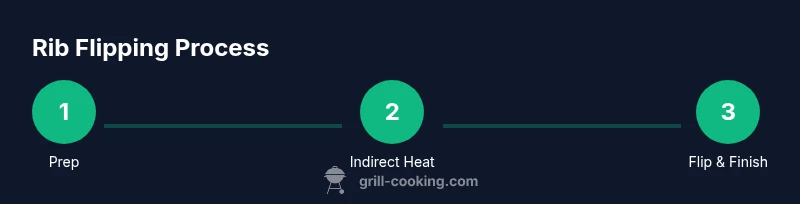
Pat ribs dry, remove the silver skin if needed, and apply your rub. Let the rub sit for a few minutes to penetrate the surface. Arrange the ribs on a clean tray with the bone side down to begin building a crust on the exposed face.
Tip: Keep the membrane intact on the bone side for tenderness; it acts as a natural barrier. - 2
Set up indirect heat
Create a two-zone setup on your grill so the ribs can rest in the cooler area while heat is kept to the sides or bottom. Close the lid to stabilize heat and prevent flare-ups that would char the surface too quickly.
Tip: If using a charcoal grill, push coals to the sides and place a drip pan in the center. - 3
Place ribs bone-side down
Place the rack on the grate bone-side down in the indirect zone. Keep the lid closed to allow gradual browning. Check the color on the exposed surface after 8–12 minutes and prepare to pivot when the crust firms.
Tip: Use long tongs and avoid pressing down on the meat to prevent squeezing juices out. - 4
First flip cue
When the exposed surface forms a stable crust and color deepens, flip the ribs so the other side can brown. Maintain indirect heat and limit lid openings for consistency.
Tip: Flip with a single, confident motion to avoid tearing the surface. - 5
Mid-cook flip
Halfway through the cook, rotate or flip again to ensure even browning on all surfaces. This helps move juices evenly and prevents one side from drying out.
Tip: If using glaze, apply during this flip window to maximize color pickup. - 6
Finish and rest
Check internal tenderness by testing near the bone but avoid bone contact with the thermometer. Remove from heat when you reach the target tenderness, tent with foil, and rest 10–15 minutes before slicing.
Tip: Resting improves juiciness and even texture across the rack.
FAQ
How often should I flip ribs on a gas grill?
On a gas grill with good indirect heat, flip ribs a few times during the cook rather than constantly. Let the crust form on each side before turning to ensure even browning and tenderness.
For gas grills, flip a few times, letting each side form a crust before turning for even color and tenderness.
Is it better to flip ribs bone-side up or down?
Start bone-side down to protect the meat and promote crust on the exposed surface. Flip to expose the bone side later to brown the other side and finish rendering.
Start bone-side down, then flip to expose the other side for even browning.
Should I baste or glaze while flipping?
If using glaze, apply during the flip window when you reintroduce heat to the other side. This helps adhesion and color without burning.
Baste during the flip window to build color without burning the glaze.
What internal temp indicates doneness for ribs?
Ribs are typically tender when they yield to slight pressure near the bone and have a deep, caramelized crust. Use tenderness rather than a strict temp as your guide.
Tenderness near the bone guides doneness more than a fixed temperature.
How can I prevent ribs from sticking when flipping?
Keep grates clean and lightly oil them, use a firm grip with tongs, and avoid twisting the meat as you flip to prevent tearing.
Maintain a firm grip and keep the grill grates well oiled to avoid sticking.
Do I need to wrap ribs during grilling?
Wrapping is optional and mostly used to accelerate tenderization or retain moisture. If you wrap, do so late in the cook to prevent steaming away the bark.
Wrapping is optional; use it to boost tenderness but not to overcook or soften the bark.
Watch Video
Quick Summary
- Flip strategically for even browning and moisture retention
- Use distant heat and color cues over a clock
- Rely on bone-side orientation to protect meat while browning
- Charcoal, gas, and pellet grills each affect flip cadence differently
- Rest the ribs after cooking for best texture