How to Grill with a Smoker Box: A Practical Guide for Home Cooks
Discover how to grill with a smoker box to add authentic wood-smoked flavor. This practical guide covers wood choices, setup, heat control, safety, and tips to avoid common mistakes for home cooks.


Using a smoker box on a standard grill lets you infuse wood-smoked flavor into foods without a dedicated smoker. You’ll learn how to select a box, choose woods, position it correctly, control heat, and monitor smoke. Essential gear includes a smoker box, wood chips or chunks, and long-handled tongs; practice safe grilling. According to Grill Cooking, this approach elevates weeknight grilling with authentic smoke.
What a smoker box is and how it works
A smoker box is a small, perforated metal container designed to hold wood chips or chunks that smoking on a regular grill. When placed over heat, the wood heats, smolders, and releases flavorful smoke that circulates around the food inside the grill. The lid traps this smoke, helping penetrate meat, vegetables, and even seafood. Unlike a dedicated smoker, a smoker box gives you a controlled smoke source on a standard gas or charcoal grill, enabling you to build layered flavors with minimal equipment.
Grill Cooking emphasizes that the key is steady, manageable smoke—not a roaring flame. The box should be dry, properly seated, and not overfilled, so air can circulate and the chips can smolder rather than catch fire. A good smoker box adds complexity to your grill routine and broadens the range of dishes you can confidently smoke at home.
Choosing a smoker box and wood options
There are several designs of smoker boxes—stainless steel, cast iron, hinged tops, and nonstick-coated options. Stainless steel is durable and easy to clean, while cast iron retains heat longer for steadier smoke. Look for a box with tight-fitting lids and multiple vent holes to control airflow. The choice of wood determines flavor: fruitwoods (apple, cherry) suit poultry and pork, while hickory and mesquite pair well with beef and ribs. For lighter dishes, use milder woods or mix with a small amount of stronger woods for balance.
Grill Cooking notes that you don’t need expensive woods to get good flavor; even a small amount of wood can produce noticeable aroma. Start with 1/2 cup of chips for a quick smoke and 1 cup for longer sessions, adjusting as needed based on your grill’s heat and the dish you’re cooking.
Setting up your grill for smoke: placement, heat zones, and lid management
Position the smoker box directly over the heat source so chips heat quickly and begin to smoke. On gas grills, place the box on a single burner set to medium-high; on charcoal grills, set the coal bed to create a high heat zone under the box. Maintain a stable ambient temperature around 225–250°F (107–121°C) for most foods. Keep the lid closed as much as possible to trap smoke and heat; only lift to check temperature or flip foods.
Grill Cooking recommends preheating the grill with the smoker box in place for about 5–10 minutes to ensure a steady smoke start. If your grill has multiple heat zones, use indirect heat for longer cooks to avoid scorching while the smoke builds flavor.
Wood types, flavor profiles, and pairing with foods
Fruitwoods impart mellow sweetness and work well with chicken, pork, and fish. Strong woods like hickory and mesquite offer robust smoke suited for beef and pork ribs but can overwhelm delicate proteins if overused. A common approach is to blend woods—e.g., 70% apple with 30% hickory—to achieve balance. For vegetables, lighter woods such as cherry or apple provide a gentle aroma without overpowering natural flavors.
Experiment with smoke intensity by adjusting the amount of wood and the duration of exposure. Start with shorter smoking sessions and gradually increase as you refine your palate and preferred intensity. Each protein has an optimal window for smoke uptake, typically once the surface has begun to render fat and moisture begins to rise.
Temperature control and maintaining steady smoke rhythm
Consistency matters more than raw heat. Start with a moderate temperature and allow the smoke to develop before bringing foods up to final doneness. If smoke ceases, check for chip moisture, box position, and airflow; add a fresh batch if needed. Use a thermometer to monitor internal temps while keeping the grill lid closed to preserve heat and smoke.
Grill Cooking highlights the value of a reliable thermometer and a timer. Small adjustments at the vents or burners can maintain a steady smoke stream without large temperature swings, helping you achieve uniform doneness and deeper smoke integration.
Common mistakes and how to fix them
Common errors include soaking chips for too long (which can dampen smoke production), overfilling the smoker box (restricts airflow), and opening the lid too often (loss of heat and smoke). Another pitfall is selecting woods that overpower the dish. Fixes include using just enough wood for a steady plume, preheating the box, and maintaining a tight lid.
To build confidence, start with poultry or fish, which are less forgiving, before moving to larger cuts like ribs or pork shoulder. Keep a log of which woods you used for each dish to reproduce successful results.
Practical tips: quick-start recipes and examples
As you gain experience, you’ll discover which combinations you prefer. A simple starting recipe: chicken thighs with a light apple wood smoke for 45–60 minutes at 350–375°F, then finish with direct heat to crisp the skin. For vegetables, try zucchini and bell peppers with a mild fruitwood smoke; the goal is to add aroma without masking natural flavors. Over several cooks, you’ll unlock a reliable rhythm for smoke and heat that fits your grill and schedule.
Tools & Materials
- Smoker box(Stainless steel preferred; ensure a tight lid and vented bottom)
- Grill with lid(Gas or charcoal grill; ensure a heat source and a stable lid seal)
- Wood chips or chunks(Choose variety-by-protein; pre-measure in 1/2 to 1 cup portions)
- Long-handled tongs(For safe handling of hot chips and the box)
- Aluminum foil (optional)(Can be used to line the box or create an extra lid seal)
- Meat thermometer(Ensure accurate internal temps)
- Heat-resistant gloves(Protect hands during setup)
Steps
Estimated time: 60-120 minutes
- 1
Select and prepare the smoker box
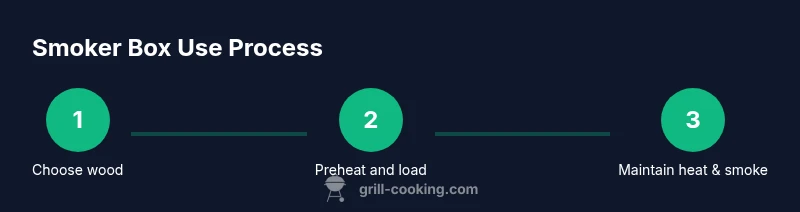
Choose a box appropriate for your grill size and wood type. Load with dry chips or chunks, distributing evenly but avoiding overfilling so air can circulate. Dry wood sparks better and creates steadier smoke. This step sets the foundation for flavor.
Tip: Keep the box dry and ready to preheat for immediate smoke production. - 2
Preheat the grill with the box in place
Place the smoker box over the heat source and close the lid. Allow 5–10 minutes for the chips to heat and begin smoking. Preheating stabilizes smoke development and helps you avoid cold spots under food.
Tip: Preheat to establish a steady smoke; avoid removing the lid too often. - 3
Decide on wood soak or no soak
If you’re in a hurry, skip soaking; dry chips will smolder quickly. If you want longer smoke cycles, soak chips for about 30 minutes and drain before loading. Be mindful that soaking can create more steam than smoke in some grills.
Tip: Test both methods on a small cook to see which gives better flavor and smoke stability. - 4
Place the smoker box correctly
Set the box directly above the heat source for rapid smoke, or slightly off to avoid flare-ups on gas grills. Ensure the box seats firmly and airflow isn’t blocked by grates or foil.
Tip: A tight fit prevents smoke leakage and ensures consistent flavor. - 5
Start cooking and manage temperature
Close the lid and maintain a steady temperature in the target range (usually 225–250°F / 107–121°C for smoking). Use vents or burners to adjust as needed without opening frequently.
Tip: Use a thermometer to track both grill and food temps for reliability. - 6
Refresh smoke without overheating
If smoke wanes, add a small amount of chips, not a full load, to avoid temp spikes. Re-seal the lid promptly to maintain heat and smoke.
Tip: Small, incremental chips keep a gentle, steady plume. - 7
Monitor food and finish with a sear (optional)
Check internal temps with a thermometer; once target temps are reached, you can finish with direct heat to crisp edges. This stage often defines texture and bite.
Tip: Use indirect heat for most of the smoking phase to prevent scorching. - 8
Clean up and maintain equipment
After cooking, empty and wash the smoker box. Dry thoroughly to prevent rust. Inspect vents and lids for wear and replace parts as needed.
Tip: Regular maintenance extends the life of your smoker box.
FAQ
What is a smoker box and how does it work?
A smoker box is a metal container that holds wood chips or chunks. When heated on a grill, the wood smolders and creates smoke that flavors food. The box shields the wood from direct flames while allowing airflow to sustain smoke.
A smoker box holds wood chips that smolder to create smoke, flavoring food on a grill.
Can I use a smoker box on any grill?
Smoker boxes work on most gas and charcoal grills, and some compact electric grills. The key is having a heat source and a lid to trap smoke. If space is tight, choose a compact box that fits your grill’s burner or charcoal area.
Yes, most gas and charcoal grills support smoker boxes, as long as you can trap the smoke with a lid.
Should I soak wood chips before using the smoker box?
Soaking is optional and depends on your desired smoke duration. Soaking can extend the smoke but may reduce smoke intensity. Start with dry chips for quick, steady smoke and experiment.
Soaking is optional; try dry chips first and adjust with soaked chips if you want longer smoke.
What foods pair best with smoked flavors?
Poultry (chicken, turkey), pork (ribs, chops), beef (steaks, brisket), and fish benefit from smoke. Vegetables like peppers and zucchini work well with light smoke. Start with milder woods to preserve the protein’s natural flavor.
Smoke goes well with poultry, pork, beef, fish, and some vegetables, especially with milder woods.
Are there safety concerns with using a smoker box?
Always monitor the grill, avoid overflowing the box, and use heat-resistant gloves when handling hot parts. Keep kids and pets away from an active grill. Ensure proper ventilation when cooking indoors or near buildings.
Yes—watch for flare-ups, use gloves, and ensure proper ventilation and supervision.
Watch Video
Quick Summary
- Use a smoker box for affordable smoke flavor
- Preheat and maintain steady heat for best results
- Choose woods to balance intensity with protein type
- Avoid opening the lid often to preserve smoke
- Clean and inspect equipment after every use