How to Grill Full Chicken: A Complete Step-by-Step Guide
Learn how to grill a full chicken for juicy, evenly cooked meat and crispy skin. This Grill Cooking guide covers selection, brining options, heat management, and safe doneness to help you master outdoor poultry.


By the end, you’ll know exactly how to grill a full chicken for juicy, evenly cooked meat and crispy skin. According to Grill Cooking, this guide covers selection, brining or dry rub options, trussing, heat management, and temperature checks to ensure safe, flavorful results on any grill. Follow the steps to achieve restaurant-quality poultry at home with confidence.
The Case for Grilling a Whole Chicken
Grill full chicken is a versatile centerpiece that combines simplicity with flavor. When you grill a whole bird, you create a unified texture across the breast, thighs, and drumsticks while benefiting from the smoky aroma that only outdoor heat can provide. The skin crisps as the fat renders, producing a roasted-like finish with a crisp crackle. The main challenge is heat management: you want enough direct heat to brown the skin, but most techniques rely on indirect heat to finish cooking without drying the meat. With careful preparation, timing, and temperature control, a whole chicken becomes a showpiece that feeds a crowd with minimal effort. Grill Cooking’s approach emphasizes safe handling, even heat, and a patient resting period to lock in juices and tenderness. As you follow these tactics, you’ll see how a well-executed method delivers consistent results, whether you’re using charcoal, gas, or pellet grills. This section lays the groundwork for the step-by-step method you’ll apply to every grill session.
Selecting a Chicken and Prep Essentials
Choosing the right bird is the first step in getting a great grill full chicken. Look for a 3–5 pound whole chicken with intact skin, fresh aroma, and no visible freezer burn. If available, select a bird with good marbling in the breast and thighs for extra juiciness. Before you begin, remove giblets and pat the exterior dry to promote even browning. If you plan to brine, a light brine can help the meat stay moist during long cooks; alternatively, a dry rub can deliver bold flavor without extra liquid. Trussing the legs and tucking the wings helps the chicken cook evenly and stay compact on the grill. Remember to bring the bird to room temperature for 20–30 minutes before cooking to ensure more even heat penetration. Finally, plan your timing around resting—the longest part of the process is not the grill time but the minutes you let the meat rest before carving.
Brining vs Dry Brining and Seasoning
Brining adds moisture and brackets the chicken with a salt solution that penetrates the meat. A light brine (about 1/4 cup salt per quart of water) for 4–6 hours is common for a 4–5 pound bird, but you can opt for a dry brine of kosher salt rubbed evenly across the skin for 4–8 hours. Dry brining simplifies cleanup and can yield an equally juicy result with really crisp skin. Either method should be followed by a thorough pat dry to remove surface moisture, which helps achieve that coveted skin crackle. After brining, apply your favorite seasoning mix or a simple salt-pepper blend, plus optional aromatics like garlic, paprika, or citrus zest for a flavorful crust. If you’re using a wet brine, rinse and pat dry after brining to prevent overly salty meat. With any seasoning, aim for even coverage, especially on the thighs where depth of flavor matters most.
Spatchcock vs Whole: Pros and Cons
Spatchcocking – removing the backbone and flattening the bird – can shave off cooking time and promote even heat exposure, which is appealing for beginners. However, many grillers prefer a traditional whole bird for its classic presentation and ease of brine or rub application. A whole bird may take longer to cook, but it is easier to monitor temperature in one central mass and reduces trimming steps after cooking. The choice between spatchcock and whole depends on grill setup, time constraints, and desired texture: spatchcock offers faster, even browning; whole delivers a roasted-like finish with a different look and bite.
Preparing the Grill for Indirect Heat
The backbone of a successful grill full chicken is controlled, indirect heat. For charcoal grills, arrange a two-zone fire with hot embers on one side and cooler coals on the other, and place the bird on the cooler zone after searing briefly over the hot side. For gas grills, set burners to create a preheated, two-zone setup by turning on one or two burners to medium and leaving the others off or at low. Pellet grills simplify this with a single target temperature; simply set the grill to about 350–375°F (175–190°C) and plan for indirect cooking. Use a thermometer to monitor ambient grill temperature and an instant-read thermometer to confirm internal doneness. Maintaining a steady temperature helps render fat slowly and yields a succulent, evenly cooked chicken.
The Step-By-Step: Truss, Season, and Grill
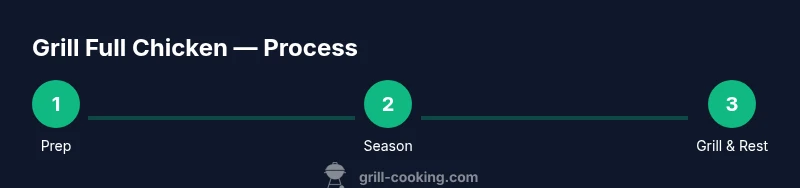
- Gather and thaw the chicken if needed, then pat dry thoroughly to remove surface moisture. 2) If brining, follow your prescribed times and rinse/dry after brining. 3) Season the bird evenly, including under the skin where possible, and truss the legs to prevent flopping during cooking. 4) Preheat the grill to a two-zone setup; sear the chicken briefly over direct heat to render fat. 5) Move the bird to the cooler side, close the lid, and monitor temperature. 6) Rotate the bird as needed to promote even browning and avoid hot spots. 7) When the internal temperature reaches near target, probe thickest parts to confirm doneness, then finish on direct heat if the skin needs more color. 8) Remove from heat and rest for 10–15 minutes before carving to let juices redistribute. 9) Carve and serve with pan drippings or a light pan sauce for extra savor. Tip: keep a spray bottle filled with water handy to manage flare-ups that can happen during searing. Why: direct heat browns the skin quickly, indirect heat completes the cook evenly without scorching. Step-by-step guidance helps ensure you don’t rush the process and that every section reaches safe, flavorful temperature.
Doneness, Temps, and Rest Time
Doneness hinges on internal temperature rather than color alone. Aim for an internal temperature of 165°F (74°C) in the thickest part of the breast and thigh, measured with an instant-read thermometer. If you’re brining, the flavor may be slightly saltier, so verify the final temperature with the thermometer and adjust seasoning after resting. Pull the chicken off the grill a few degrees early since carryover heat will continue to cook it as it rests. Rest the chicken for at least 10–15 minutes in a warm area, tented loosely with foil if needed. This rest period allows juices to redistribute, yielding tender, juicy meat in every bite. When carving, slice along the natural joints to preserve moisture and keep the crisp skin intact for serving. A properly rested chicken maintains its juiciness and presents beautifully on the plate.
Troubleshooting Common Issues
If the skin isn’t crisp enough, finish the chicken over direct heat for 2–3 minutes per side, watching closely to avoid burning. If the meat seems undercooked, it likely needs more time on the cooler zone; move to indirect heat and continue cooking, checking frequently. A persistent problem with dry meat often points to overcooking or insufficient moisture: consider brining next time or using a light oil-based rub to improve moisture retention. If flare-ups occur, close the lid and briefly move the chicken away from the flames, then resume cooking with a shielded position. Always check for evenness by probing several parts of the bird and verifying uniform temperature. Finally, avoid piercing the meat too early—let the juices stay inside for maximum tenderness.
Carving, Serving, and Leftovers
Carving a whole chicken begins with a neat, confident slice along the breastbone, followed by separating each leg and wing. Use a sharp carving knife and a steady hand to make clean cuts that preserve moisture in the meat. Serve with light pan sauces, a lemon-herb drizzle, or a simple pan jus created from deglazing the resting juices. Leftovers store best when refrigerated promptly in shallow containers so they cool quickly and evenly. Reheat gently to avoid drying the meat; consider using the microwave with a splash of broth or reheat in a low oven to maintain moisture. Grilled chicken leftovers pair well with salads, tacos, or sandwiches, giving you a quick, satisfying meal after a weekend cook.
Tools & Materials
- Meat thermometer (instant-read preferred)(Probe into thickest part of the breast and thigh; target 165°F (74°C))
- Trussing twine(Tie legs together and tuck wings to keep the bird compact)
- Kitchen shears(Useful for trimming excess skin or fat)
- Carving knife and cutting board(Sharp knife; stable board for clean carving)
- Tongs and heat-safe gloves(Grip and protect hands during grilling and flipping)
- Grill brush and aluminum foil(Clean grill grates and shield heat during direct searing)
- Spray bottle with water(Control flare-ups during direct heat searing)
- Large platter or tray(Resting area for the hot bird and carry-to-table)
Steps
Estimated time: 60-90 minutes
- 1
Gather and prep
Bring the chicken to room temperature, pat dry, and remove giblets if present. If you plan to brine, prepare the brine now and thaw the bird completely if it’s frozen. Rinse and dry after brining if needed.
Tip: Patting dry thoroughly helps achieve crisp skin and even browning. - 2
Choose brine or dry-brine
Decide between a light wet brine or a dry brine. For wet brine, submerge for 4–6 hours; for dry brine, rub salt evenly and let rest for 4–8 hours in the fridge. Rinse if a wet brine was used and pat dry before proceeding.
Tip: Dry brine is easier to manage and still yields juicy meat with crisp skin. - 3
Season and truss
Season under the skin if possible, then rub the outside with salt, pepper, and any preferred spices. Truss the legs and tuck the wings to prevent flapping during cooking.
Tip: Even seasoning under the skin boosts flavor in every bite. - 4
Preheat and set up grill
Set up a two-zone fire for indirect cooking. Preheat to about 350–375°F (175–190°C) and ensure the grill lid can close without obstruction.
Tip: Two-zone setup helps achieve crisp skin without burning the meat. - 5
Sear briefly over direct heat
Place the chicken over direct heat for 3–5 minutes per side to start browning and render fat from the skin.
Tip: Watch for flare-ups; use a spray bottle or shield with foil as needed. - 6
Cook indirectly to finish
Move the bird to the cooler side, close the lid, and cook until the thermometer reads near 160°F (71°C) in the breast and 170–175°F (77–79°C) in the thigh.
Tip: Turn the bird occasionally for even heat distribution. - 7
Check doneness and rest
When the internal temps near target, remove from heat and let rest for 10–15 minutes to redistribute juices.
Tip: Resting is essential for juicier meat and easier carving. - 8
Carve and serve
Carve along natural joints for clean portions. Serve with juices or a light pan sauce.
Tip: Slice the breast against the grain for tender pieces. - 9
Store leftovers safely
Cool promptly, refrigerate in shallow containers, and reheat gently to preserve moisture.
Tip: Leftovers pair well with salads, tacos, or wraps.
FAQ
What is the best way to season a whole chicken for grilling?
Season under the skin and on the outside for even flavor. A simple mix of salt, pepper, paprika, garlic powder, and a touch of citrus zest works well. Let it sit for 20–30 minutes to meld the flavors before cooking.
For best results, season under the skin and on the outside with a simple salt and spice blend, then rest briefly before grilling.
Is spatchcock a better method than grilling a whole chicken?
Spatchcocking can cook faster and promote even browning, but a whole chicken offers presentation and uniform mass. Choose based on time, grill setup, and desired texture.
Spatchcocking speeds up cooking and browning, but a whole chicken gives a classic look; pick what fits your grill and schedule.
Do I need to brine a whole chicken before grilling?
Brining is optional but helps with moisture retention. A light wet brine or a dry brine can improve juiciness; rinse and pat dry if you choose a wet brine.
Brining is optional but can improve juiciness; dry brine is a simpler option.
What internal temperature confirms doneness for a grilled chicken?
Reach at least 165°F (74°C) in the thickest part of the breast or thigh. Use an instant-read thermometer and test in multiple places to ensure even cooking.
Make sure the thickest part reads 165 degrees Fahrenheit or higher.
How long should a whole chicken rest after grilling?
Rest for 10–15 minutes to let juices redistribute. This improves tenderness and makes carving easier.
Rest for about 10 to 15 minutes before carving.
What are common mistakes when grilling a whole chicken?
Overcooking, uneven heat, and skipping rest are the most frequent errors. Use a two-zone setup, monitor temps, and rest before carving.
Common mistakes are overcooking, poor heat control, and not resting the meat.
Watch Video
Quick Summary
- Prepare a two-zone grill for even cooking.
- Use a thermometer to hit 165°F safely.
- Rest the bird to retain juiciness.
- Season evenly for a flavorful crust.