Grill Chicken Fast Food at Home: A Step-By-Step Guide
Learn to grill chicken fast food at home with a practical, step-by-step guide. From heat management to safe handling and flavor tweaks, this educational article helps home cooks achieve juicy, crispy results quickly.


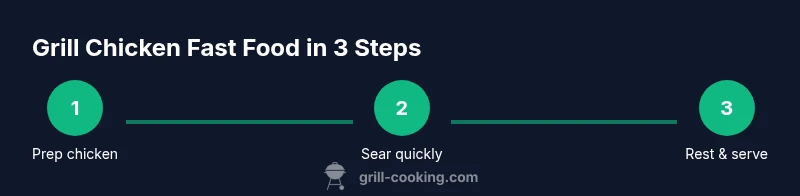
According to Grill Cooking, you can reproduce grill chicken fast food results at home by maximizing heat, using two-zone cooking, and finishing with a brief rest. Start with trimmed, evenly thick pieces, preheat a two-zone grill, and apply a bold dry rub or light marinade. With precise timing, you’ll achieve juicy meat and a crisp exterior in under 30 minutes.
Key principles for fast, safe grilled chicken
Grill chicken fast food results hinge on three core ideas: consistent thickness, smart heat management, and efficient flavor application. Start with chicken pieces that are evenly thick so they cook uniformly. When you can, trim excess fat and dry the surface well—juices on the surface can hinder browning. Heat management matters more than raw power: a two-zone setup lets you sear quickly on direct heat and finish gently on indirect heat. Finally, choose a flavor approach that suits weeknight speed—bold dry rubs or light, fast-friendly marinades can deliver big flavor in minutes. According to Grill Cooking, planning your steps to minimize adjustments keeps the process smooth and predictable, which translates to better results in less time.
For home cooks, the goal is a crisp exterior with a juicy interior. The balance comes from an initial high-heat sear to lock in moisture, followed by controlled finishing on a cooler zone. With practice, you’ll be able to scale up or down based on batch size without sacrificing texture.
Heat management: two-zone cooking for speed
Two-zone grilling creates a fast, repeatable workflow. You’ll maintain a hot direct zone for searing and a cooler indirect zone for finishing. This setup reduces flare-ups, prevents overcooking, and helps you handle variations in piece thickness. If you’re using charcoal, bank coals to one side; with gas, set one side to high and the other to medium-low. A quick test with an empty grate helps you gauge heat retention. When the surface sizzles loudly but the juices stay mostly on the meat, you’re ready to begin the sear without bending time too far. Grilling with two zones also gives you room to maneuver if a piece browns faster than expected, allowing you to move it to indirect heat without interrupting the rest of the batch.
Cuts, thickness, and prep for uniform cooking
For rapid cooking, bone-in pieces take longer than boneless cuts, so plan accordingly. Thighs and boneless breasts are common fast-food favorites because they cook quickly and stay juicy when properly managed. If your chicken is uneven in thickness, gently pound or butterfly the thicker halves to a uniform thickness of about 1/2 inch. Pat dry with paper towels to remove surface moisture that can steam rather than brown. Apply a dry rub or light marinade just before grilling; heavy marinades can cause flare-ups and uneven charring. The goal is surface flavor that browns quickly without soaking the meat through.
Marinades vs. dry rubs: speed-focused flavor
Dry rubs tend to be faster and less messy than wet marinades, which can add 15 to 30 minutes of prep time depending on the recipe. A quick rub of salt, pepper, paprika, garlic powder, and a little sugar can produce a robust crust in minutes when exposed to direct heat. If you prefer a marinade, keep it light and apply just before cooking to avoid adding too much moisture that could hinder browning. In both cases, flavor compounds should cling to the surface for quick browning, then finish with a simple glaze or squeeze of lemon to brighten the finish. Grill Cooking analysis suggests that the fastest path to a strong crust is a minimal wet coating paired with high direct heat.
Preheating and grill setup for fast results
Preheating is essential for a quick, even cook. Aim for a hot direct zone around 450–500°F and a secondary zone around 350–400°F if your grill allows. Clean grates prevent sticking and ensure even browning, so give your grill a short clean with a brush before heating. Oil the grates lightly to enhance nonstick performance. A two-zone system makes it easier to transition from searing to finishing without losing momentum. For gas grills, preheat both zones, then adjust the airflow to maintain the target temperatures. For charcoal, set up a two-zone fire and keep the lid closed as you sear to build surface browning without overcooking the interior.
Direct-heat sear, indirect finish: the standard method
The classic fast-food style method uses a high-heat sear on each side for 1–2 minutes per side to form a crust quickly. After searing, move the pieces to the indirect heat zone to finish cooking through without scorching the crust. Flip only when a clean crust forms to avoid tearing the surface. Keep the grill lid closed during the indirect phase to retain heat and reduce total cooking time. You can test for doneness with a meat thermometer; removing the meat just shy of the target and letting carryover heat finish the process yields juicy results.
Safety and doneness: temps, rest, and handling
Safe handling is non-negotiable. Chicken should reach an internal temperature of 165°F (74°C) for safe consumption. Remove from heat at or just before this target, allowing carryover heat to bring it up during resting. Resting for 3–5 minutes helps redistribute juices and improves slice quality. Since the surface browning happens quickly, avoid cutting into the meat immediately after removal—the juices will escape and toughen the texture. When serving, consider portioning while cold or for immediate plating to ensure a consistent, hot finish.
Flavor boosters and quick sauces
Finish with bright, fast accents that complement the crust. A lemon-herb drizzle, garlic butter, or a simple chili-garlic glaze can elevate a basic rub without slowing you down. If you want extra depth, a quick glaze after the sear—made from a small amount of honey or maple with soy or tamari—adds a glossy finish and a perceptible sweetness that pairs well with char. For health-conscious cooks, a squeeze of fresh citrus right before serving brightens the dish without adding heavy sauces. These little touches give fast-food style chicken a restaurant-like finish.
Common pitfalls and fixes
Even experienced home cooks run into common issues with fast grilling. If the crust burns before the interior is cooked, lower the heat and extend the indirect phase; a longer rest can also help. If the meat is pale and lacks browning, ensure the grates are clean and dry, and use a bit more direct heat initially. Overcrowding the grill reduces airflow and increases steaming; cook in batches if needed. If you notice excessive moisture on the surface, pat dry again before returning to direct heat. Remember, consistent thickness helps avoid scorching on the edges while the centers finish cooking.
Tools & Materials
- Grill (gas or charcoal)(Two-zone capability preferred (hot direct zone and cooler indirect zone))
- Meat thermometer(Digital probe works best for accurate doneness)
- Tongs(Long handle to keep hands safe)
- Heat-resistant gloves(Optional for handling hot grates)
- Dish for rest(Cover loosely with foil if needed)
- Paper towels(Pat dry surface before seasoning)
- Marinade or dry rub ingredients(Fast flavor enhancers; adjust to taste)
- Oil spray or brush(Light coating to prevent sticking)
Steps
Estimated time: Total time: 25-40 minutes
- 1
Prepare and trim chicken
Trim any excess fat and ensure uniform thickness. If pieces vary, gently pound thicker portions to ~1/2 inch to promote even cooking. Pat dry to remove surface moisture, which helps browning. Apply a light rub or marinade just before grilling to maximize surface flavor.
Tip: Even thickness reduces hot spots and ensures a uniform cook. - 2
Preheat grill and set zones
Preheat the grill to establish a hot direct zone for searing and a cooler indirect zone for finishing. For gas grills, heat respective burners to achieve the target zones; for charcoal, bank coals to one side. Give the grill a few minutes to reach temperature before adding meat.
Tip: Two-zone setup prevents overcooking the crust while the center finishes. - 3
Season and apply rub
Generously apply your chosen dry rub or light marinade to all surfaces. Avoid soaking the meat in liquid marinades; a dry coating browns quickly and sticks better during searing. Let rub cling for a minute or two before placing on the grill.
Tip: A quick, bold rub creates a crisp crust in high heat. - 4
Sear on direct heat
Place chicken on the direct heat zone, cooking for 1–2 minutes per side to form a crust. Don't move the pieces too soon; a proper sear releases a crust that resists tearing and reduces sticking.
Tip: Move only after a clean crust forms on each side. - 5
Finish on indirect heat
Relocate pieces to the indirect heat zone to finish cooking through without burning the crust. Monitor closely with a thermometer to avoid overcooking. Lid down helps retain heat and speed up the process.
Tip: Carryover heat will finish cooking after removal from direct heat. - 6
Rest and serve
Transfer the chicken to a clean plate and let rest for 3–5 minutes to reabsorb juices. Slice against the grain for tender bites. Serve immediately with quick sides or sauces for a complete fast-food style plate.
Tip: Resting prevents juice loss and yields juicier slices.
FAQ
What cuts of chicken work best for fast grilling?
Boneless breasts and thighs cook quickly and evenly on a two-zone grill. Thighs stay juicy, while breasts cook faster when pounded to uniform thickness. Bone-in pieces may require longer; plan accordingly.
Boneless breasts and thighs are great for speed; flatten thicker pieces to cook evenly.
Is it safe to grill chicken from frozen?
Grilling from fully frozen is not recommended because it prevents even cooking and can lead to unsafe temperatures. Thaw chicken safely in the fridge or under cold water before grilling for best results.
Don't grill frozen chicken; thaw it first for even cooking.
What is the safe internal temperature for grilled chicken?
The recommended safe internal temperature for chicken is 165°F (74°C). Use a meat thermometer to verify by inserting into the thickest part away from bone.
Cook chicken to 165 degrees, check with a thermometer.
Can I grill chicken without oil or marinade?
Yes, you can grill dry-seasoned chicken with well-oiled grates to minimize sticking. A light oiling of the surface also helps create a crisp crust without added liquids.
Oil the grates lightly; you can grill with just seasonings and a hot, clean grill.
How can I prevent dry chicken on the grill?
Choose thicker cuts, pound to even thickness, and use the two-zone method to finish with indirect heat. Don’t overcook; pull off just before reaching 165°F to let carryover heat complete doneness.
Avoid overcooking; rest the meat to keep it juicy.
What heat level is best for a fast sear?
Aim for a high direct-heat sear to form a crust quickly. Adjust to keep the crust from burning while the interior finishes cooking on indirect heat.
Use high heat for a quick sear, then move to indirect heat.
Should I brine chicken for faster cooking?
A quick brine can improve juiciness but isn’t required for fast cooking. If time is short, a light salt rinse and pat dry can help, followed by your chosen rub or marinade.
Brining helps, but a quick dry rub also works well for speed.
What are common mistakes when aiming for fast-food flavor?
Overcrowding, uneven thickness, and incomplete finishing heat can ruin texture. Ensure two-zone heat and batch cooking if needed to avoid overcrowding.
Avoid crowding and uneven thickness to keep texture even.
Watch Video
Quick Summary
- Use two-zone heat for speed and control
- Uniform thickness ensures even cooking
- A quick sear locks in juices
- Finish with indirect heat and rest before serving
- Safe temps and handling prevent foodborne illness