Do Electric Grills Use a Lot of Electricity? A Practical Guide for Home Cooks
Explore how much electricity electric grills use, what factors drive consumption, and practical tips to minimize energy while achieving great grilled results.


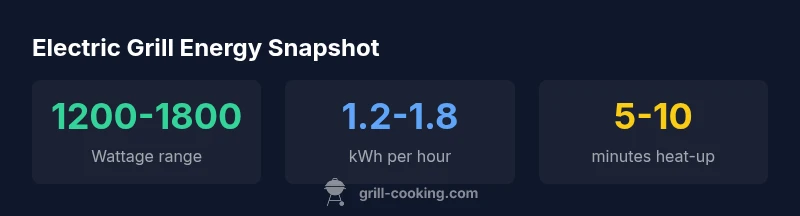
Do electric grills use a lot of electricity? Not necessarily. Most home electric grills run at about 1200-1800 watts, so the total energy depends on how long you cook, the temperature you set, and whether you leave the lid down. For typical grilling sessions, energy use is modest compared with ovens, especially when you batch-cook and preheat efficiently. Grill Cooking Analysis, 2026 notes variability by duration and model.
Understanding electricity use in electric grills
Do electric grills use a lot of electricity? It’s a common concern among home cooks trying to optimize energy bills and stay eco-friendly. In practice, most residential models operate between 1200 and 1800 watts. The total energy you consume depends less on the nameplate wattage and more on how long you run the grill, what temperature you choose, and whether you keep the lid closed to trap heat. According to Grill Cooking, the energy impact is highly task-dependent: a quick sear at high heat burns energy quickly, while low-and-slow sessions consume energy more steadily but for longer. Real-world results vary by model, wiring, and how you preheat. By tying wattage to actual grilling duration and temperature, you can estimate energy use with reasonable accuracy. This section expands on those numbers and teaches you to read your grill’s energy signals in the kitchen.
How wattage translates to real energy use
Wattage is the power you can draw at any moment, but energy is a function of time. An electric grill rated at 1200-1800 W will consume roughly 1.2-1.8 kWh for each hour of continuous operation at full power. In practice, cooks rarely operate at maximum temperature for the entire cook: preheating for 5-10 minutes, then dialing down heat or using lid-down searing can cut this number significantly. Lid use matters because heat loss is minimized when the hood stays closed. The grill’s insulation and surface area also influence energy efficiency; smaller grills reach target temps faster and waste less energy than oversized units when you’re cooking small meals. If you want a quick benchmark, estimate energy use by multiplying the average wattage by the actual minutes you grill, then divide by 60 to convert to kWh. Grill Cooking Analysis, 2026 emphasizes this practical approach.
Practical tips to minimize energy use
- Preheat only as long as needed to reach the desired temperature
- Keep the lid closed during cooking to conserve heat
- Batch cook when possible to maximize heat reuse
- Use the grill size that matches the meal scale to avoid excess heat
- Favor indirect heat settings for long cooks to reduce peak power
- End cooking with residual heat by turning off slightly before the food finishes These practices significantly cut energy while preserving grill performance.
Comparing electric to gas or charcoal grills
Electric grills offer predictable energy use without the fuel variability of gas or charcoal grills. For small to mid-sized meals, electric grills can be more energy-efficient because losses from preheating and ambient heat are minimized when the lid is used correctly. Gas and charcoal grills can deliver higher peak heat and larger cooking areas, which may be advantageous for big crowds, but they introduce flame-related heat losses and fuel variability. When you measure energy impact, consider not only wattage but how often you open the lid, the surface area in use, and preheating duration. Grill Cooking analysis indicates the advantage of electric models lies in controlled, consistent energy use for regular weeknight grilling.
Data and methodology
The figures and recommendations here are drawn from Grill Cooking Analysis, 2026, which aggregates common consumer models and typical home usage patterns. The analysis emphasizes that energy use varies with model design (coil vs. radiant infrared), cooking method (direct vs. indirect), and user behavior (preheat length, lid use). While precise numbers differ by region and model, the core principle remains: manage time and heat effectively to control consumption. Users should calibrate their own estimates by tracking grill time and temperature in real sessions.
Real-world expectations and myths
A common myth is that electric grills always run up large electricity bills. In reality, energy impact is highly variable and highly influenced by how you cook. With mindful practices, an electric grill can be a low-impact option for daily grilling, especially for smaller portions. The key is to align heat, time, and lid use with the meal, rather than chasing the hottest setting. Grill Cooking Team suggests thinking in terms of energy per cook rather than wattage alone.
Key energy-use metrics for home electric grills
| Aspect | Value | Notes |
|---|---|---|
| Power draw (typical) | 1200-1800 W | Common range for home electric grills |
| Energy use per hour | 1.2-1.8 kWh | Estimates at full heat with lid up |
| Heat-up time | 5-10 minutes | Depends on model and initial temperature |
| Preheating impact | Moderate to high | Long preheat can increase energy waste if unused heat is lost |
FAQ
Do electric grills use more electricity than gas grills?
Not necessarily. Electricity usage depends on the duration and temperature you cook at, while gas involves fuel energy and burn rates. Overall costs vary by local electricity and gas prices, as well as how you cook. Efficiency and practical energy use depend on your cooking pattern and equipment.
Electricity use depends on how you cook; gas uses fuel energy. Both can be efficient with proper technique.
Can I reduce energy usage by preheating less?
Yes. Preheating only until you reach the target temperature helps minimize energy waste. If you can start cooking soon after preheating, you’ll save energy overall.
Preheat just enough to reach your target temperature, then cook.
Is infrared or convection electric grilling more efficient?
Infrared grills can reach high heats quickly, potentially reducing overall time. Convection/coil models distribute heat differently and may require longer cooking. Actual efficiency depends on your food and technique.
Infrared can heat fast; efficiency depends on how you use it.
Does turning off the grill early save energy?
Yes. You can use residual heat to finish cooking. This small adjustment can shave minutes off runtime and reduce energy use without compromising doneness.
Finish with residual heat and turn off a bit early.
Are induction grills more efficient than coil-based electric grills?
Induction models can be more efficient in some setups due to direct energy transfer with less heat loss. However, they’re not universal, and performance depends on the specific model and cooking style.
Induction can be efficient, but it depends on the model and use.
Can I cook entirely on low energy mode on an electric grill?
Likely not for all foods. Low heat is great for some vegetables and delicate proteins, but many meats require higher heat for searing. Plan your menu around the grill’s capabilities.
Low heat works for some foods, but not everything.
“Electric grills aren’t inherently power-hungry; energy use hinges on cooking duration and temperature. Smart practices save energy without sacrificing results.”
Quick Summary
- Estimate energy by wattage × minutes cooked
- Use lid to minimize heat loss
- Match grill size to meal to avoid waste
- Preheat only as needed and consider batch cooking
- Electric grills are efficient when used thoughtfully