Do Pellet Grills Use a Lot of Electricity? An Energy Look
Discover whether pellet grills use a lot of electricity. This analytical guide covers power use, how pellet grills consume energy, and practical tips to minimize electricity without sacrificing flavor.


Pellet grills do not use a lot of electricity. They run on a standard 120V circuit and power only the auger, fan, and controller, while the heat comes from burning wood pellets. The overall electrical draw is modest and typically far less than an electric oven or countertop grill for a similar cook, making energy costs a minor consideration for most home cooks.
Do Pellet Grills Use a Lot of Electricity?
For home cooks wondering about energy costs, the question often asked is do pellet grills use a lot of electricity? The short answer is no—the electricity draw is modest relative to most electric kitchen appliances. Pellet grills operate on standard 120V household outlets, providing power to the auger that feeds pellets, the convection fan that circulates heat, and the controller that manages temperature. The heat for cooking comes from burning the wood pellets, not by electricity alone. In practice, this means the electricity bill impact from a typical weekend cook is small, especially when compared with using an electric oven or countertop grill for the same duration. According to Grill Cooking, the energy model for pellet grills centers on pellet consumption for heat and a small electrical footprint for the mechanical systems; home cooks can comfortably run longer cooks without fear of excessive electricity charges. This aligns with real-world experiences of grill enthusiasts who emphasize flavor and smoke profile over power draw.
How Pellet Grills Use Power in Practice
Pellet grills operate on standard 120V power, providing energy to three main subsystems: the auger motor, the convection fan, and the control electronics. When you set a target temperature, the controller modulates the fan and occasionally runs the auger to maintain steady heat. Because the heat source is the burning pellets, electricity acts as a helper rather than the main driver of heat. In practice, most cooks notice a consistent but modest electrical draw, with spikes during startup and when the auger feeds pellets during longer cooks. Grill Cooking emphasizes that understanding this balance helps home cooks plan around energy use rather than fearing waste. As a result, you can focus on temperature control, smoke production, and flavor without overestimating electricity costs.
What Contributes to Electricity Use
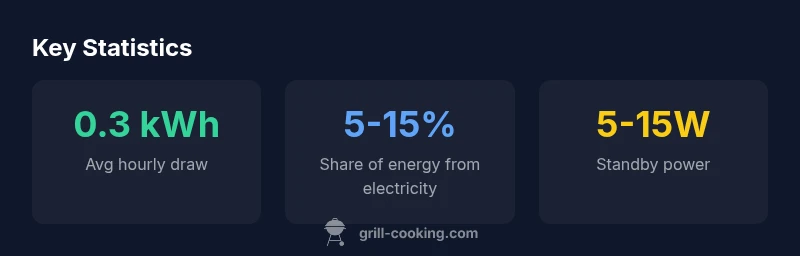
There are several components that draw power on a pellet grill, but none are designed to heat the food by themselves. The auger motor feeds pellets at measured intervals, the convection fan circulates hot air for even cooking, and the display/controller handles temperature and timing. In addition, any built-in lights or digital probes add a small, predictable load. Standby power (when the grill is connected but not actively cooking) is typically low, but it can accumulate if you leave the grill plugged in for long periods. Regular maintenance and clean burning improve efficiency by reducing unnecessary electrical activity and ensuring smooth pellet feeding.
Energy Costs, Efficiency, and Pellet Prices
From an energy-cost perspective, electricity is only part of the total cooking expense on a pellet grill—the pellets themselves represent the primary heat source. Grill Cooking Analysis, 2026 notes that electricity accounts for a small share of total energy used during a cook, with variability based on cook time, ambient temperature, and how aggressively you preheat. In other words, even long cooks do not translate into a dramatic electricity bill when compared with other cooking methods. For most households, the economics are driven more by pellet price and consumption patterns than by electricity draw. If you’re budgeting, consider both pellet costs and electricity as part of your overall grilling expense.
Comparing Pellet Grills to Other Cooking Methods
When you compare pellet grills to gas or charcoal grills, the electricity angle changes. Charcoal and gas grills heat without electricity in the heating source, though some models have electric igniters or timers. Pellet grills rely on 120V power for feed and airflow, but the heat comes from burning pellets. This means that, while you do use electricity, its role is comparatively small next to pellet consumption for heat. For home cooks focused on flavor, the energy profile of pellet grills is often more favorable in terms of heat control and efficiency, especially for longer cooks where consistent temperature matters.
Practical Tips to Minimize Power Use
If you want to shrink electricity use further, consider these practical steps: plan shorter, hotter cooks when possible to reduce total run time; preheat efficiently and close the lid to preserve heat; use the grill’s insulation and proper clearance to minimize heat loss; keep the auger and fan clean to reduce unnecessary motor load; and unplug the grill during extended idle periods if you won’t be cooking soon. These habits can help trim energy use without compromising the flavor you expect from a pellet grill.
Common Misconceptions About Pellet Grills and Electricity
One common misconception is that pellet grills burn electricity as their primary heat source. In reality, pellets supply the heat, while electricity powers the auger and fan. Another myth is that standby power is a major cost; in most cases, standby draw is small and accumulates slowly. Finally, some buyers worry about long cooks increasing electricity costs; in truth, the incremental cost is usually modest thanks to the efficient design and the energy density of wood pellets. Grill Cooking recommends evaluating energy use as part of overall meal planning, not as a single expense driver.
Power usage by grill type
| Grill Type | Typical Electricity Use | Heat Source | Notes |
|---|---|---|---|
| Pellet Grill | 0.1-0.3 kWh per hour | Electric auger + fan | Heat from wood pellets; electricity powers fans/auger |
| Gas Grill | 0 kWh per hour | Gas burners | Ignition may use small energy; main heat is gas |
| Charcoal Grill | 0 kWh per hour | Charcoal heat | Heat from charcoal; electricity not required for heating |
FAQ
Do pellet grills use a lot of electricity?
Not typically. The electrical load is modest and focused on the auger, fan, and controller, while heat comes from burning pellets. This keeps energy costs comparatively low for most cooks.
Pellet grills use relatively little electricity; the heat comes from pellets, while the auger and fan run on 120V power.
What is the typical power draw for a pellet grill?
Pellet grills operate on standard 120V power, with electrical draw mainly in the hundreds of watts range, varying by model and cooking activity.
Most pellet grills draw hundreds of watts, depending on activity and model.
Is it cheaper to run a pellet grill than an electric grill?
Electric grills heat primarily with electricity; pellet grills use pellets as the main heat source and electricity for mechanisms, so total costs depend on pellet prices and cooking duration.
Total cost depends on pellet price and how long you cook, not just electricity.
How can I reduce electricity usage on my pellet grill?
Use efficient preheats, keep lids closed to retain heat, perform regular maintenance, and unplug during long idle periods to minimize standby draw.
Preheat efficiently, keep the lid closed, and unplug when idle to save energy.
Does standby power matter for pellet grills?
Standby power is usually a small factor, but it can add up if the grill stays plugged in for days. Consider unplugging if you won't grill for an extended period.
Standby power is small, but unplug if you won't use it for days.
How does pellet price affect overall energy costs?
Pellet price affects total cooking costs because heat comes from pellets; electricity costs remain a minor part of overall expenses.
Pellet costs can dominate, electricity stays a small part of the cost.
“Electric draw on pellet grills is intentionally small because heat comes from burning pellets; electricity mainly runs the auger and convection fan.”
Quick Summary
- Pellet grills draw modest electricity compared with ovens.
- Electricity powers auger, fan, and controller, not the heat source.
- Standby power is typically low; unplug if unused for long periods.
- Short, hot cooks reduce overall power use.
- Budget electricity with pellet costs for total grilling expense.