Difference Between a Grill and a Pan: An Analytical Guide
Learn the difference between a grill and a pan, including heat transfer, surface design, flavor development, and practical guidance for choosing the right tool for outdoor grilling vs indoor cooking.


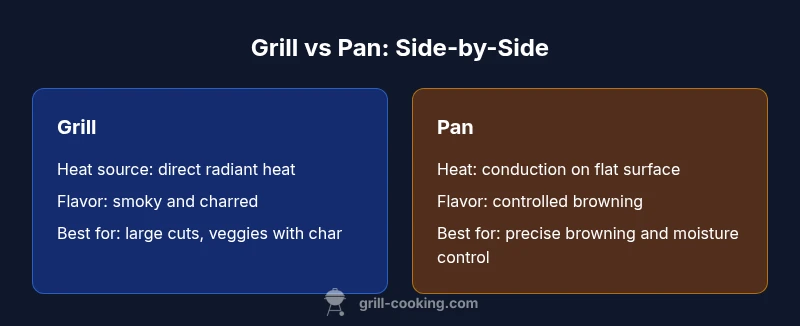
The difference between a grill and a pan comes down to heat source, surface design, and resulting flavor and texture. A grill delivers direct radiant heat from above and below with open air, creating char and smoky notes. A pan uses a flat, heated surface for precise browning and moisture retention. Each tool excels in different foods and cooking contexts.
Introduction to the Core Question: The difference between a grill and a pan
The question of how a grill differs from a pan is central to culinary technique. In everyday cooking, home chefs often face the dilemma of choosing the right tool for a given dish. According to Grill Cooking, understanding the difference between a grill and a pan starts with three pillars: heat delivery, surface geometry, and typical culinary outcomes. This article analyzes those pillars with a focus on practical decision making, not just theory. We will compare how each tool treats foods, what textures and flavors emerge, and which foods benefit most from each method. The goal is to give you actionable guidance that you can apply in your kitchen today, whether you grill outdoors on a weekend or pan-sear indoors after work. The discussion will remain grounded in real cooking scenarios and measurable differences, helping you make informed choices over the long term.
Comparison
| Feature | Grill | Pan |
|---|---|---|
| Heat transfer | Direct radiant heat from flames or coals; air circulation enhances browning | Conduction through a flat heated surface; heat spreads from contact points outward |
| Surface texture and sear | Distinct grill marks; smoky char; uneven browning due to gaps in grates | Even browning across a flat surface; smoother surface interaction |
| Flavor outcomes | Smoky, caramelized edges; pronounced char flavors | Controlled browning with less smoky influence; moisture retention possible |
| Best for | Outdoor cooking, high-heat searing, large cuts | Indoor or outdoor use with precise control; delicate proteins |
| Cleaning and maintenance | Requires grill brushes, scrapers, and seasonings; longer cleanup | Easier to wipe clean; some oils and residues persist can be simple to manage |
Strengths
- Grilling offers distinct flavor and texture due to direct high heat and smoke.
- Pan cooking provides precise temperature control and moisture management.
- Grills enable outdoor cooking and social gatherings, expanding cooking opportunities.
- Pans are versatile, usable indoors year-round and with a wide range of cookware materials.
Negatives
- Grill setups require weather considerations and more cleanup effort.
- Grills can lead to uneven cooking if heat zones aren’t managed.
- Pans may lack smoky flavors and require careful heat management to avoid drying foods.
Grill for flavor-first outdoor cooking; pan for precise indoor browning and moisture control
If flavor from smoke and char is the priority, the grill is the better tool. If you need consistent browning and tight control over moisture, the pan excels. Use each where its strengths shine, and you’ll maximize both texture and taste.
FAQ
What is the main difference between a grill and a pan?
The core distinction lies in heat delivery and surface interaction. A grill uses direct radiant heat with open air, creating smoky flavors and grill marks, while a pan relies on conduction through a flat cooking surface for precise browning and moisture control.
Grill uses radiant heat with air for smoky flavor; pan uses direct contact heat for precise browning.
Can you achieve grill-like flavor with a pan?
You can mimic some grill flavors by using a hot pan and a bit of high-heat searing, followed by finishing in the oven or under a broiler, but you won’t replicate full outdoor smoky notes and authentic grill marks exactly.
You can mimic some sear quality, but you won’t get true outdoor smokiness.
Is a grill pan the same as a grill?
A grill pan is a ridged pan designed to imitate grilling on a stovetop. It provides grill-like marks and some smoke flavor, but it does not replace the airflow and high heat of an outdoor grill.
A grill pan mimics grilling on a stove, not the same as an outdoor grill.
Which is better for seafood?
Both work; seafood benefits from high heat for quick browning. Grilling can impart smoky notes, while pan-searing helps maintain moisture and prevents overcooking in a controlled setting.
Seafood cooks quickly; grilling gives flavor while pan-searing offers control.
How does weather affect performance of grill vs pan?
Weather mainly affects outdoor grills—wind and temperature influence heat and flame management. Pans allow consistent cooking indoors regardless of weather, making them reliable year-round.
Outdoor weather can change grill performance; pans stay stable indoors.
Quick Summary
- Choose the grill for smoky flavor and fast searing outdoors
- Opt for a pan when precise browning and moisture control matter
- Match food type to tool: thick cuts and veggies fare well on the grill; delicate proteins benefit from pan searing
- Weather and space influence tool choice—indoors favors the pan
- Invest in both if you cook year-round and across diverse recipes