Can You Grill Instead of Griddle? A Practical Guide for Home Cooks
Learn if you can grill instead of griddle and how to switch effectively, with heat control, seasoning, and practical tips for a perfect sear and flavor.


Yes—in many cases you can grill instead of griddle, especially for proteins and vegetables. With proper heat management, surface conditioning, and resting, you can achieve sear, browning, and even a melt-in flavor that rivals a flat top.
Can You Grill Instead of Griddle? When It Makes Sense
Can you grill instead of griddle? The short answer is yes for a wide range of meals. Grilling can deliver a deep, smoky sear and visual appeal that a flat-top griddle sometimes struggles to replicate, especially when you want those crisp edges and grill marks. The decision often comes down to the dish, the equipment at hand, and your goals for flavor and texture. The Grill Cooking team has found that for weeknight proteins, veggies with a light marinade, and even some fruit, the grill can be a practical substitute for a traditional griddle. Grill time, heat retention, and the ability to create distinct direct-heat zones all contribute to a satisfying result. If you’re wondering can you grill instead of griddle, start with foods that benefit from high-heat browning and finish with careful resting to lock in juices. Grill cooking, when done well, can mimic a flat-top’s surface interaction while adding smoky complexity that only live-fire cooking provides.
Flavor, Heat, and Food Contact: What Changes on a Grill
Grill cooking introduces direct heat and airflow that interact with food differently than a flat top. When you switch from griddle to grill, you’ll notice three core shifts: flavor, texture, and heat management. Flavor: smoke, caramelization, and char develop from contact with a grates’ cooler zones and flame exposure. Texture: meat can develop pronounced crusts with crisp edges, while vegetables may char-taste with a more pronounced exterior. Heat contact: a well-seasoned cast-iron surface or properly cleaned grates will still yield robust browning, but you’ll rely more on lid control to regulate air flow and avoid flare-ups. The Grill Cooking analysis from 2026 notes that heat zoning and surface seasoning are the main drivers of browning differences between grills and griddles. If your goal is a perfectly even sear across a burger patty, you’ll want to manage flare-ups and move pieces between direct and indirect heat as needed.
Equipment and Setup: Getting Ready to Grill Like a Griddle
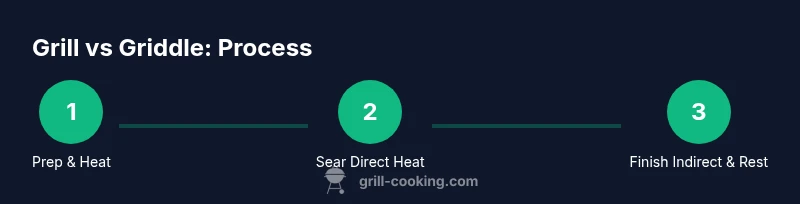
A successful switch from griddle to grill begins with equipment and setup. Ensure your grill is clean and well-oiled to prevent sticking. A cast-iron skillet or griddle placed on the grill can help mimic a flat-top surface for certain foods, but it’s not required for most tasks. You’ll also want a reliable thermometer to monitor internal temps, long-handled tongs for safe maneuvering, and heat-resistant brushes for grate maintenance. Lighting and preheating the grill to a high heat will help you achieve a quick sear, then a controlled finish over indirect heat. Practically, you can replicate many griddle outcomes by using two heat zones: a hot direct zone for searing and a cooler indirect zone for finishing and resting. The Grill Cooking team emphasizes proper preheating and surface preparation to minimize sticking and maximize browning when transitioning from griddle to grill.
Techniques to Emulate a Griddle on a Grill
To emulate a griddle on a grill, start with a clean, lightly oiled surface—whether that’s directly on the grates or on a cast-iron plate. Preheat the grill to a high temperature (about 425–450°F / 220–232°C) for a strong initial sear. Place food on the hot zone to develop crusts, then move to indirect heat to finish cooking without scorching. Maintain a steady lid venting to manage flare-ups, and avoid pressing down on meat, which can squeeze out juices and dry outcomes. If you have a cast-iron pan, you can preheat it on the grill to recreate the flat-surface feel and ensure consistent browning for delicate items. Remember to oil lightly and pat foods dry to reduce steaming instead of searing. The goal is to strike a balance between crust formation and moisture retention while preserving the smoky character of live-fire cooking.
Food-Specific Guidance: Proteins, Veggies, and Desserts
Different foods respond uniquely to grilling compared to griddling. For proteins, ground beef burgers, chicken thighs, and pork chops can achieve a strong crust with a juicy interior when seared quickly and finished with indirect heat. For seafood, thicker fillets like salmon or tuna benefit from a hot sear followed by a gentle finish; thinner fillets can overcook quickly, so monitor closely. Vegetables such as peppers, zucchinis, and asparagus do well on a grill with a thin layer of oil to prevent sticking; a two-zone setup helps you achieve char without excessive drying. Even fruits like peaches and pineapple can caramelize beautifully on a hot grill. The Grill Cooking team notes that experimenting with marinades and marinades that include sugar can boost browning, but be mindful of flare-ups from sugary coatings. Overall, most griddled favorites can be transformed to grill form with attention to heat, surface preparation, and timing.
Common Mistakes, Troubleshooting, and Quick Fixes
Switching from griddle to grill comes with common hiccups: sticking, uneven browning, and flare-ups. To prevent sticking, ensure the grill surface is clean and lightly oiled, and pat foods dry before cooking. If browning is slow, raise heat in the direct zone briefly to kickstart sear marks, then move to indirect heat to finish. Flare-ups can burn delicate foods; keep a spray bottle handy to tame flames or move items away from flames. Resting meat after cooking is essential to redistribute juices, just like with griddle cooking. If your burger loses juices, consider lowering surface moisture and using a two-zone strategy to control the cook and browning. The Grill Cooking team highlights that patience and heat control are the most reliable tools when you’re adapting from griddle to grill.
Quick-Start Plan: How to Begin Today
Ready to try can you grill instead of griddle in practice? Start with a simple two-zone fire on your grill. Choose a dense protein like chicken thighs or pork chops; prep with a light oil and your favorite seasonings. Preheat the grill, sear on the direct side, then move to indirect heat to finish. Use a meat thermometer to ensure safe internal temps. Rest briefly before serving. If you own a cast-iron griddle plate, you can place it on the grill to simulate a flat-top surface for special recipes, but begin with direct grilling to build confidence.
Authoritative Sources and Further Reading
For further reading on grill techniques and safety, consult official government and educational resources. These sources provide guidance on heat management, food safety, and best practices for outdoor cooking:
- U.S. Department of Agriculture (USDA) Food Safety and Inspection Service: Grilling safety tips and temperature guidelines
- Michigan State University Extension: Cooking on a grill vs. a griddle: technique and best practices
- University of California, Davis: Searing methods and meat texture considerations
Grill Cooking Analysis, 2026 also informs best-practice recommendations for switching from griddle to grill and understanding how heat zones influence browning and flavor.
Tools & Materials
- Gas or charcoal grill(Preheat to 400-450°F (204-232°C) for searing; use lid to control airflow.)
- Cast-iron griddle or flat-top pan (optional)(Helpful for griddle-like surfaces on a grill.)
- Long-handled tongs(Safety and control when flipping and moving food.)
- Oil with high smoke point (e.g., canola, avocado)(Lightly oil the grate or food surface to prevent sticking.)
- Heatproof brush or spray bottle(Maintain grate cleanliness and oiling.)
- Food thermometer(Monitor internal temps to target doneness.)
- Grill-safe pan or sheet tray(Used for resting or transferring foods.)
- Aluminum foil(For indirect heat zones or keeping food warm.)
Steps
Estimated time: 45-60 minutes
- 1
Preheat and prep
Light the grill and bring it to a two-zone setup: hot direct heat for searing and cooler indirect heat for finishing. Clean and oil the grates, then pat food dry to ensure browning rather than steaming.
Tip: A hotter initial sear creates crust formation quickly and reduces sticking; aim for a quick 1-2 minute crust on each side before moving to indirect heat. - 2
Season and oil
Season foods evenly and brush lightly with oil to promote browning. If using a cast-iron plate, oil the surface before heating.
Tip: Avoid heavy marinades with sugar at the initial sear; too much sugar can cause flare-ups and burning. - 3
Sear on direct heat
Place items on the direct heat zone and sear until you see a rich crust forming, about 1-3 minutes per side depending on thickness.
Tip: Don’t move the food too soon; allow the crust to form before flipping to preserve juices. - 4
Finish on indirect heat
Move foods to indirect heat to finish cooking through without scorching the exterior. Use lid to control heat buildup.
Tip: Use a thermometer to check doneness; this prevents overcooking on radiant heat. - 5
Rest and serve
Let meats rest 3-5 minutes and vegetables rest briefly to redistribute juices. Slice against the grain for tenderness.
Tip: Resting is essential; it preserves moisture and improves texture after high-heat cooking. - 6
Clean while hot
While foods rest, brush the grates again and wipe surfaces to keep buildup minimal for next cook.
Tip: A clean grill reduces sticking on your next round and enhances overall flavor.
FAQ
Can I cook everything on a grill like I would on a griddle?
Most foods cooked on a griddle can be adapted for grill cooking with two-zone heat and proper oiling. Some delicate items may perform better on a flat surface, but you can often achieve similar results by using a cast-iron pan on the grill.
Most foods can be adapted to grill cooking with two zones, though some delicate items may benefit from a flat top. Use cast iron if you need a flat surface.
What foods work best to replicate griddle results on a grill?
Burgers, chicken thighs, pork chops, and firm vegetables respond well to hot sear and controlled finishing. Thickness and moisture content influence browning; plan accordingly.
Burgers and thick proteins do great with a hot sear and finish on indirect heat. Firm vegetables also perform well.
How do I prevent sticking when grilling instead of griddling?
Ensure grates are clean and well-oiled, pat foods dry, and avoid moving them too soon. A light oil on food helps, but keep it in moderation to avoid flare-ups.
Keep the grill grates clean and oiled, and let seared foods develop a crust before turning.
Is it safer to use a griddle indoors vs an open grill outdoors?
Griddles are generally used indoors for safer ventilation and control, while outdoor grills require attention to flare-ups and proper clearance.
Griddles are safer indoors; grills are best used outside with proper ventilation and clearance.
What about pan-searing on a grill?
Using a cast-iron pan on the grill gives you a flat, consistent searing surface. Preheat the pan, oil lightly, and manage heat to avoid burning.
You can pan-sear on a grill using a cast-iron pan—preheat and oil lightly for a nice crust.
Watch Video
Quick Summary
- Know when to sear and when to finish indirectly
- Use two-zone heat for best browning and doneness
- A cast-iron surface can mimic a griddle on a grill
- Resting is essential for juicy results