Burger Grill Time: Master Doneness for Perfect Burgers
Learn precise burger grill time to hit perfect doneness every time. This expert guide covers patty thickness, heat management, temps, and proven techniques for juicy, flavorful burgers on any grill in 2026.


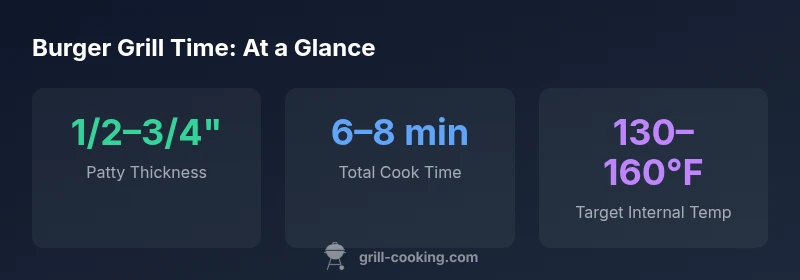
Burger grill time varies by patty thickness and desired doneness, but a good starting point is 1/2 inch to 3/4 inch patties cooked on direct high heat, about 2-3 minutes per side for medium-rare to medium. For thicker patties, plan 5-6 minutes total, plus carryover. Use a thermometer to verify target temperatures for safety and taste.
The Foundations: Patty Thickness, Ground Beef Quality, and Grilling Setup
The foundation of burger grill time starts long before the first sizzle. The fat-to-lean ratio of ground beef, patty thickness, and how you prepare the grill determine how quickly heat penetrates and how evenly the burger cooks. For home grills, most cooks find a fat ratio of about 80/20 — that is, roughly four parts lean meat to one part fat — yields a juicier bite without crumbling. Patties in the range of 1/2 inch to 3/4 inch thick strike a balance between a crisp exterior and a moist interior; thinner patties overcook quickly, thicker patties require more careful heat management.
Forma patties loosely; avoid overworking the meat which can make them dense. Make patties slightly larger than the bun to compensate for shrinkage during cooking. Chill briefly after shaping to help them hold their form on the grate. Salt is best applied just before grilling to preserve surface moisture; for extra flavor, some cooks salt ground beef lightly an hour or two before shaping, but this is optional.
Prepare the grill with a two-zone setup, or heat in stages if you’re using a single-burner grill. A hot direct zone provides searing, while a cooler indirect zone finishes the cook evenly. Oiling the grates or brushing the patty tops with a tiny amount of oil reduces sticking without adding fat to the patty.
Heat Management: Direct High Heat vs. Two-Zone Grilling
Most burgers begin with a hot sear, achieved by a direct heat zone at 425–475°F (218–246°C). After 1–2 minutes per side, you can move the patties to a cooler area to finish, ensuring a uniform interior. If you grill on a single-zone setup, you can leave the burgers on the periphery to finish slowly, or you can remove the patties briefly after searing to let the temperature equalize. A two-zone setup also allows you to better control flareups from fatty toppings or cheese. Use a cast-iron skillet on the grill for an extra-crispy crust if you prefer; or finish on a rimmed baking sheet in a 350–400°F oven if you’re cooking multiple patties at once. The key is to monitor internal temperature rather than relying solely on time, since thickness and grill variance can change results.
The Doneness Timeline: Target Temps and Typical Times
Doneness targets vary with personal preference, but a practical framework helps you plan ahead. For 1/2 inch patties, a quick sear of 2–3 minutes per side often yields a nice crust with a juicy center, aiming for about 130–140°F for medium-rare to medium. If you’re cooking 3/4 inch patties, 3–4 minutes per side is common, with an interior target of roughly 135–160°F depending on your doneness goal. For 1 inch patties, 5–6 minutes per side is typical, with final temps around 145–160+°F. Always account for carryover: burgers continue to cook after removal, rising by about 5–10°F. Keep a reliable instant-read thermometer handy and check early and often, especially when grilling for guests or thicker patties.
Techniques to Maximize Juiciness and Even Doneness
Juiciness comes from a balance of fat, surface moisture, and heat control. Choose ground beef with an 80/20 ratio for juiciness, and avoid overworking the meat when forming patties. Do not flatten or press patties during grilling, as that squeezes out juices. Season the outside just before grilling to maximize surface moisture. Flip burgers only once or rotate them 90 degrees between flips to create appealing grill marks without breaking the crust. If cheese is desired, add it in the final minute so it melts without delaying doneness. A two-zone setup helps you let the interior finish without over-charring the exterior.
Common Mistakes to Avoid (and Fixes)
- Pressing patties with the spatula: squeeze out juices and dry the interior. Fix: be gentle and avoid pressure.
- Flipping too often: interrupts crust development. Fix: flip once per side, or flip and rotate minimally.
- Not preheating: leads to uneven cooking. Fix: preheat 10–15 minutes before cooking and oil the grates lightly.
- Using cold patties: slows heat penetration. Fix: keep meat chilled until just before shaping, then season and form.
Resting, Toppings, and Carryover: Finishing Steps
Resting burgers for 3–5 minutes after removal allows juices to redistribute, improving moistness and flavor. During this rest, cheese (if used) can set, and toppings can be prepared without heat loss from the patty. Carryover cooking typically adds 5–10°F, so plan to remove burgers when they’re just under your target. Slice buns lightly and toast them briefly for texture. Classic toppings (lettuce, tomato, onion, pickles) add crunch and brightness, while condiments should complement, not overwhelm, the burger flavor. For guests with different doneness preferences, consider serving a platter with a thermometer so everyone can verify their preferred level of doneness.
Putting It All Together: A Sample Cook Plan
- Preheat grill to 425–450°F and set up a two-zone layout.
- Form 1/2 to 3/4 inch patties; lightly salt just before grilling.
- Sear 2–3 minutes per side for 1/2 inch, 3–4 minutes for 3/4 inch, or 5–6 minutes for 1 inch patties.
- Check internal temperature with a thermometer; target 130–140°F for medium-rare to 160°F for well-done, accounting for carryover.
- Rest 3–5 minutes off the heat; toast buns during this time.
- Add cheese in the final 30–60 seconds if desired, then build with toppings and condiments.
- Serve promptly to preserve warmth and texture.
- Clean the grill after the last patty cools to prevent flavor transfer and flareups.
Safety and Cleanup for Burger Grilling
Always practice safe food handling when grilling burgers. Keep raw beef separate from ready-to-eat foods, use separate cutting boards, and wash hands after handling raw meat. Grill grates should be clean before use to prevent sticking and flareups. After grilling, safely dispose of or refrigerate any leftovers promptly and store buns away from moisture to prevent soggy bread.
Burger patty thickness and cook-time guide for direct-heat grilling
| Patty Thickness | Direct-Heat Time per Side | Internal Temp Range | Total Time |
|---|---|---|---|
| 1/2 inch | 2-3 minutes | 130-140°F (56-60°C) | 4-6 minutes |
| 3/4 inch | 3-4 minutes | 135-160°F (57-71°C) | 6-8 minutes |
| 1 inch | 5-6 minutes | 145-160+°F (63-71°C) | 10-12 minutes |
FAQ
What thickness is best for burgers on the grill?
Most home burgers cook well at 1/2 to 3/4 inch; thicker patties require longer cooking and may dry. Salt outside just before grilling and use two-zone heat for even doneness.
Aim for half to three-quarters of an inch for the best balance of crust and juiciness.
Should I salt before or after forming patties?
Season the outside just before grilling to maximize surface moisture and flavor. Some cooks salt ground beef before shaping, but this is optional.
Salt on the outside right before you grill to keep moisture on the surface.
What internal temperature should I target for my burgers?
Target temperatures range from about 130°F for medium-rare to 160°F for well-done, depending on your preference. Use a thermometer for accuracy.
Check with a thermometer; start around 130 for medium-rare and go up as you like.
Do I need to rest burgers after grilling?
Yes, rest for 3–5 minutes to redistribute juices. Resting also helps finish carryover cooking and improves texture.
Let them rest a few minutes before serving.
How can I prevent burgers from sticking or flattening on the grill?
Preheat the grill, oil the grates lightly, and avoid pressing patties with a spatula. Flip once and don’t squash the patties.
Don’t press the patties; flip once and keep the crust intact.
What about carryover cooking on the grill?
Carryover will add about 5–10°F after you remove the burgers. Plan to pull them just under your target temperature.
Expect a small rise in temperature after you take them off the grill.
“Consistency comes from controlling heat, not chasing perfect timing. Use a thermometer and rest the burgers to let carryover finish the job.”
Quick Summary
- Start with 1/2–3/4 inch patties for best balance.
- Use two-zone heat to sear and finish evenly.
- Check doneness with a thermometer, plan for carryover.
- Rest burgers 3–5 minutes for juiciness and flavor.
- Avoid pressing patties to preserve moisture.