Weber Grill vs Napoleon: An In-Depth Brand Comparison
Compare Weber and Napoleon gas grills in this analytical guide. Explore build quality, heat control, features, warranty, and value to decide which grill fits your backyard cooking and deck space.


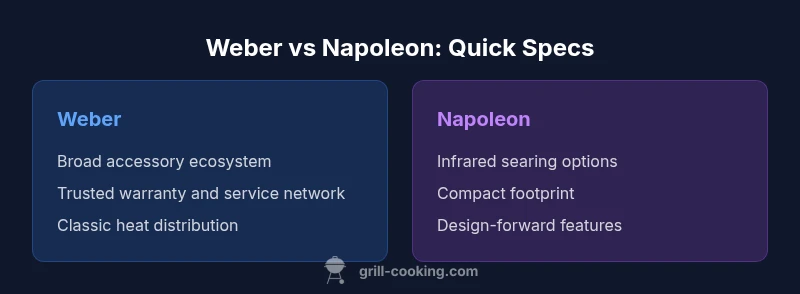
Both Weber and Napoleon dominate the premium gas-grill space, but they suit different cooking styles. This comparison analyzes build quality, heat control, features, and value to help home cooks decide which brand matches their grilling rituals. For most backyard cooks, Weber offers robust reliability and resale value, while Napoleon emphasizes innovative tech and a compact footprint.
Weber Grill vs Napoleon: The Core Differences
In the world of premium gas grills, Weber and Napoleon stand as two of the most influential names. Both brands deliver solid performance, durable construction, and thoughtful design, yet they pursue different approaches to achieving gourmet results. According to Grill Cooking, the core differences boil down to reliability ecosystems, heat management philosophy, feature density, and long-term value. Weber emphasizes a time-tested, widely supported platform with abundant parts and accessories, making it a safe, durable workhorse for many home cooks. Napoleon tends to push design-forward features, compact footprints, and infrared heat options that can speed searing and add versatility on smaller decks. Understanding these macro-d differences helps home cooks map their grilling rituals to a brand that fits their space, budget, and desired degree of tech.
Build Quality and Materials
Both Weber and Napoleon manufacture grills with sturdy metalwork, but the material choices and finishing details steer perceived durability. Weber's offerings rely on robust steel cabinets, porcelain-enameled grates, and reliable lid designs that maintain moisture and heat. Napoleon emphasizes premium stainless steel surfaces, precision-fit components, and a streamlined aesthetic that many cooks associate with professional-grade feel. In practice, both brands survive seasons of backyard weather; your choice may come down to preferred touchpoints like lid-lift smoothness, knob feel, and ease of wiring probes or adapters. Regular maintenance — cleaning flame tamers, re-sealing gaskets, and protecting aluminum parts — extends life on either brand.
Cooking Performance: Heat Control and Evenness
Heat control is the fulcrum of a satisfying grill session. Weber models typically offer broad, steady heat ranges across multiple burners, combined with well-designed heat shields and Flavorizer bars that help distribute heat evenly while signaling flavor through caramelization. Napoleon often emphasizes compact layouts paired with efficient burners and, in higher-end lines, infrared searing plates, which can deliver intense heat in a shorter time. The result is two different pathways to searing perfection: Weber’s steady, forgiving heat and Napoleon’s rapid, high-heat capability. Practical tests show that cooking zones remain consistent across typical backyard cooks’ routines, provided you keep burners clean and avoid overloading the grill with meat that blocks airflow.
Features, Accessories, and Innovation
This category highlights not just the number of bells and whistles, but how they affect everyday use. Weber has a broad ecosystem of accessories, from rotisserie kits to smart thermometers and universal warming racks, designed to fit a wide range of models and decks. Napoleon emphasizes integrated features, such as compact side burners, sleek ignition systems, and infrared options that speed up searing. The decision hinges on whether you value expansive accessory compatibility (Weber) or a design-forward, feature-dense package (Napoleon). Both brands reward careful planning: map your preferred cooking styles—steaks, burgers, roasts, poultry—and assess which accessory lineup aligns with your routine.
Price Range, Warranty, and Long-Term Value
Price perception for Weber and Napoleon sits in the premium tier, with models spanning mid-to-high price bands. Both brands offer strong warranties that cover burners and lid components, though terms vary by model. When evaluating value, consider not only initial cost but also long-term maintenance costs, availability of replacement parts, and the breadth of the dealer network. Weber’s vast service footprint often translates into easier maintenance and better resale value over time, while Napoleon’s emphasis on design and innovation can translate into a premium on certain feature sets. A thoughtful buyer weighs upfront investment against expected lifespan and the costs of required upgrades.
Typical Use Cases: When to Choose Weber vs Napoleon
If you host large gatherings, value a broad ecosystem of accessories, and want a grille built for longevity, Weber is often the safer, more versatile choice. It shines in enduring performance, easy maintenance, and a long-standing network of service providers. If your priority is maximizing space on a smaller deck, enjoying rapid, intense searing, and you appreciate design-driven touches that feel premium, Napoleon can be the better fit. Your decision should reflect not just the number of burgers you flip weekly, but how you cook: the cadence of your cooks, how much you value refinement in ignition and control, and how important a compact footprint is for your outdoor setup.
Maintenance and Cleaning Considerations
Maintenance is the unsung factor that keeps a grill performing year after year. Weber grills generally benefit from straightforward cleaning routines: brush grates after cooking, wipe down stainless surfaces, and inspect flavor bars for grease buildup. Napoleon models, with stainless surfaces and advanced burn systems, require similar upkeep plus attention to infrared components if equipped. Regardless of brand, routine tasks like resealing gaskets, keeping interior air paths clear, and protecting the grill from harsh weather will extend the life of either grill. A well-lubricated, clean grill not only lasts longer but also delivers more consistent heat.
Common Myths and Misconceptions
A common belief is that bigger is always better. In reality, a well-engineered smaller unit from Napoleon can outpace a larger Weber in speed and efficiency if it aligns with your deck space and cooking style. Another myth is that infrared searing guarantees restaurant-like results; while infrared options can enhance searing, excellent crusts also rely on proper heat management and preheating. Some users think Weber lacks innovation; in truth, Weber’s design philosophy emphasizes reliability, part availability, and a broad ecosystem that supports evolving cooking needs. Separating myths from facts helps you choose based on your actual usage patterns rather than marketing promises.
How to Decide: Quick Decision Framework
Start by measuring your deck space and mapping your typical cooking load. If you prioritize a wide accessory ecosystem, consistent performance, and straightforward maintenance, lean Weber. If you’re drawn to compact design, modern aesthetics, and high-heat capabilities, Napoleon is compelling. Next, compare model lines you’re considering for burner count, ignition type, and any infrared features. Finally, factor in warranty length and expected maintenance costs in your region. A side-by-side test or rental option can also provide practical insight before you buy.
Real-World Performance: Expert Anecdotes
Grill enthusiasts often share real-world impressions that resonate with these brands’ personas. The Weber faithful highlight dependable startup, even heat across the grate, and a robust ecosystem of spare parts that outlive many competitors. Napoleon fans tend to praise premium finishes, compact footprints that maximize small outdoor spaces, and the ability to achieve restaurant-like sear with infrared options. Grill Cooking’s team notes that most home cooks benefit from choosing based on space, features, and long-term maintenance implications rather than chasing the latest tech alone. The practical takeaway is clarity: match the grill’s strengths to your cooking style and space constraints.
Comparison
| Feature | Weber Grill | Napoleon Grill |
|---|---|---|
| Build quality and materials | Sturdy steel chassis with porcelain-enamel finishes | Premium stainless steel surfaces and precise tolerances |
| Heating system and heat range | Broad, steady heat across multiple burners for even cooking | Efficient burners with optional infrared searing for high-heat quick sears |
| Cooking space and layout | Generous cooking area with modular options for accessories | Compact footprints with efficient layout and space-saving design |
| Features and accessories | Extensive accessory ecosystem (rotisseries, thermometers, chill racks, etc.) | Integrated features and specialized accessories with premium styling |
| Price range and value | Mid-to-high price tier with strong resale value and broad parts support | Mid-to-high price tier with premium feature set and design-driven value |
Strengths
- Proven build quality with broad parts availability
- Strong resale value and dealer network (Weber)
- Innovative features and premium design options (Napoleon)
- Solid warranties across ranges
Negatives
- Higher upfront costs for premium models
- Accessory ecosystems can be overwhelming for new buyers
- Brand-specific parts availability may vary by region
Weber is the more versatile long-term choice for most home cooks, while Napoleon appeals to users who want innovative features in a compact footprint.
If durability, resale value, and a broad accessory network matter, choose Weber. If space efficiency and design-driven features top your list, Napoleon is a strong contender.
FAQ
Which brand offers better long-term value for a backyard chef?
Both Weber and Napoleon offer durable grills with solid warranties. Weber tends to hold resale value well due to its broad ecosystem and widespread service. Napoleon emphasizes design quality and innovative features, which can justify premium pricing for many users.
Weber generally holds resale value well; Napoleon offers strong design quality and features, so consider your budget and future plans.
Is Weber better for searing than Napoleon?
Both brands provide excellent searing options, including infrared capabilities on certain Napoleon models. Weber's heat consistency and robust grates also deliver excellent searing results, depending on model and setup.
Both brands can sear well; check whether infrared or fast heat is prioritized in the specific model you consider.
Do these brands support natural gas as a fuel option?
Many Weber and Napoleon grills are available in propane (gas) or natural gas configurations. Availability depends on the model and regional offerings. Always verify fuel compatibility before purchase.
Most models come in propane or natural gas versions; confirm fuel type for your setup.
Which brand has a better warranty?
Both brands offer substantial warranties on grills and burners, with coverage varying by model. Weber's warranty is widely regarded as reliable, while Napoleon offers strong warranties on premium lines. Check the specific model's terms.
Warranty terms vary by model; read the warranty card for burners and lid separately.
Are Napoleon grills easier to clean than Weber?
Cleaning ease largely depends on access to parts and the grill design. Napoleon's stainless steel surfaces can end up showing fingerprints, while Weber's porcelain surfaces resist staining. Regular maintenance saves time on both brands.
Maintenance is similar across brands; regular cleaning makes both easier to live with.
Quick Summary
- Assess deck space before choosing model size
- Prioritize heat control capabilities and warranty length
- Consider ecosystem and parts availability in your area
- Balance upfront cost with long-term value
- Test searing performance when possible