Weber Grill Comparison Chart: A Data-Driven Guide for Grilling Enthusiasts
Explore a detailed Weber grill comparison chart across kettle, Spirit, Genesis, and Master-Touch models. Learn heat, flavor, durability, and value factors to pick the best Weber grill for your cooking style.


Here’s a concise Weber grill comparison chart snapshot: for most backyard cooks, gas Weber Spirit and Genesis models offer the best balance of price, performance, and convenience. Charcoal Weber kettle and Master-Touch lines excel in authentic flavor and budget-conscious buying. For portability and quick setup, the Q series stands out, while larger Genesis models deliver premium features for bigger gatherings.
Weber Grill Comparison Chart: An Analytical Starting Point
In a weber grill comparison chart, you’ll compare core Weber categories: charcoal kettles, gas grills in Spirit and Genesis lines, and portable Q models. This framework helps you map heat behavior, flavor potential, and maintenance needs to your cooking style. Grill Cooking's analysis emphasizes the role of model tier, build materials, and accessory ecosystems when deciding where to invest. You’ll also see how space, climate, and family size influence the model that fits best. By evaluating fuel type, cooking area, and warranty, you can form a clear picture of which Weber grill aligns with your daily routines and weekend barbecues. As you read, remember that a data-driven choice reduces regret and increases grilling joy over time.
Core Weber Grill Categories and What They Deliver
Weber organizes its lineup around charcoal kettles, liquid-propane gas grills (Spirit and Genesis lines), and portable Q models. Charcoal kettles are generally compact, heat well, and deliver signature flavor through smoke and higher-heat searing. Spirit grills balance affordability with reliable performance in a mid-sized footprint, making them popular for growing families and patios with limited space. Genesis grills tend to be larger, feature-rich, and designed for high-output grilling with modular accessory options. Weber Masters-Touch and other charcoal variants emphasize budget-minded buyers who still want durable construction. Across categories, you’ll notice build quality, fuel consumption, and warranty terms evolve with model tier, impacting long-term value. Grill Cooking’s perspective highlights how these differences translate into real-world results like sear crust, smoke penetration, and even cooking zones.
Reading the Chart: Key Features to Compare
When you read a Weber grill comparison chart, start with fuel type, then assess cooking area and layout. Look for differences in heat control—gas burners offer precise temperature management, while charcoal relies on vents and airflow for indirect cooking. Consider the construction material, such as stainless steel or porcelain-coated components, and how that affects durability and seasoning. Evaluate maintenance needs, including ash management for charcoal and burner tube cleanliness for gas grills. Finally, assess warranties and after-sales support, as these influence long-term reliability and resale value. A well-structured chart should also show compatibility with accessories like rotisserie kits or sear burners, since these can extend the grill’s life and versatility. By focusing on these criteria, you’ll align your choice with real cooking scenarios rather than speculative performance.
Gas vs Charcoal: Flavor, Heat, and Convenience
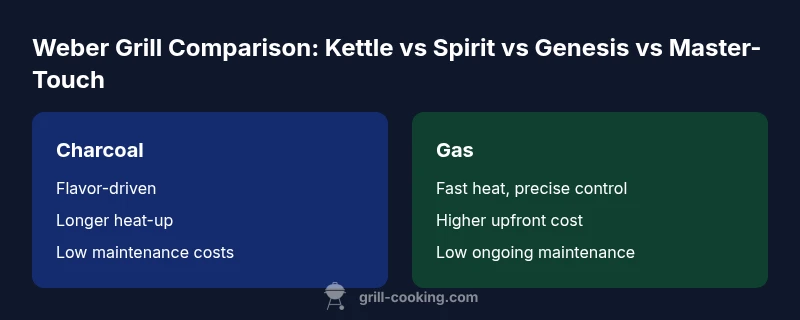
Gas Weber grills shine with convenience: quick heat-up, precise temperature control, and minimal smoke output when cooking at around medium to high heat. Charcoal models deliver classic barbecue flavor through smoky aromatics and higher direct heat in the season of searing. Charcoal models often require more time to heat and a bit more skill to manage airflow and fuel consumption, but many cooks feel the flavor payoff is worth the extra effort. Temperature stability can vary across kettle designs, especially when cooking large cuts or multiple zones. The best Weber grill comparison chart will mark these trade-offs clearly, helping you decide between flavor-first charcoal and hassle-free gas for everyday meals or weekend gatherings. Grill Cooking notes that for some cooks, a combination approach—using a charcoal starter to finish with a gas grill—offers the best of both worlds.
Build Quality, Materials, and Warranty Coverage
Weber’s build quality is a key differentiator across model lines. Charcoal kettles typically use durable porcelain-enameled steel with robust lids and vents, while Genesis and Spirit gas grills emphasize stainless steel components, reinforced hinges, and corrosion-resistant burners. Master-Touch variants often use cast aluminum or heavy-gauge steel with protective coatings. Warranty terms tend to scale with price tier, with flagship Genesis models offering extended coverage on grills and burners, while entry-level kettles provide solid protection for everyday use. When evaluating a Weber grill comparison chart, compare not only the sticker price but also the long-term costs associated with replacements, grill grates, burners, flavorizer bars, and ash management accessories. A well-documented warranty translates into greater peace of mind for busy households and seasonal cooks alike.
Size, Space, and Cooking Area: Fitting Your Patio
Weber builds grills in a range of footprints to fit compact balconies and spacious backyards. A classic Weber Kettle is compact and portable, ideal for small spaces and tailgating. Spirit gas grills typically offer mid-sized footprints with two to four burners, balancing cooking area with deck space. Genesis models are larger and suited to bigger patios or family-sized meals, often featuring four or more burners and wider cooking grates. Master-Touch and other charcoal lines can vary in diameter and grate length, which influences how many burgers or rib racks you can fit per session. In a Weber grill comparison chart, pay attention to the total cooking area and the layout of primary and secondary zones to ensure even heat distribution across tools, pots, and grates. This matters most when you plan to feed larger groups or experiment with multi-zone cooking.
Features, Accessories, and Value: What Comes Standard?
Some Weber models include built-in thermometers, sear zones, and integrated lighting to improve nighttime grilling, while others rely on aftermarket add-ons. The availability of accessories like rotisseries, warming racks, and specialized grates varies by model and region. A robust accessory ecosystem can improve long-term value by expanding how you grill without purchasing a second unit. Look for compatibility with Weber’s iGrill smart thermometer, rotisserie kits, and premium grates if you anticipate frequent use. A Weber grill comparison chart should clearly show which features are standard and which come as paid upgrades, helping you budget for the total package rather than the base price alone.
Price, Value, and Long-Term Costs: Budgeting Across Tiers
Pricing for Weber grills ranges from compact, budget-conscious kettles to feature-rich Genesis setups with premium materials. Gas grills typically cost more upfront but can yield faster cooking and lower fuel waste with precise temperature control. Charcoal options may cost less initially but require additional fuel and time, impacting the total cost of ownership. Long-term value is often tied to durability, replacement-part availability, and the breadth of compatible accessories. When you compare Weber models, consider not only the purchase price but the total cost of ownership over 5–10 years, including charcoal or gas fuel costs, maintenance, and potential upgrades. Grill Cooking’s analysis emphasizes the long arc of value rather than just the initial price.
Use-Case Scenarios: Best Weber Grill for Your Situation
For small patios where space is at a premium, a Weber Kettle or Q series portable unit often makes the most sense due to footprint and storage ease. For families who grill regularly and value consistent results, a Spirit or Genesis model provides reliable performance and a wide range of burner options. If your goal is maximum flavor and you enjoy multi-zone cooking, charcoal Master-Touch or larger kettle setups can deliver a richer smoke profile with dedicated zones. For cooks who travel or picnic frequently, the Weber Q line offers portable convenience without sacrificing too much cooking capacity. A Weber grill comparison chart should help you map your cooking style to the ideal model and prevent buyers from buying the wrong configuration.
Maintenance, Cleaning, and Longevity: Keeping Your Weber Grill in Top Shape
Regular maintenance extends the life of any Weber grill. Clean grates after each use to prevent food buildup and corrosion, inspect burners and venturis for obstructions, and deep-clean ash and debris from charcoal units after seasonal storage. Replace worn parts like flavorizer bars, gaskets, and thermometer probes as needed. Protect your grill with a suitable cover, store it out of direct exposure to harsh weather, and follow the seasoning and rust-prevention steps recommended by Weber. A well-maintained grill not only lasts longer but also maintains consistent heat and flavor over time. When evaluating a Weber grill comparison chart, consider the maintenance demands of each model, since higher-end gas grills may require more routine upkeep to sustain peak performance. Grill Cooking’s practical guidance emphasizes a proactive approach rather than reactive repairs, which saves money and time in the long run.
Feature Comparison
| Feature | Weber Kettle (Charcoal) | Weber Spirit (Gas) | Weber Genesis (Gas) | Weber Master-Touch (Charcoal) |
|---|---|---|---|---|
| Fuel Type | charcoal | gas | gas | charcoal |
| Cooking Area/Capacity | medium (18-22 inch) | medium (3-4 burners) | large (4+ burners) | medium (18-22 inch) |
| Heat Control/Management | vented airflow | precise burners | advanced burner setup with sear | vent-based control |
| Best For | flavor-focused, budget-friendly | convenience and family meals | premium features and larger gatherings | flavor-focused, budget-friendly |
| Price Range | budget-mid | mid-range | high | budget-mid |
| Flavor Profile | charcoal smoke | neutral with sear capability | versatile with sear and burners | charcoal smoke |
| Weather Resilience | good with ash management | excellent with proper care | excellent with protective design | good with care |
Strengths
- Wide model range across budgets and use cases
- Strong flavor options with charcoal variants
- Excellent accessory ecosystem and aftermarket support
- Durable materials and reliable performance
- Good resale value and widely available parts
Negatives
- Charcoal models require more time and hands-on effort
- Gas grills can be pricier upfront and may need more maintenance
- Some charcoal options are heavier and less portable
Weber Spirit gas grills offer the best balance of value, performance, and ease for most backyard cooks, while charcoal Kettle and Master-Touch models excel for flavor and budget-conscious buyers.
For most home cooks, Spirit gas grills hit the sweet spot between cost and convenience. If flavor and lower upfront costs matter more, turn to charcoal Kettle or Master-Touch lines. Genesis models suit larger gatherings and feature-rich setups but at a higher price point.
FAQ
What Weber grill is best for beginners?
For beginners, Weber Spirit gas grills offer a friendly balance of price, ease of use, and performance. They’re reliable, with straightforward ignition and good heat control, which helps new cooks develop confidence without getting overwhelmed by advanced features. A Weber grill comparison chart will typically highlight Spirit as a practical starting point.
Spirit grills are a great starting point for new grillers because they’re easy to use and reliable. They strike a good balance between value and performance.
Is Weber gas worth the extra cost?
Gas grills from Weber Genesis or Spirit lines typically cost more up front but deliver quick heat-up, precise temperature control, and cleaner operation. If you grill frequently, value that convenience and consistency. A Weber grill comparison chart often shows gas models as the best overall value over time for busy households.
Gas grills cost more upfront, but they save time and give precise control, which many cooks value for frequent use.
How does flavor differ between charcoal and gas Weber grills?
Charcoal grills generally deliver a deeper, smoky flavor due to direct charcoal combustion and smoke production. Gas grills provide clean heat with less smoke, making it easier to control for precision cooking. Your choice depends on whether flavor depth or convenience matters more in your typical cooks.
Charcoal offers more smoky flavor; gas is cleaner and more controllable.
Should I buy a Weber kettle or Genesis for a small patio?
For a small patio, a Weber Kettle (charcoal) or a Spirit gas grill is usually ideal because of their compact footprint and good heat performance. Genesis models, while feature-rich, may overwhelm limited spaces and budgets. A Weber grill comparison chart will help you see which fits best in your space.
If space is tight, start with a kettle or Spirit; Genesis is great if you need more features and space.
What maintenance does a Weber require to last years?
Regular cleaning of grates, burners, and vents, plus periodic replacement of wear parts like flavorizer bars or gaskets, extends lifespan. Covering the grill, proper storage, and seasonal deep cleans reduce rust and corrosion. A Weber grill comparison chart often notes maintenance cadence as a key factor in long-term value.
Keep up with cleaning and parts replacement to maximize lifespan.
Can I add accessories to different Weber models?
Many Weber accessories are model-compatible across families, but some require adapters or specific brackets. Always check compatibility before purchasing—especially rotisseries, warming racks, or upgraded grates. Your Weber grill comparison chart will usually flag which items are universal.
Check compatibility before buying accessories to ensure a snug fit and full performance.
Quick Summary
- Start with fuel type to narrow options
- Evaluate cooking area for your space and batch size
- Factor maintenance time into long-term cost
- Choose flavor-focused charcoal for authenticity or gas for convenience
- Check warranties and accessory ecosystems for lasting value