Are Grill Lights Legal? A Practical Grilling Guide
Are grill lights legal? Learn how local codes, HOA rules, and safety standards affect outdoor grill lighting, plus practical tips to stay compliant while grilling.


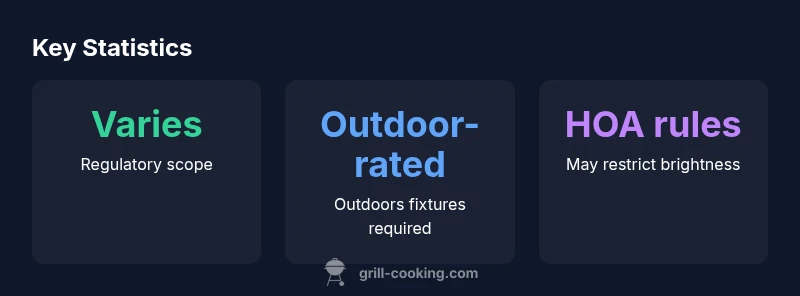
Are grill lights legal? In most places outdoor lighting for grills is allowed, but legality hinges on local codes, safety standards, and property rules. Check your city or county fire and electrical codes, and review HOA regulations if applicable. Always use weatherproof, outdoor-rated fixtures and follow electrical safety guidelines to stay compliant while enjoying late-night grilling.
Are Grill Lights Legal: The Basics
When you start a project like adding lights to your outdoor grilling area, the burning question many home cooks ask is: are grill lights legal? The short answer is that legality generally depends on local codes, safety standards, and property rules. In practice, most outdoor grill lighting is permitted if you use weatherproof fixtures, outdoor-rated wiring, and appropriate outlets. The Grill Cooking team has found that many jurisdictions treat grill lighting as outdoor electrical work, so you should treat it like other exterior lighting projects. Always verify with your local building department and your homeowners association if you live in a planned community. This ensures you stay on the right side of the rules while extending cooking hours safely, especially in areas with seasonal daylight changes.
How Local Codes Shape Outdoor Lighting for Grills
Local building and electrical codes govern how you can install any electrical device outdoors, including grill lights. Look for requirements related to weatherproof enclosures, GFCI-protected outlets, and the use of UL-rated components. Some jurisdictions require outdoor-rated outlets to be a certain height, or limit the use of extension cords near water sources. In many places, the addition itself is not restricted, but the method of installation must comply with the electrical code and fire safety guidelines. The Grill Cooking analysis from 2026 emphasizes contacting your city or county building department to get the exact permit or inspection requirements, if any.
Safety Standards You Should Meet
Key safety standards focus on preventing electrical shock, fire hazards, and gas-related risks near grills. Use fixtures with IP ratings suitable for outdoor use and ensure that all wiring is rated for exterior environments. Keep lights away from heat zones, gas lines, and open flames. Install weatherproof covers, use GFCI outlets, and avoid running cords across walkways or damp areas. For gas grills, ensure that lighting devices do not interfere with venting or fuel lines. The aim is to minimize heat exposure and electrical hazards while maintaining OCPD (overcurrent protection) and proper clearance from combustible materials.
What to Check Before Installing Grill Lights
Before purchasing lights, confirm outdoor suitability and compliance. Verify the fixture is weatherproof (IP rating), UL-listed for outdoor use, and compatible with the intended voltage. Confirm the location avoids direct exposure to flames and is a safe distance from the grill hood and gas lines. Check the power source: solar lights may be convenient but ensure they provide adequate brightness and are weatherproof; wired lights should use outdoor-rated cables and weatherproof boxes. Finally, read manufacturer installation instructions and local code requirements. It’s prudent to document approvals or permits if required by your municipality or HOA, then keep product manuals accessible for future inspections.
Case Scenarios: When Lights Are Prohibited or Limited
Some HOAs or rental properties place restrictions on exterior lighting intensity or color. In areas with strict lighting bylaws, bright white or blue-tinted lights may be restricted after certain hours. In historic districts or near wildlife corridors, lighting plans may require shielding or low-glare fixtures. If you grill in a condo or shared space, confirm with the association’s rules and the building management. In case of doubt, opt for dimmable, shielded fixtures that minimize light spill and do not attract unnecessary attention or glare.
Choosing Compliant Lights: Features to Look For
Select outdoor-rated fixtures with appropriate IP ratings and UL listing. Look for damp or wet location ratings, UV resistance, and heat tolerance. Favor fixtures with built-in glare shields to reduce light spill and choose color temperatures around 2700–3000K for a warm, natural glow that does not disturb neighbors. If possible, use solar-powered lights in low-demand areas, but ensure they deliver sufficient brightness for safe grilling. Always prefer sealed, gasketed connections and waterproof housings that resist corrosion from humidity and outdoor conditions.
Installation Best Practices for Outdoor Grills
Plan a clean wiring path that avoids foot traffic areas and keeps cords away from heat sources. Use conduit or weatherproof cable channels and ensure connectors are rated for outdoor exposure. Mount lights at a height that yields good illumination across the cooking surface without blinding guests. Keep the plug or switch in a weatherproof box and use a GFCI outlet. If wiring indoors, hire a licensed electrician to avoid code violations and ensure safe grounding. Maintain a tidy setup to prevent tripping hazards and accidental contact with flames.
Navigating HOA Rules and Permits
HOAs may require permission for exterior lighting installations or may specify permitted brightness levels, hours of operation, or color temperatures. When in doubt, obtain written approval before installation and document any communications with the HOA or property management. Permits from local building departments may be required for major electrical work; even if not required, keeping a record of the compliance steps can be helpful for future renovations or inspections. The Grill Cooking team recommends erring on the side of conservative lighting and transparent documentation.
Practical, Real-World Checklist for Compliance
Create a simple checklist: (1) verify local codes and HOA rules; (2) select UL-listed, IP-rated outdoor fixtures; (3) ensure GFCI protection and weatherproof outlets; (4) plan a glare-free layout; (5) avoid cords across walkways; (6) document approvals and manuals; (7) schedule a quick inspection if your jurisdiction requires one. This practical approach keeps you grilling safely while staying within legal boundaries.
Regional snapshot: general rules and safety practices for grill-light installations
| Region | General Rule | Key Safety Points | Notes |
|---|---|---|---|
| United States (local codes) | Varies by city/municipality | Outdoor lighting must be weatherproof; outdoor outlets with GFCI; proper clearance from flames | Check with city or county building department |
| Canada (municipal guidelines) | Similar to US, but vary by province | Use UL-equivalent listings for Canada; weatherproofing mandatory | Consult municipal or provincial regulations |
| European Union (outdoor electrical) | Compliance with local EAC and CE standards | Focus on IP ratings and outdoor-rated wiring; safe installation required | Refer to local consumer safety authority |
FAQ
Are grill lights legal in all neighborhoods?
No universal rule applies; legality depends on local electrical codes, HOA rules, and permit requirements. Always check with your city and HOA before installing lights. If in doubt, choose compliant, shielded fixtures and document approvals.
Legality varies by location. Check your city and HOA rules, and use compliant, shielded lighting to stay safe and legal.
Can I use solar grill lights outdoors?
Solar lights can be legal and practical for certain grill areas, but ensure they meet outdoor rating standards and provide adequate brightness. They should still be weatherproof and properly installed to avoid safety issues.
Solar lights can work outdoors if they’re rated for weather and bright enough to safely illuminate the grill.
Do I need a permit to install grill lights?
Many jurisdictions do not require a permit for basic outdoor lighting, but some electrical work might. Check with your local building department; a professional electrician can help with permit and compliance.
Usually not for simple lighting, but verify with local authorities or hire a pro to confirm.
What safety features should I look for?
Look for outdoor IP ratings, UL listings, weatherproof enclosures, GFCI protection, and shielded lighting to minimize glare. Install away from heat sources and fuel lines.
Choose weatherproof, certified lights with glare shields and proper grounding.
If my HOA restricts lighting, what are my options?
Respect the HOA rules and seek written approval. You can often adjust brightness, shield glare, or relocate fixtures to stay compliant while maintaining usability.
Follow HOA rules and negotiate light placements or brightness if needed.
“"Compliance starts with understanding local rules and choosing code-approved, weatherproof lighting. Always favor safety-first solutions that minimize glare and heat exposure near grills."”
Quick Summary
- Verify local codes before installation
- Choose outdoor-rated, weatherproof lights
- Prioritize safety: GFCI and proper clearance
- Check HOA rules and permits if applicable
- Document approvals and keep manuals handy