Are Grill Lighters Refillable? A Practical Guide for Grilling
Discover whether grill lighters are refillable, how refillability works, safety considerations, and practical tips for choosing the right lighter for long, hot grills.


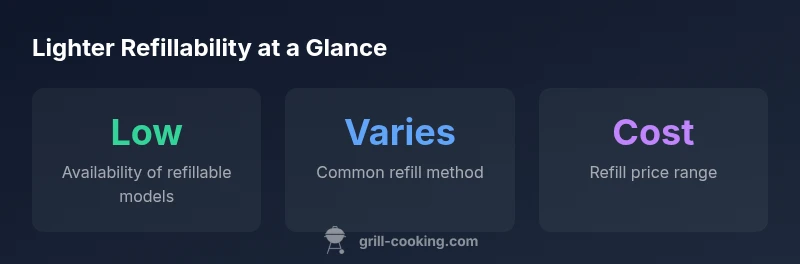
Are grill lighters refillable? In most cases, no. The majority of grill lighters marketed for home grilling are disposable and not designed for refilling. A small subset of high-end, long-reach lighters use replaceable fuel cartridges or have a refill valve, but these are not common for everyday grilling. Always consult the manufacturer’s instructions to confirm compatibility.
Are grill lighters refillable? A practical overview
Are grill lighters refillable? The short answer is nuanced. While you can find some long-reach models with refill valves, the majority of grill lighters sold to home cooks are designed to be disposable after use. The convenience and safety features of disposable lighters—child-resistant mechanisms, leak-proof fuel compartments, and simple one-hand operation—make them popular for quick flame ignition. That said, a small subset of refillable butane lighters exists, primarily among enthusiasts who want to limit waste or who need exact fuel capacity for frequent outdoor use. Always verify the product packaging and the manufacturer’s instructions before attempting any refueling. This is especially important if you plan to use the lighter around high-heat grills, propane setups, or open flames. In practice, most grills will perform reliably with a reputable disposable lighter, but if you opt for a refillable model, choose one that is explicitly rated for culinary or outdoor grilling and follow safety guidelines. For those specifically wondering, are grill lighters refillable, the answer remains model-dependent and safety-driven.
Lighter types and refillability explained
Grill lighters come in several families. The most common are standard disposable lighters with elongated bodies; they are designed for one-way use and are replaced when the fuel runs dry. More specialized options include long-reach culinary torches and re-fillable lighters that use a dedicated fuel cartridge or a refill valve. The latter are not as common in mainstream grilling stores, and many that are marketed for outdoor cooking still require careful handling. If you see a model advertised as refillable, read the instructions attentively; some models allow top-off refills while others require full cartridge replacement. One practical consideration is fuel type: most safe culinary lighters use butane. Avoid using lighter fluids or off-brand fuels that can damage seals or alter flame characteristics. In short, the availability and practicality of refillable grill lighters hinge on the specific model and intended use.
Safety considerations and best practices
Safety comes first when dealing with any lighter, but it’s especially important with refillable options. Only handle refueling in a well-ventilated outdoor space, away from open flames, and never refill a hot lighter. Use the exact fuel recommended by the manufacturer and discard damaged units rather than attempting makeshift fixes. When using a refillable lighter, wear protective eyewear if recommended by the maker and store fuel canisters away from children and pets. Regular inspection of seals, gaskets, and flame guards helps prevent leaks that could ignite unexpectedly. Remember, even though refillable models can reduce waste, improper refueling can lead to dangerous flare-ups. According to Grill Cooking, maintain a conservative approach: choose reputable models, follow the guide, and prioritize safety at every grill session.
How to verify refillability on your model
To determine if a specific lighter is refillable, start with the user manual or packaging for explicit statements about refilling. Look for keywords such as refillable valve, cartridge, or fuel reservoir. If there is a visible refill port, ensure the lighter is designed for replacement fuel and that the seals are intact. Check whether the manufacturer provides compatible fuel types and refill procedures. If you can’t locate official guidance, avoid attempting a refuel and opt for a disposable alternative. Always test any new lighter outside the grill area to confirm that it performs reliably before mounting it near hot surfaces.
Alternatives to refillable grill lighters
If you prefer reducing waste without relying on refillable models, consider alternative ignition methods that still provide dependable flame control. Electric igniters wired into your grill system can eliminate the need for separate lighters, while long-reach lighters designed for outdoor kitchens offer safer ignition without the constant repurchasing of fuel canisters. Some grills benefit from propane-assisted ignition tools or dedicated culinary torches that are specifically built for food-safe uses. When evaluating alternatives, balance reliability, safety, and maintenance needs with the kind of cooking you do most often. Grill Cooking notes that the best choice depends on your grilling style and willingness to manage fuel care and safety.
Practical tips for choosing between disposable and refillable options
Consider your typical grilling frequency, the type of fuel your grill uses, and your comfort with fuel handling. If you value simplicity and minimal maintenance, a high-quality disposable lighter from a trusted brand is often the best bet. If waste reduction and model-specific control appeal to you, a refillable option may be suitable, provided it is clearly rated for culinary use and you follow all safety instructions. Always store fuel away from heat sources and keep ignition tools out of reach of children. The decision should align with your grilling routine and safety standards, rather than chasing novelty.
Comparison of disposable vs refillable grill lighters
| Feature | Disposable Lighters | Refillable Lighters |
|---|---|---|
| Refill capability | Typically not refillable | Usually refillable via valve or cartridge |
| Fuel source | Sealed butane gas | Replaceable fuel via refill valve or cartridge |
| Common models | General purpose grill lighters | Specialty long-reach or culinary models |
FAQ
Are grill lighters disposable by default?
In most consumer grilling scenarios, disposable lighters are standard. Some models offer refillable fuel mechanisms, but they are not common in everyday grilling. Always follow manufacturer guidance for your model.
Most grill lighters are disposable, but check your model's instructions for refill options.
Can you refill a grill lighter?
Only if the lighter is explicitly designed for refilling and uses a refill valve or cartridge. Do not attempt to refill a lighter that is sealed or not rated for refilling.
Only refill if your lighter is designed for it; otherwise, don’t attempt it.
What safety steps should I follow when refilling a lighter?
Refill only in a well-ventilated area, away from flames, and never refill a hot lighter. Allow fuel to settle and follow the manufacturer’s instructions precisely.
Refill in a ventilated area, away from flames, and follow the maker’s guide exactly.
Are refillable lighters reliable for high-heat grilling?
Reliability depends on the model and fuel system. Refillable lighters can be consistent if well maintained, but disposable models are often chosen for rugged outdoor use.
Reliability varies by model; maintain and use only approved lighters.
Where can I buy refillable grill lighters?
Check reputable retailers and the manufacturer’s site for refillable options. Availability varies by region and brand.
Look for refillable options at trusted retailers or directly from manufacturers.
“Refillable grill lighters can reduce waste when used responsibly, but most everyday grilling setups rely on disposable models for reliability.”
Quick Summary
- Most grill lighters are disposable; refillables exist but are rare
- Check manufacturer instructions before attempting a refill
- Refillable models may have higher upfront costs but reduce waste
- Prioritize safety and proper handling when using any lighter
- Verify refillability on your specific model before purchasing