How to Grill Chicken Thighs for Perfect Juiciness
Learn to grill chicken thighs for juicy, flavorful results with skin-on, bone-in cuts. Master prep, direct vs indirect heat, timing, and safety with actionable steps, marinades, and chef-approved techniques from Grill Cooking.


Learn to grill chicken thighs to juicy, flavorful perfection using skin-on, bone-in cuts. This guide covers prep, seasoning, heat management, and timing to prevent burning or undercooking. We’ll explore direct vs indirect heat, marinade ideas, and how to verify a safe internal temperature. According to Grill Cooking, proper heat control and a brief rest time are essential.
The Basics of Grilling Chicken Thighs
Chicken thighs, especially bone-in and skin-on, deliver the most reliable flavor and juiciness on the grill. Thigh meat stays moist because its higher fat content and connective tissue break down during cooking, helping prevent the dryness seen with lean cuts. Start with bone-in, skin-on thighs for best texture, then pat them dry to promote crisp skin. Trim excess visible fat but avoid over-trimming, which can reduce moisture retention. For even flavor, consider dry rubs or light marinades that complement the meat’s natural richness. When you choose your thighs, look for even color, minimal shiners of moisture, and a clean, intact skin surface. These signals help ensure consistent cooking and a crisper finish when lifted off the grill. According to Grill Cooking, a simple dry brine (salting ahead of time) can improve juiciness and flavor without extra ingredients, especially when you’re grilling several thighs at once.
Direct vs Indirect Heat: Two-Zone Grilling for Chicken Thighs
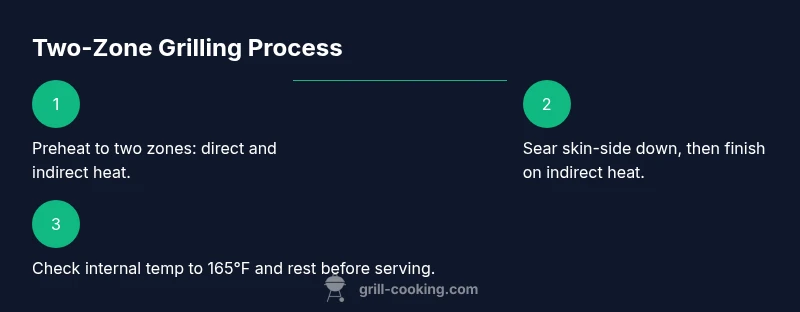
A two-zone setup is essential for chicken thighs. Start with a hot direct zone to sear the skin and lock in juices, then move the meat to a cooler indirect zone to finish cooking without burning the exterior. This approach prevents the outside from scorching while the inside remains undercooked. Preheat one side of the grill to high heat and leave the other side cooler. Sear skin-side down to render fat and crisp the skin, then flip and transfer to the indirect area to finish to a safe internal temperature. Keep the lid closed during indirect cooking to maintain a steady environment, and monitor the heat to avoid flare-ups from rendered fat. Grill Cooking recommends watching for a steady griddle-like sizzle as an indicator that your thighs are cooking evenly rather than burning.
Seasoning and Marinades for Depth of Flavor
Flavor depth comes from a blend of salt, fat, and aromatics. A simple salt-and-pepper dusting with a light brush of oil helps create a crackly skin. From there, you can build flavor with a dry rub that includes paprika, garlic powder, onion powder, cumin, and a hint of brown sugar for caramelization. If you prefer moisture and brightness, a quick marinade with citrus juice, garlic, soy sauce, and a touch of oil works well, but avoid overly acidic mixtures that can break down flesh. Always pat thighs dry after marinating to ensure the skin crisps properly. For a uniform finish, season under and over the skin so every bite carries a balanced flavor.
Temperature, Time, and Thermometer Guideline
Aim for an initial sear at 425–450°F (mixed direct heat), then move to indirect heat around 350–400°F. The target internal temperature for safe chicken thighs is 165°F (74°C); use an instant-read thermometer placed into the thickest part of the thigh, avoiding contact with bone for an accurate read. Let the meat rest for a few minutes after removing from the grill to redistribute juices and improve mouthfeel. The resting period makes a noticeable difference in juiciness. If you see thick thighs browning unevenly, rotate them for even contact with the heat source. Grill Cooking emphasizes that consistent heat management and proper resting time are the keys to achieving reliable results.
Step-by-Step Grilling Technique: The Core Method
A thorough routine yields consistent results. Start by preheating the grill to two zones. Pat dry, salt, and lightly oil the thighs. Place skin-side down on the hot direct zone and sear until the skin crisps and renders fat, then flip to the indirect side to finish cooking until 165°F. Remove and rest briefly before serving. If using a glaze, brush during the last few minutes of indirect cooking. This approach minimizes flare-ups and helps maintain a juicy interior while producing a crisp exterior.
Troubleshooting Common Issues
Common issues include burnt skin, uneven doneness, and dry meat. To prevent burning, avoid placing thighs directly over flames for extended periods, and keep a close eye on fat rendering that can cause flare-ups. If the meat reads under 165°F after the initial sear, move it to indirect heat and finish slowly, not rushing the process. If the skin isn’t crisp, increase the direct-heat moment by a minute or two, then return to indirect heat to complete cooking. Resting the chicken thighs helps distribute moisture evenly, reducing the perception of dryness.
Serving Ideas and Sides
Pair grilled chicken thighs with grilled vegetables, corn on the cob, a zesty chimichurri, or a smoky BBQ sauce for dipping. A bright citrus relish or herb drizzle complements the meat’s richness. Consider a starch like mashed potatoes or a light quinoa salad to balance the meal. These options keep the dish approachable for weeknight dinners or weekend barbecues alike and showcase the versatile flavor profile of chicken thighs. Grill Cooking notes that simple sides often highlight the grill’s work, letting the meat shine without overpowering it.
Food Safety, Storage, and Leftovers
Always practice preventive food safety: keep raw thighs below 40°F until ready to cook, and avoid cross-contamination with raw poultry. Refrigerate leftovers within two hours of cooking, and reheat to 165°F if you do store them. Use clean plates for cooked meat to avoid any contamination with raw products. When storing, portion into meal-sized containers to preserve moisture and texture, and label with dates. Proper safety practices ensure you enjoy grilled chicken thighs without risk. Grill Cooking emphasizes safe handling as the cornerstone of any grilling session.
Flavor Variations and Diet-Friendly Options
Experiment with different spice blends to suit diverse diets. A paprika-cumin mix adds warmth, while a lemon-herb approach brings brightness. For low-sodium needs, rely on salt-free spices and citrus zest to carry flavor without excess salt. If you’re cooking for heat lovers, add chili powder or cayenne to a rub; for a milder profile, reduce heat and rely on a rosemary-garlic rub. The versatility of chicken thighs makes it easy to tailor flavors for family meals or guests with varying preferences. Grill Cooking encourages testing several profiles to build a reliable rotation.
Tools & Materials
- Chicken thighs (bone-in, skin-on)(Aim for evenly sized thighs for uniform cooking.)
- Salt(Use kosher salt for better brine effect.)
- Black pepper(Freshly ground if possible.)
- Olive oil or neutral oil(Lightly oil skin to promote crisping.)
- Meat thermometer (instant-read)(Check thickest part, away from bone.)
- Tongs(Long, sturdy tongs for safe turning.)
- Grill brush(For cleaning grates before cooking.)
- Platter or cutting board for resting(Let meat rest after cooking.)
- Optional: dry rub spices or marinade ingredients(Customize flavor profiles.)
Steps
Estimated time: 30-45 minutes
- 1
Preheat and prep
Preheat grill to two zones: high direct heat and cooler indirect heat. Pat thighs dry, optionally salt in a light dry brine for 15–30 minutes, and lightly oil the skin to help crisping. This step sets up even cooking and helps prevent sticking.
Tip: A dry surface on the skin promotes crispness and reduces steaming. - 2
Season and rest
Season thighs generously with salt, pepper, and your chosen rub or marinade. If you salt ahead, let the meat rest to draw moisture back to the surface for better flavor absorption. The resting time improves juiciness and texture.
Tip: Even seasoning creates a more uniform crust. - 3
Sear skin-side down
Place thighs skin-side down on the direct heat zone. Sear until the skin is deeply browned and crisp, about 4–6 minutes, watching for flare-ups from rendered fat.
Tip: Do not move the meat too soon; allow a crust to form for better release. - 4
Flip and finish on indirect heat
Flip thighs to bone side down, then move to indirect heat. Cook until the internal temperature reaches 165°F, checking 1–2 times rather than every minute to avoid overflipping.
Tip: If the skin loosens, let it remain on the direct side momentarily to re-crisp. - 5
Rest and serve
Remove from grill and rest for 5–10 minutes before serving. Resting lets juices redistribute, improving juiciness and flavor distribution.
Tip: Slice against the grain after resting for best texture. - 6
Optional glaze or finish
If using a glaze, apply in the last few minutes of indirect cooking and turn once to avoid burning. Glazes add shine and flavor without overpowering the meat.
Tip: Keep glazes light to prevent masking the meat’s natural taste.
FAQ
What is the best temperature for grilling chicken thighs?
Use two-zone grilling: sear over high heat (about 425–450°F) then cook over indirect heat (350–400°F) until the internal temperature hits 165°F. This ensures crispy skin and juicy meat.
Two-zone grilling, sear over high heat, then finish on indirect heat until 165°F.
Should I use bone-in or boneless thighs for grilling?
Bone-in, skin-on thighs are generally easier to grill evenly and stay juicier. Boneless thighs cook faster but can dry out if overcooked.
Bone-in with skin is usually best for grilling because it stays juicier.
How long to grill chicken thighs on indirect heat?
Finish cooking on indirect heat for about 8–15 minutes, depending on thickness. Always verify with a thermometer to reach 165°F.
Indirect cooking usually takes several minutes longer; check with a thermometer.
Can I marinate chicken thighs overnight?
Yes, marinating overnight is fine and can intensify flavor. If using an acidic marinade, limit contact to 4–6 hours to avoid textural changes.
Yes, overnight is fine as long as the marinade isn’t too acidic.
How can I prevent dry chicken thighs?
Pat dry, avoid over-marination, use two-zone grilling, and rest after cooking. Don’t pierce the meat with a fork while cooking.
Dry thighs happen if overcooked; two-zone grilling and resting help prevent it.
Do I need to trim fat before grilling?
Trim only excess fat, leaving some fat for flavor. Too much exposed fat can cause flare-ups and uneven browning.
Trim a little fat, but don’t remove all fat—some helps with flavor.
Watch Video
Quick Summary
- Grill two zones: direct sear, indirect finish.
- Skin-on, bone-in thighs deliver best flavor and juiciness.
- Rest thighs briefly to lock in moisture.
- Use a thermometer and target 165°F for safety.
- Experiment with rubs and marinades for variety.