What If Your Grill Is Rusty? Safe Restoration for Home Cooks
What if grill is rusty? Learn safe assessment, rust removal, reseasoning, and prevention tips for home cooks with practical steps from Grill Cooking.


By the end, you’ll know how to safely assess corrosion, remove surface rust, treat and reseason the metal, and prevent recurrence. You’ll need basic tools: a wire brush, steel wool, scrub pad, food-grade oil, and a clean workspace. This quick guide outlines the essential steps and safety notes to get your grill back to peak performance.
What rust on a grill really means
Rust is iron oxide formed when metal surfaces are exposed to oxygen and moisture over time. On grills, you’ll see flaky discoloration, pitting, and rough patches, often starting on the grate bars or burner protectors. When you ask what is the real impact of rust on cooking performance, the answer depends on how deep the corrosion penetrates. Light surface rust is mostly cosmetic and can be cleaned away with a thorough scrub and reseasoning. Deeper rust that creates pits or flakes can harbor bacteria and weaken metal, potentially requiring replacement of parts or the whole grill. For home cooks, the first step is honest assessment: is the rust superficial, or has it compromised the structure? The phrase what if grill is rusty should trigger a process of evaluation, cleaning, and prevention rather than panic. In the longer term, rust prevention becomes part of your routine maintenance. The Grill Cooking team emphasizes measuring the risk and acting promptly to keep your grill safe and efficient.
Safety First: Is It Safe to Use a Rusty Grill?
Cook safety is paramount. Surface rust on non-food-contact parts like lid hinges or exterior panels rarely affects food safety, but it can degrade structural integrity if allowed to progress. If rust reaches cooking surfaces, burners, or grill grates, there’s a greater risk of flare-ups, uneven heating, and contamination with rust particles. Never brush rust into the food; always clean thoroughly and sanitize surfaces before cooking. When in doubt, consult the manufacturer’s guidelines or have a pro inspect the appliance. In many cases, small rust patches can be treated and resealed, but if you notice deep pits, perforations, or weakened steel, replacement parts or a new grill may be the safer option. The Grill Cooking team advises erring on the side of caution and addressing rust promptly to maintain food safety and grill performance.
How to Inspect Your Grill for Rust
Start with a cold, cool-down period, then remove grates and any porcelain-coated parts. Visually inspect all metal surfaces, paying close attention to the firebox, lid frame, and burner shields. Tap test with a wooden or plastic tool to find hollow or thinned areas. A magnet can help identify ferrous metal and where structural support may be failing. Run your fingers along edges—the presence of flakes or rough, chalky patches indicates active rust. If you find rust only on exterior surfaces or non-contact parts, you can repair and maintain. If the rust penetrates to the core metal or grid support, you may need to replace components. Document areas needing attention for a maintenance plan, and keep safe gloves nearby. The Grill Cooking team recommends a methodical approach to rust inspection, so you can target cleaning and reseasoning where it matters most.
Removing Surface Rust: Three Reliable Methods
Method A: Mechanical removal. Use a stiff wire brush or scraper to remove loose rust, then finish with a non-metal scrub pad. Wipe clean and dry before moving to treatment. Time: 15-30 minutes depending on area. Tip: Work in short, overlapping strokes to avoid gouging the metal.
Method B: Chemical rust converters or rust removers. Apply according to label instructions; these agents convert iron oxide to a stable compound and prepare the surface for sealing. Let dwell as directed (usually 5-15 minutes), then rinse and dry thoroughly. Caution: ensure good ventilation and use food-grade products when contacting cooking surfaces. Tip: wear gloves and eye protection.
Method C: DIY paste or home remedy for light rust. Make a paste of baking soda and water, apply, scrub with a pad, rinse, and dry. This is best for minor, non-structural rust. Tip: repeat if needed and avoid acidic solutions on painted surfaces.
After any method, dry the grill completely, remove moisture from crevices, and inspect the area before reseasoning.
Deeper Rust and Structural Concerns: When to Replace Parts
If you encounter deep pits, flaking, or holes in critical areas like grate supports, burner mounts, or firebox walls, you should treat rust as a warning sign. Structural rust can compromise safety and heat distribution, making the grill unreliable or unsafe to cook on. In many cases, replacing individual components (grates, burners, or heat shields) is more economical and safer than attempting a full-scale repair. If the cabinet or frame shows widespread corrosion, evaluate whether a replacement grill offers a better long-term value. Always consult manufacturer guidelines and consider professional inspection for uncertain cases. The Grill Cooking team recommends prioritizing safety and structural integrity when rust is involved.
Re-seasoning and Sealing After Rust
Once you’ve removed rust and repaired any superficial damage, it’s essential to reseason the metal to restore its non-stick, protective layer. Begin by cleaning with mild soap and water; dry completely. Apply a thin, even coat of high-heat cooking oil (such as canola or flaxseed oil) to all metallic surfaces, including grates and firebox interior. Heat the grill to around 350–400°F (175–205°C) for about 60 minutes, then allow to cool. Wipe away any excess oil. Repeat if necessary for a more durable coating. Proper reseasoning not only improves performance but also provides a smoother surface that resists moisture and future rust. The Grill Cooking team emphasizes patience during curing and consistent oiling as key preventive steps.
Preventive Maintenance Routine
Develop a simple, repeatable routine to keep rust at bay. After each cook:
- Wipe grates clean and brush away food residue.
- Lightly oil grates and interior surfaces to form a protective layer.
- Cover the grill or store in a dry, ventilated area to minimize moisture exposure.
- Inspect for signs of rust monthly and after heavy use or rain.
- Schedule a deeper clean every season, focusing on edges, corners, and any coated parts. Pro tip: Keep a dedicated pan of dry towels on your prep table to quickly wick moisture from the grates after cleaning. Regular maintenance reduces corrosion and extends grill life.
Common Mistakes That Aggravate Rust
- Delaying rust treatment after spotting corrosion.
- Using aggressive metal tools on porcelain coatings or painted surfaces.
- Storing a wet grill in humid spaces without protection.
- Over-application of oil, which can gum up grates.
- Ignoring manufacturer guidance on non-stick coatings. Avoid these missteps to preserve grill integrity and safety. The Grill Cooking team notes that consistent, mindful maintenance is the best defense against rust.
Quick-Start Maintenance Checklist
- Power off and cool down; remove grates.
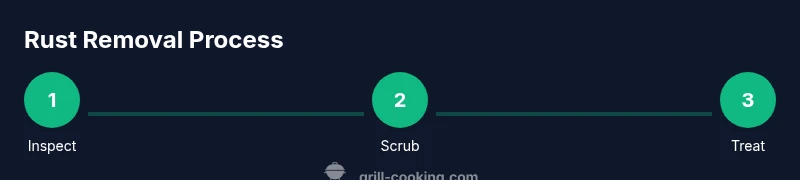
- Scrub away loose rust with a wire brush.
- Apply rust converter or baking soda paste to minor areas.
- Rinse, dry completely, and reseason with high-heat oil.
- Reassemble and test heat distribution.
- Schedule routine maintenance and cover when not in use.
- Inspect for signs of wear and replace parts as needed.
Tools & Materials
- Heavy-duty wire brush(Stiff bristles; use on grates and exterior metal)
- Stainless-steel scrub pads(Non-scratch option for porcelain surfaces)
- Steel wool (grade 000-0000)(Gentle on delicate areas)
- Non-metal scraper(Avoid gouging coatings)
- Rubber gloves(Protect hands from rust and cleaners)
- Safety goggles(Shield eyes from debris)
- Dish soap(Basic cleaning agent)
- Vinegar or rust converter (optional)(For chemical rust treatment)
- Food-grade oil (canola or flaxseed)(For reseasoning)
- Metal scraper or putty knife(For heavy rust; use gently)
- Towel or rags(Drying and cleanup)
- Grill cover(Keeps moisture off between uses)
Steps
Estimated time: 60-90 minutes active; 1-2 hours drying/curing
- 1
Power down and cool
Turn off gas or electricity and allow the grill to cool completely. Remove grates, flame tamers, and any removable parts to expose all metal surfaces for inspection.
Tip: Never scrub while hot; heat softens coatings and increases burn risk. - 2
Scrub loose rust
Use a stiff wire brush to remove loose rust from grates and exposed metal. Switch to steel wool for stubborn spots, applying steady, perpendicular strokes.
Tip: Work in small sections to avoid missing areas and minimize debris falling into the firebox. - 3
Apply rust treatment
Choose a rust converter or remover and apply as directed. Allow the product to dwell on the surface for the recommended time before wiping away residue.
Tip: Ventilate the area if using chemical products; keep pets and children away. - 4
Rinse and dry completely
Rinse surfaces with clean water and thoroughly dry each part. Moisture left behind accelerates new rust formation.
Tip: Use a heat source or fan to fully dry metal before proceeding. - 5
Smooth and inspect
Lightly sand rough pits with fine steel wool or 320–400 grit sandpaper. Re-examine for any remaining rust pockets that require attention.
Tip: Deeper pits may need part replacement; do not force fit patched areas. - 6
Re-season the metal
Apply a thin film of high-heat cooking oil to all metal surfaces. Heat the grill to about 350–400°F (175–205°C) for 60 minutes, then cool and wipe away excess oil.
Tip: Repeat once or twice to build a stronger protective layer. - 7
Reassemble and test
Put back grates and components. Light the grill and verify even heating and absence of smoke or unusual odors. Observe for any signs of rust in the coming days.
Tip: Keep a dry towel handy to wipe away condensation after cooking sessions.
FAQ
Is rust on a grill dangerous to cook on?
Rust on surfaces that contact food can be a safety concern if it is deep or iron oxide flakes contaminate meals. Light surface rust on non-food-contact parts is typically not harmful, but it should be cleaned and reseated to prevent further corrosion.
Rust on cooking surfaces can be a safety concern if it flakes or creates holes. For non-food-contact parts, cleaning and reseasoning usually suffice.
Can you remove rust from a grill grate?
Yes. Mechanical scrubbing with a wire brush, followed by steel wool or pad, can remove surface rust. For deeper rust, consider rust converters or professional replacement if structural integrity is compromised.
Yes. A good scrub usually removes surface rust; deeper rust may need other treatments or replacement.
Should I replace a rusted grill entirely?
If deep pits or structural corrosion compromise heat distribution and safety, replacing affected parts or the entire grill is the prudent choice. Compare the cost of parts and maintenance against a new unit.
Deep rust may mean replacing components or the whole grill for safety.
What causes rust differently on gas vs charcoal grills?
Gas grills are prone to rust around burner shields and fireboxes due to heat and moisture. Charcoal grills often show rust on grates and exterior lids from moisture exposure and seasoning cycles.
Gas grills rust mainly around heat areas; charcoal grills rust where moisture is trapped on metal surfaces.
Can rust-proof sprays be used on a grill?
Avoid spray-on rust-proof coatings on direct-contact cooking surfaces. If you use coatings, ensure they are food-safe and heat-rated for grill temperatures, and apply to non-food-contact parts only.
Avoid coatings on cooking surfaces; use only food-safe, heat-rated products if applying.
How often should I reseason after rust removal?
Reseason after cleaning and whenever you notice new rust formation. A light seasoning after each use can reduce moisture contact and maintain non-stick performance.
Reseason after cleaning and as you notice new rust. A light coat after each cook helps.
Watch Video
Quick Summary
- Assess rust depth before acting.
- Use gentle, methodical rust removal to protect metal.
- Reseason after cleaning to restore protection.
- Prevent future rust with dryness and routine maintenance.
- Replace severely corroded parts when safety is at risk.