How to Clean a Grill with Onion: A Practical Guide
Learn a chemical-free, onion-based method to clean grill grates, deodorize, and protect your setup. Step-by-step guidance, tips for best results, and real-world variations from Grill Cooking.


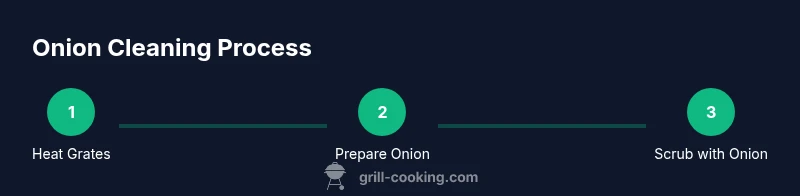
If you’re learning how to clean grill with onion, start by heating the grates to loosen grime. Rub a halved onion across the hot surfaces to lift residue and create steam, then wipe clean and oil the grates before cooking again. This chemical-free method uses onion moisture and mild acidity for a quick refresh. Here’s a step-by-step guide.
Why Onion Works for Grilling Cleanliness
According to Grill Cooking, using onion for grill cleaning leverages its moisture and natural acids to lift stuck-on residue and deodorize the surface. If you're asking how to clean grill with onion, this method offers a chemical-free approach that fits the needs of home cooks. The basic idea is simple: heat the grates to loosen grime, then scrub with a halved onion so the onion itself acts as a natural abrasive and steam source. In practice, this creates a micro-cleaning cycle that lifts buildup while leaving a mild onion aroma that disappears after a quick wipe. The onion’s moisture also helps generate steam during the cleaning pass, which softens burned-on bits without harsh cleaners. This makes maintenance feel approachable and beginner-friendly, especially after a busy cookout. Keep in mind that onion cleaning shines when grates are moderately dirty and you’re prepared to follow with a light brush and final oiling for best results.
When Onion Cleaning Is Most Effective
Onion cleaning excels when grills are moderately dirty after a standard cookout but before heavy buildup has cured into char. It works well on properly heated grates (roughly 400-500°F) because the heat drives steam from the onion, releasing acids that help loosen residue. This method is versatile across gas grills and charcoal grills, provided you avoid direct heat spikes that could burn the onion and create smoke. It's less effective on grills with enameled grates that require gentler handling, and it should be paired with a light brush or wipe for stubborn spots. For frequent grillers, doing a quick onion clean after each cook keeps buildup manageable and reduces the need for chemical cleaners.
Tools, Ingredients, and Prep for an Onion-Based Clean
You’ll need a ripe onion (yellow or white works best) cut in half, a stable cutting board, a sharp knife, heat-resistant gloves, and tongs or a spatula for maneuvering hot components. Keep paper towels handy for quick returns to the polish stage, and optionally a clean cloth to wipe grates after scrub. If you want extra reach, use sturdy grill-safe skewers to help steady onion halves. No harsh cleaners are required; the onion provides moisture and mild acidity. Remember to preheat the grill before starting to ensure the grates release grime more easily. You’ll also want a light neutral oil for a final wipe to prevent sticking.
How the Onion Cleaning Method Fits into Routine Maintenance
This technique is most effective as a mid-cycle maintenance step, not a full deep clean. After you perform onion scrubbing, you still might need to brush loose debris and rinse the grates with water. The idea is to use onion to loosen and lift residues so they are easier to wipe away, not to substitute for a thorough cooler-cleaning routine. Pair onion cleaning with your standard post-cook wipe-down and inspection. The routine should include checking burner ports, drip pan, and grates periodically and applying oil to protect the surface from rust.
Variations: Onions by Color and Alternatives
Yellow onions tend to offer a robust aroma and good moisture for the cleaning pass, while white onions can be a bit milder. Red onions, when used, provide a distinct scent that some cooks prefer after barbecues with pork or poultry. If onions aren’t available, you can substitute a small citrus wedge to generate steam and a light acidic lift, but this won’t provide the same extended moisture as an onion. The core idea remains: heat, moisture, and a gentle abrasive action help lift residue, followed by a wipe and oiling for protection.
Dealing with Tough Residue: When Onion Isn’t Enough
For grills with heavy, baked-on residue, onion cleaning may need to be part of a broader routine. Use a scrubbing brush or grill-safe scraper after the onion pass to address stubborn spots, then reheat and wipe again. If you notice rust or flaking on grates, halt heavy scrubbing and assess whether a replacement grate is needed. Onion cleaning is a great first step, but it should be complemented by routine professional-grade cleaning tools and periodic deep cleans.
Post-Cleaning Care: Rinse, Dry, and Oil
After you complete the onion scrub, wipe down the grates with a clean cloth to remove loose bits and any onion residue. If your grill is smoking or has visible residue, rinse briefly with a small amount of water away from flame and then dry thoroughly. Finally, apply a light coat of oil to the grate surface to minimize sticking during the next cook. This post-clean routine helps protect metal surfaces and extends grate life, especially on carbon steel and cast iron grates.
Tools & Materials
- Onion (yellow or white)(Two halves per cleaning session; select firm onions without mold)
- Cutting board(Stable surface for slicing onion halves)
- Sharp knife(Chef’s knife or Santoku; ensure a clean, safe cut)
- Heat-resistant gloves(For handling hot grates and tools)
- Tongs or grill-safe spatula(Move onion halves and scrub without direct contact)
- Paper towels or clean cloth(Wipe loose debris and onion residue)
- Neutral oil (spray or brush)(Light coat on grates after cleaning to prevent sticking)
- Optional grill brush(For stubborn patches after onion pass)
Steps
Estimated time: 15-25 minutes
- 1
Preheat and Prep Onion
Preheat the grill on high for 5-7 minutes to warm the grates. While it heats, cut the onion in half, exposing the flat side for better contact with the grate surface.
Tip: Cut the onion just before use to maximize moisture release and minimize browning. - 2
Inspect Grates and Safety
Put on heat-resistant gloves and inspect the grates for loose debris. If flipping grates, do so with caution and avoid touching hot metal with bare skin.
Tip: Keep a safe distance from active flames; use tongs to reposition onion halves as needed. - 3
Rub Grates with Onion Halves
Using the flat cut surface, press the onion half onto the hot grates and move it in long, deliberate strokes to release steam and lift grime. Turn the onion to use fresh surface as it browns.
Tip: Apply steady pressure and cover all surfaces, including corners and grooves. - 4
Wipe and Re-apply as Needed
Wipe away loosened debris with a paper towel. If residue remains stubborn, scrub again with the onion and pause for a few seconds to let steam loosen it.
Tip: Work in sections to avoid missing spots and to prevent re-depositing grime on clean areas. - 5
Rinse, Dry, and Oil
If safe for your grill type, give a light rinse to remove loose particles, then dry thoroughly with towels. Finish with a light oiling to protect the grate surface.
Tip: Never soak hot grates; keep water minimal and use oil to form a protective layer. - 6
Return to Cooking Readiness
Let the grates come back to their typical cooking temperature, then wipe once more with a dry cloth before placing food. Confirm there is no onion residue left on the surface.
Tip: A quick wipe after preheating ensures a clean surface for your next cook.
FAQ
Does onion cleaning work on both gas grills and charcoal grills?
Yes, onion cleaning can be effective on both gas and charcoal grills when the grates are hot and properly heated. The technique relies on heat, moisture, and mild acidity to loosen residue, which translates across grill types. For best results, adjust your wrist motion to cover all surfaces and finish with a light oil.
Yes. Onion cleaning works on gas and charcoal grills when the grates are hot and they are scrubbed evenly; finish with a light oil.
Can I use red onions instead of yellow onions for cleaning?
Red onions can be used, but they often have a stronger aroma and may leave a more noticeable scent. Yellow or white onions are typically preferred for their moisture and milder scent. Either works as long as you monitor heat and wipe clean afterward.
Red onions can be used but yellow or white is usually preferred for milder aroma and moisture.
Is onion cleaning safe for non-stick or coated grates?
Onion cleaning is generally safe for most grills, but for non-stick or coated grates you should avoid aggressive scrubbing that could wear the coating. Use gentler pressure and combine with non-abrasive wipes.
Be gentle with non-stick coatings; use light pressure and non-abrasive wipes.
Do I need to rinse the grill after onion cleaning?
A light wipe to remove onion residue is usually enough. If you rinse, do so carefully away from flames and dry the grates thoroughly before cooking again.
Wipe off onion residue; rinsing is optional but if done, do it away from flames and dry well.
How often should I clean my grill with onion?
Use onion cleaning as a quick maintenance step after regular grilling sessions, especially when you notice mild buildup. It’s not a replacement for periodic deep cleans, but it keeps surfaces fresher between full cleanings.
Use it after regular grilling to keep surfaces clean between deeper cleans.
Watch Video
Quick Summary
- Preheat grates to optimize cleaning performance.
- Rub with halved onion to lift grime and create steam.
- Finish with a light oil for easier future cleaning.
- Works across gas and charcoal grills with proper technique.
- Incorporate onion cleaning as part of a regular maintenance routine.