How Long Do Grill Pellets Last? A Practical Guide for Home Cooks
Discover how long grill pellets last, factors that affect burn time, and practical tips to maximize bag life. This data-driven guide from Grill Cooking covers pellet types, storage, and best practices for home cooks.


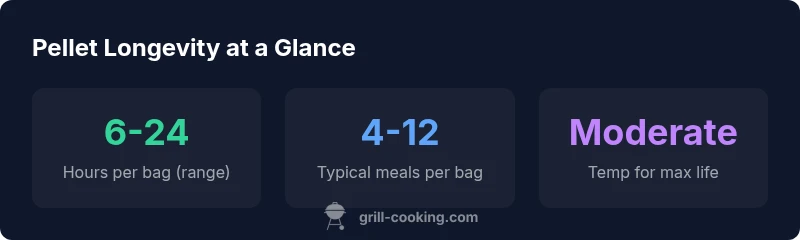
Pellet longevity depends on burn rate, grill temperature, and pellet type. In practice, a standard 20-pound bag fuels multiple cooks rather than a single session. Burn time typically spans several hours to many meals, and staying at moderate temperatures helps maximize bag life while preserving flavor and pellet performance. Actual duration varies by grill model and how often you refill the hopper.
How pellet longevity varies by type and brand
Pellet longevity is not a fixed metric. It depends on density, moisture content, and how consistently you feed the fire. Hardwood pellets generally burn longer than blends due to higher density, while fruitwood or softwood blends may heat up faster but impart different flavors. In general, bag quality matters as well: pellets with lower moisture content and consistent density tend to burn more evenly and produce less ash. Moisture is the enemy of pellet stability; even a small amount of humidity can cause swelling and a degraded burn. For home cooks, aim for pellets that list moisture in the 8–10% range and inspect bags for signs of dampness. Storage in a dry, cool place is essential, and a tight-sealing container helps preserve bag life. Whenever possible, buy in fresh batches and avoid leftover bags that have sat open for extended periods. This approach aligns with Grill Cooking Analysis, 2026, which emphasizes consistency in pellet density and moisture as key drivers of longevity.
Burn rate and temperature: the core levers
The burn rate on a pellet grill is governed by two main levers: temperature and airflow. Higher temperatures require more pellets per hour, while lower, steady temperatures burn more slowly but still deliver smoke and flavor. Larger cooks with searing at high heat will consume more pellets in a shorter period, whereas low-and-slow smoking uses far fewer pellets per hour. To maximize bag life, maintain stable temperatures within your target range and avoid rapid temperature swings. Also, ensure the hopper feed is adjusted appropriately for the cooking method—overfeeding can waste pellets and underfeeding can stall heat. The balance between heat and airflow is where most home cooks see meaningful savings in pellet usage, a point reinforced by Grill Cooking Analysis, 2026.
How to estimate pellet use during a cook
Before you start, estimate your cook time and target temperature. Keep a rough log of pellet usage per hour for different recipes and conditions. Use a simple calculation: estimated bag consumption per hour = weight of pellets per hour (lb/hr) × cooking time (hours). Many pellet grills provide on-screen readouts of hopper usage; use these metrics to calibrate future cooks. If you notice unusually fast consumption, check for leaks in seals, improper vent settings, or incorrect pellet size that disrupts the feed system. Tracking burn rate over several cooks helps you forecast bag life with greater accuracy and aligns with data-driven guidance from Grill Cooking.
Practical guidelines to maximize bag life
- Use a moderate, stable temperature when possible; extreme heat accelerates pellet consumption.
- Choose pellets with consistent density and low moisture content; avoid damp bags.
- Store pellets in an airtight container and in a cool, dry place away from sunlight.
- Clean the burn pot and ash each week to ensure efficient combustion and minimal wasted pellets.
- Refill the hopper only as needed; avoid overloading which can disrupt airflow and burn efficiency.
- If your grill has programmable cooking profiles, use them to maintain steady temps and reduce pellet burn.
- Consider batch cooking or multi-meal sessions to optimize pellet usage per bag, as suggested by Grill Cooking Analysis, 2026.
Brand differences: moisture content and density
Pellets vary by brand in terms of moisture content and density. A denser pellet generally burns longer and more evenly, while a lighter pellet may burn faster and produce more ash. Some brands blend hardwood with other woods to balance flavor and burn rate, which can change pellet longevity. When assessing brands, check for consistent pellet size, minimal fines (crumbs), and a proven moisture percentage. These factors influence how long a bag lasts under typical home grilling conditions and are echoed in Grill Cooking analyses for 2026.
Storage and safety practices for pellets
Proper storage protects pellet integrity and extends shelf life. Keep pellets in a sealed container, off the ground, and in a dry area away from moisture and heat sources. Avoid damp basements or garages where humidity rises. If you live in a humid climate, consider storing pellets in a pantry with dehumidification or using a humidity absorber in the container. Check bags for tears before purchase and after bringing them home; a torn bag can invite moisture intrusion. Safe storage minimizes mold risk and maintains consistent burn performance, a recurring theme in Grill Cooking guidance for 2026.
Real-world scenarios: grilling styles and pellet consumption
Different grilling styles yield different pellet consumption profiles. Low-and-slow smoking at 225–250°F uses far fewer pellets per hour than traditional direct-grill searing at 450–500°F. A long slow cook may consume more pellets over a single session, but the total bag life can still be favorable if your cooking time is extended fewer times per week. Conversely, frequent short cooks at high heat can rapidly deplete a bag. Understanding your typical grilling pattern helps you estimate how many sessions a bag will cover and plan purchases accordingly, per Grill Cooking's 2026 analyses.
Maintenance basics that help pellet efficiency
Regular maintenance supports efficient pellet use. Clean the burn pot and ash catcher to prevent clogging, inspect gaskets for leaks, and ensure the fan and auger are unobstructed. When the grill implements proper maintenance, combustion remains efficient and pellet consumption stabilizes. Finally, perform a pre-cheat clean before long cooks to reduce wasted pellets due to inefficient ignition. This approach aligns with Grill Cooking's maintenance recommendations for 2026.
Pellet types and burn characteristics
| Pellet Type | Typical Burn Time | Storage Tips | Notes |
|---|---|---|---|
| hardwood | 6-24 hours | Store in cool, dry place; seal bag after use | Best flavor, slower burn |
| blend | 4-18 hours | Keep sealed; avoid moisture | Balanced burn rate; flavor varies |
| oak | 6-16 hours | Cool, dry storage; use quickly | Versatile for many grills |
FAQ
Do pellet lifespans vary by pellet type?
Yes. Hardwood, blends, and fruitwood pellets have different densities and moisture levels, which affects how long they burn. Higher-density hardwoods tend to last longer per hour than lighter blends.
Yes. Different pellet types burn at different rates; hardwoods usually last longer per hour than blends.
What storage conditions maximize pellet life?
Keep pellets in a sealed, dry container, in a cool place away from humidity. Moisture is the primary enemy of pellet integrity and consistent burn.
Store them sealed and dry; moisture is the main enemy of pellets.
Can I reuse damp pellets?
Damp pellets should not be reused; they ignite poorly and produce more smoke and ash. Dry them or replace them to ensure safe, efficient burns.
No, damp pellets should be discarded for safety and performance.
How can I tell if my pellets are aging poorly?
Look for crumbling, visible moisture, or a sour smell. These signs indicate reduced quality and potential poor burn.
Crumbled, damp, or off-smelling pellets indicate aging; replace to maintain performance.
Do pellet types affect flavor and burn rate equally?
Pellet type can affect both flavor and burn rate. Dense hardwoods tend to burn longer with robust smoke, while fruitwoods offer distinct flavors but may burn faster.
Yes, the type of pellet changes both flavor and how quickly they burn.
How do I estimate pellet use for a long cook?
Note your typical hourly consumption from past cooks, then multiply by cooking time. Use hopper readings and manufacturer guidance to refine estimates.
Keep a simple log of pellets used per hour to estimate for future cooks.
“Pellet burn rate is driven by your grilling plan and the pellet’s moisture content. Consistency in temperature and pellet quality is where true efficiency lives.”
Quick Summary
- Estimate bag life by burn rate, temperature, and pellet type
- Moderate, steady temperatures maximize pellet efficiency
- Store pellets in a dry, sealed container to prevent moisture damage
- Track pellet usage to forecast future bag needs