Fix Burning Plastic Smell on Your Grill: Safety and Troubleshooting
Learn how to diagnose and fix a grill that smells like burning plastic. Safety-first steps, common causes, and prevention tips for home cooks.


If your grill smells like burning plastic, stop using it immediately and power down all sources. Move people away, ventilate the area, and assess for obvious plastic contact or melted parts. Start with the simplest fixes: remove nearby plastics, shut off gas or electricity, and let the grill cool before inspecting. If the odor persists or you suspect a gas leak, contact a professional.
Immediate Safety Steps
If your grill smells like burning plastic, shut everything down immediately. According to Grill Cooking, safety should be your first priority when a grill smells like burning plastic. Turn off all burner knobs, close the propane valve, and unplug any electric ignition if your grill is powered. Move people and pets away, and open nearby doors or windows to vent smoke. Do not re-light the grill until you have identified and removed the source of the odor and inspected for damage. If you suspect a gas leak, leave the area and contact emergency services. After you have moved to a safe location, wait for the grill to cool completely before handling any component. Keep a metal container handy for disposing of melted plastic fragments and never touch hot plastic with bare skin.
Common Causes of Burning Plastic Smell on a Grill
Several non-technical factors can produce a burning plastic odor. The most frequent issue is plastic components or packaging near hot parts coming into contact with flames. Another common culprit is melted plastic from rotisserie forks, plastic covers, or helper tools that were left too close to the burners. Electrical ignition wires or terminals that touch hot metal can overheat and melt plastic insulation, producing acrid smoke. Drip pans, hoses, or gaskets made with plastic or silicone can degrade under high heat and emit odd odors when heated. Finally, poor ventilation can cause smoke and overheated plastic to linger inside the grill body, especially if the lid is kept closed during high heat.
How to Diagnose Safely: A Step-by-Step Check
Start with the simplest checks before opening the grill cabinet. Look for obvious sources of heat near plastic items: plastic shelves, handles, thermometers, or tool hooks that are within flame reach. Inspect the interior for melted plastic fragments and charred wrappers. If you find burned plastic, remove it with non-metal tools and dispose of it safely in a metal container. Check the ignition system: ensure wires are intact and not rubbing against hot surfaces. Inspect hoses for signs of cracking or melting. If the odor persists after a basic wipe down, the smell may be coming from the burner housing or a damaged electrical component. Do not run the grill if you see melted parts or suspect a gas leak.
Cleaning and Repair: Get It Smelling Fresh Again
Once you’ve identified the source of the odor, replace or repair damaged plastic parts with heat-safe alternatives. Remove any melted plastic residues from the burner area using a plastic-safe scraper and a damp cloth; avoid metal scrapers that can scratch and trap debris. Clean the drip tray and burner housing to prevent residue buildup that could melt later. If wiring shows damage, disconnect power and arrange repair or replacement by a qualified technician. Re-seat heat shields and verify that all plastic components are kept away from direct flames. Finally, perform a careful test on a cool grill with non-toxic oil and watch for any signs of heat creep or new odors.
Prevention Tips for Odor-Free Grilling
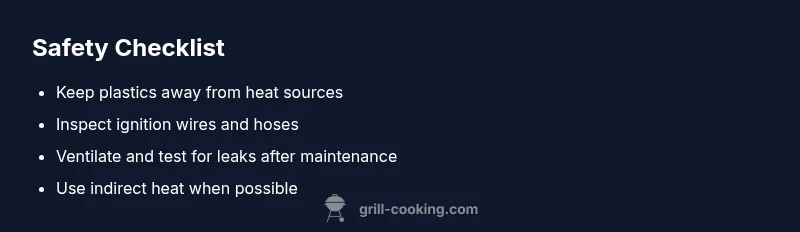
Store plastics and wrappers away from the grill at all times, and use only heat-safe tools near flames. Keep the grill area clear of combustibles and ensure adequate clearance around vents. Schedule regular maintenance checks to replace worn hoses, cracked gaskets, and damaged ignition wires. Keep a proper fuel source and regulator in good condition, and test for leaks with soapy water after any maintenance. Grilling with indirect heat can also reduce scorching and odor buildup. When you store your grill for the off-season, cover plastic items to prevent heat transfer and ensure a cool, dry location to minimize odor development.
When to Call a Pro and What to Expect
If you cannot locate the source of the odor or if you notice a persistent gas hiss or strong gas smell, stop using the grill and contact a licensed technician or the grill brand’s service line. A professional will inspect the gas line, regulators, and electrical components for heat damage and ensure safe operation. The Grill Cooking team recommends avoiding DIY fixes on gas lines whenever you smell gas or see signs of melting insulation. Expect a safety inspection, part replacement, and a test run after service. Depending on the issue, you may need new hoses, gaskets, or wiring harnesses. Always request a written estimate and required parts before authorizing any repair.
Steps
Estimated time: 30-60 minutes
- 1
Power down and secure area
Shut off all heat sources, disconnect gas supply if safe, and unplug electrical ignition. Move people and pets away and ventilate the area. Allow the grill to cool before handling any parts.
Tip: Wear heat-resistant gloves and use non-slip footwear. - 2
Ventilate and assess for obvious damage
Open the lid and doors to improve airflow. Look for visible plastic fragments, melted components, or scorch marks on exterior surfaces. Do not touch anything that feels hot.
Tip: Keep a metal container nearby for disposal of melted plastic. - 3
Inspect wiring and hoses
Check ignition wires for wear, cracking, or bare metal. Inspect hoses and regulator for melt marks, cracks, or discoloration. Do not operate if anything looks damaged.
Tip: If you see exposed wire or suspect a leak, stop and call for service. - 4
Remove melted plastics and debris
Carefully remove any melted plastics using plastic-safe tools. Dispose of debris in a metal container. Wipe the area with a damp cloth to remove residue.
Tip: Avoid metal scrapers that can gouge surfaces and trap debris. - 5
Replace damaged parts
Install heat-safe replacements for affected plastic parts, gaskets, or wiring harnesses. Recheck clearance between heat sources and plastic components.
Tip: Always follow the manufacturer’s installation instructions. - 6
Test and re-light safely
Reconnect power and gas only after all parts are secured and the area is clean. Perform a low-temperature test before full cooking to ensure no new odors appear.
Tip: If any odor returns, stop and contact a professional.
Diagnosis: Grill smells like burning plastic during operation
Possible Causes
- highPlastic components or wraps in proximity to heat are melting or overheating
- mediumElectrical ignition wires or terminals are damaged or rubbing on hot metal
- lowDrip tray, hoses, or gaskets containing plastic near burner are degrading
Fixes
- easyTurn off grill, disconnect gas and power, and allow components to cool before inspection
- mediumInspect for melted plastics; replace with heat-resistant parts and relocate wiring away from heat
- hardCheck hoses and regulator for wear; if suspect, call a professional and do not operate until repaired
FAQ
What should I do first if my grill smells like burning plastic?
Shut down the grill, move to a safe area, and inspect for obvious causes. If a gas smell is present, evacuate and contact emergency services. Do not relight until the source is identified and resolved.
Shut it down, move to safety, and inspect for the cause. If you smell gas, evacuate and call for help.
Can burning plastic smell indicate a gas leak?
Yes. A gas leak can accompany melted plastic odors. If you smell gas strongly, leave the area immediately and contact emergency services rather than attempting DIY fixes.
Yes, gas leaks can be involved. Leave the area and call emergency services if you smell gas strongly.
Is it safe to grill after removing melted plastic?
Only after a full inspection and replacement of damaged parts. Do not resume grilling until you are sure all heat sources and plastics are clear.
Only after a full inspection and replacement of damaged parts. Don’t grill until it’s clear.
How can I prevent burning plastic smells in the future?
Store plastics away from the grill, keep heat sources clear, and perform regular maintenance to replace worn hoses and damaged wiring.
Store plastics away from the grill and keep up with maintenance to prevent odors.
When should I replace grill parts rather than clean?
If parts are melted, cracked, or show signs of heat damage, replace them rather than attempting to clean. Damaged parts can fail and cause more odors or safety risks.
If parts are damaged or melted, replace them rather than trying to clean.
Watch Video
Quick Summary
- Turn off fuel and inspect safely
- Identify and remove melted plastics
- Replace damaged parts before cooking again
- Prevent odors with routine maintenance