Can You Put Aluminum Foil on a Grill? A Practical Guide
Learn safe, practical guidance on using aluminum foil on grills. This guide covers when to foil, heat management, and cleanup tips for home cooks and grill enthusiasts.


Yes, you can use aluminum foil on a grill, but only with caution. Foil can help with heat control, keep foods from sticking, and simplify cleanup, yet it can block airflow, trap moisture, and cause flare-ups if placed over direct flames. Use perforated or shielded foil in indirect zones for best results.
Can You Put Aluminum Foil on a Grill? What the Experts Say
The quick answer is yes, but there are important caveats. Aluminum foil is a versatile tool for grilling, helping with heat control, reducing sticking, and simplifying cleanup. However, when misused it can restrict airflow, trap heat in the wrong places, and even lead to flare-ups. The Grill Cooking team emphasizes using foil strategically—primarily in indirect-heat zones or as perforated shields rather than a blanket over the entire grate. Grill Cooking Analysis, 2026 notes that many home cooks experiment with foil to manage delicate items and messy marinades, but success hinges on proper placement and ventilation. Treat foil as a tool, not a blanket, and always follow direct-heat safety rules to protect yourself and your food.
When Foil Makes Grilling Easier: Use Cases
Aluminum foil shines in several common grilling scenarios. It helps keep smaller items from falling through the grate (shrimp, vegetables, or diced potatoes), protects delicate foods from direct heat (fish fillets or thin pork slices), and makes cleanup a snap by catching drips. Foil can be used to create packets that steam sides from the inside, or to shield ribs and chicken from flare-ups during high-heat searing. For best results, use heavy-duty foil or perforated sheets and avoid wrapping foods so tightly that heat cannot circulate. The Grill Cooking team often recommends testing foil techniques with a small batch before scaling up for a family cookout.
How to Set Up Foil for Direct vs Indirect Heat
Direct-heat foil uses are limited; in practice, foil should rarely be laid flat over the entire grate over flames. Instead, form a shield or a packet that sits in an indirect zone, away from direct flames. For indirect grilling, place a foil shield on the heat shield or create a shallow pan with foil to catch drippings. Perforate packets to allow steam to escape and prevent soggy results. When using foil as a shield, maintain at least 1 inch of clearance from the fire to reduce risk of scorching. This setup preserves some airflow while still protecting food from scorching.
Safe Techniques: Shielding, Packets, and Perforation
Two primary safe techniques exist. First, heat-shield packets that sit above the grate in an indirect zone; second, perforated packets or shields that allow steam to escape while still moderating heat. Perforation is key: tiny holes enable moisture to evaporate and prevent pressure buildup that could rupture the packet. Use heavy-duty foil or wrap a thin sheet around a heatproof pan to block direct flames without fully sealing the surface. Always avoid placing foil directly on flames where hotspots concentrate heat and risk damage to the foil and grill.
Common Pitfalls: Flare-Ups, Parchment, and Clumping
Foil can backfire if misused. Blocking airflow near direct flames can create dangerous flare-ups, especially if fat renders into a pocket of trapped heat. Never cover meat vents or flame outlets with foil, which can cause gas buildup or extinguisher-like flare-ups. Don’t use parchment in place of foil on a grill; parchment isn’t rated for high heat and can ignite. Avoid large, thick foil layers that trap moisture and lead to soggy textures or uneven cooking. Always monitor temperature with a grill thermometer and adjust vents to maintain a steady heat.
Cleaning Up and Reusing Foil: Tips for Maintenance
After grilling, remove foil carefully to prevent burns from hot drippings. If you used foil as a shield or packet, reuse the foil only if it’s clean and not compromised; otherwise, discard. Clean any residue from the grate where foil contacts the surface, taking care not to scrub away protective coating or scratch the grate. For environments where foil was used in the indirect zone, inspect drip pans and replace them if they show signs of wear. Store unused foil in a dry place to prevent tearing and maintain sheet integrity for next time.
Real-World Scenarios: Recipes and Timing with Foil
Consider a fish fillet that benefits from a gentle shield in indirect heat: place a perforated foil shield over the heat zone, rest the fish on a small tray, and monitor the internal temperature with a grill thermometer. For vegetables like peppers and zucchini, prepare foil packets with a light drizzle of oil and seasonings, then place in the indirect zone for 10–12 minutes, flipping once. For smaller items that might fall through the grate, lay a small perforated foil sheet over a grill basket to catch them. Always plan for 5–15 minutes of preheating time after assembling your foil setup and adjust based on the meat’s thickness and desired doneness.
Tools & Materials
- aluminum foil (heavy-duty)(16-24 inch sheets preferred; nonstick or heavy-duty recommended for durability)
- grill-safe pan or tray(Use for indirect-heat setups and to catch drippings)
- tongs(For safe placement and turning without burning yourself)
- perforated foil sheets or perforated shield(Optional but helpful for steam escape in packets)
- heat-resistant gloves(Protect hands when handling hot foil and pans)
- drip pan (metal)(Optional for catching fat and juices; helps with cleanup)
- grill thermometer(Monitor grate and internal temperature for precise cooking)
Steps
Estimated time: 25-40 minutes
- 1
Plan foil placement
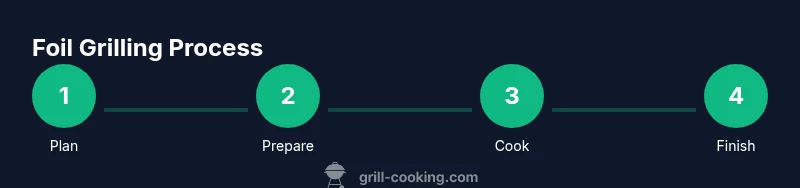
Assess your grill setup and decide whether you’ll shield or packet items in indirect zones. This avoids blocking airflow and helps manage flare-ups. Choose a location away from main flames and ensure you have safe access to the foil with heat-resistant gloves.
Tip: Visualize heat zones before starting and mark indirect areas with a grill-safe tool. - 2
Prepare foil shields or packets
Cut foil to size, and either fold into a shallow shield or make perforated packets. Perforations allow steam and moisture to escape, preventing soggy results. If creating a shield, build a small lip so drippings don’t spill onto the fire.
Tip: Double-check that the foil isn’t punctured too large or too small for the intended item. - 3
Place foil in indirect zone
Place the shield or packets in the indirect heat area, not directly over flames. This reduces risk of scorching while still providing moisture-assisted cooking. Maintain at least 1 inch of clearance from the flame.
Tip: Use a thermometer to gauge whether indirect heat is at a safe level for your food type. - 4
Cook with foil and monitor
Start cooking, then open or adjust vents cautiously to maintain steady heat. Flip items as needed with tongs, avoiding direct contact with the hot foil. Keep a close eye on flare-ups and move foil if you notice excessive smoking or burning.
Tip: Don’t seal packets too tightly—steam needs to escape to prevent bursting. - 5
Finish and rest
Check internal temperatures to ensure doneness, then remove foil shields or packets and finish with a brief open-heat sear if desired. Rest meat off the grill to allow juices to redistribute and the foil to be cool enough to handle.
Tip: Let rest times match cut thickness; burgers benefit from 3–4 minutes, larger roasts longer. - 6
Clean up remnants
Carefully unwrap and dispose of used foil. Clean the grill grates and drip pans to prevent residue from building up. Store foil with care to prevent tears for the next cook.
Tip: Always wear gloves during cleanup and ensure the grill is fully cool before touching any metal surfaces.
FAQ
Is aluminum foil safe to use on all grills?
Aluminum foil is generally safe on gas and charcoal grills when used correctly. Avoid covering vents or placing foil directly over open flames. Use indirect heat setups and perforated packets to maintain airflow and reduce flare-ups.
Yes, foil is generally safe on grills if you avoid blocking vents and use indirect heat.
Can aluminum foil affect grill temperature?
Foil can alter heat distribution if placed directly over flames or if it blocks airflow. Keep foil in indirect zones or use perforated designs to maintain steady temperatures and prevent hotspots.
Foil can change heat flow if not used in indirect zones.
What foods should I avoid wrapping in foil on a grill?
Avoid wrapping very acidic foods in foil for long periods, as acids can react with the foil and affect flavor. Also avoid sealing meats too tightly; allow some airflow for even cooking.
Avoid acidic foods in foil for long cooks and don’t seal tightly.
How should I clean up after using foil on the grill?
Dispose of used foil carefully while the grill is still warm but safe to touch. Wipe grates and scrub lightly to remove any stuck-on residue, then store foil for future use.
Let the grill cool safely, then clean and store foil for next time.
Are there foil-free methods to achieve similar results?
Yes. You can use grill baskets, cast-iron pans, or silicone mats designed for high heat to protect delicate foods while preserving airflow and browning.
There are foil-free options like grill baskets and pans.
What’s a simple safety tip when starting with foil on a grill?
Always wear heat-resistant gloves, keep a spray bottle handy for flare-ups, and avoid crowded foil configurations that trap heat.
Wear gloves and keep burners under control to prevent flare-ups.
Watch Video
Quick Summary
- Plan foil placement around indirect heat zones
- Use perforated shields or packets to balance moisture and airflow
- Avoid covering vents or wrapping foods too tightly
- Monitor temperatures and adjust flames as needed
- Clean promptly to prevent residue buildup