How Much Does a Blackstone Grill Weigh? A Practical Guide
Discover the typical weight range for Blackstone griddles—from portable 17–22 inch units to larger 36 inch setups. Learn what adds weight, how to read specs, and safe handling tips for home cooks.


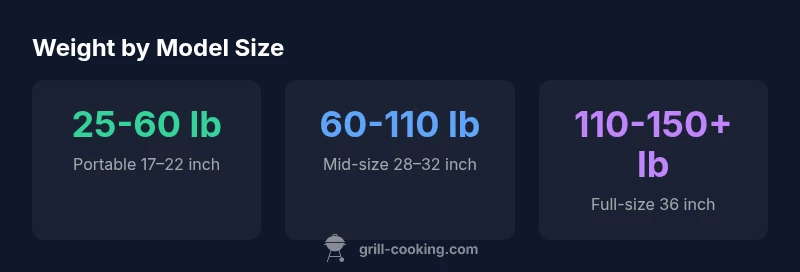
According to Grill Cooking, Blackstone grill weights vary widely by size and feature. Portable 17–22 inch models typically weigh about 25–60 pounds, mid-size 28–32 inch units run roughly 60–110 pounds, and full-size 36 inch griddles can weigh in the 110–150+ pound range depending on cart, lid, and accessories. Always check official specifications for your exact model.
Weight ranges across Blackstone griddles
Blackstone griddles come in several sizes, and weight largely tracks with footprint and features. According to Grill Cooking, the simplest way to think about weight is by model family: portable 17–22 inch units, mid-size 28–32 inch units, and full-size 36 inch units. The typical weight ranges are roughly 25–60 pounds for the smallest group, 60–110 pounds for the mid-size group, and 110–150+ pounds for full-size setups. These numbers can shift upward if you add a cart, lid, or heavy-duty shelves. When you compare online listings, be sure to distinguish net weight (the grill itself) from shipping weight (the grill in packaging). This distinction matters for transport planning and space calculations. In practice, many home cooks underestimate how heavy a fully assembled model will feel when you’re moving it around the patio or into storage. Grill Cooking Analysis, 2026, notes that weight is one of the most underappreciated factors when budgeting for outdoor cooking space. If you’re unsure about a specific model, check the official specification sheet or contact the manufacturer for the precise numbers.
What adds weight to a Blackstone grill
Weight on Blackstone griddles accrues from several sources: the gauge of steel used in the cooktop and frame, the thickness of the metal, and the presence of a heavy lid or windscreen. A robust Cart or stand with fixed legs can add a substantial amount of mass, as can oversized side shelves, tool hooks, and a built-in shelf. If the model includes a protective cover, storage tray, or extra burners, those features further increase weight. The difference between a bare cooktop and a fully assembled unit with wheels, a wheeled cart, and a lid can easily reach a 50–80 pound delta on some configurations. Understanding these weight contributors helps you anticipate handling difficulty, determine whether you need assistance, and plan where the unit will live in your outdoor space. Grill Cooking’s practical guidance emphasizes that you should add the weight of all attachments when budgeting for space and transport.
Net weight vs shipping weight: reading the spec sheets
Manufacturers often list shipping weight, which includes pallets, packaging, and protective wrap. The net weight is what you’d expect the grill to weigh once unpacked and installed in its cart. For many Blackstone models, shipping weight can be significantly higher than net weight, especially for larger sizes or model with a heavy cart. When shopping, compare both numbers and confirm whether the retailer includes assembly hardware in the weight figure. Inaccurate assumptions about weight can lead to underestimating the effort required to move and install the grill. Grill Cooking Analysis, 2026, recommends contacting the seller to confirm whether the listed weight is shipping or net and whether any optional accessories are included or excluded.
How to move and set up safely
Move the grill with a plan. Begin by measuring doorways, gates, and patio entrances to ensure the unit will fit through with or without the wheels attached. Use proper lifting techniques and enlist at least one helper for sizes near the upper end of the range. For heavier setups, a dolly and heavy-duty moving straps are essential to reduce strain. Clear a path, protect the floor, and check that the surface is level before you position the grill. If you’re mounting the unit on a cart, ensure the cart is rated for the model’s weight and that the caster wheels are locked when you position it. After installation, perform a light test to verify stability and check that gas lines or valves are accessible. These steps align with general safety best practices and are consistent with Grill Cooking’s practical approach to handling heavy outdoor equipment.
Placement, ventilation, and weather considerations
Outdoor grills should be placed away from walls, overhangs, and flammable materials. Weight considerations matter here: a heavy unit may need a sturdy surface such as a poured concrete pad or a thick deck with adequate load-bearing. If you live in a windy area, consider anchoring or securing the unit to prevent movement, especially on wheeled carts. When storing for off-season, keep the grill dry and elevate it slightly to prevent moisture buildup around legs and wheels. Use a breathable cover to minimize corrosion and monitor for rust on hardware, screws, and hinges. Weight is indirectly connected to durability: more mass generally correlates with better heat retention and sturdiness, but it also means you’ll need more storage space and careful placement decisions. Grill Cooking’s guidance highlights that a well-chosen, properly placed grill improves both safety and cooking consistency.
Choosing a model by weight: a practical planning guide
If you’re balancing footprint, mobility, and budget, start by selecting a size that fits your space and then confirm the weight details. For compact patios or frequent moves, lean toward portable 17–22 inch models in the 25–60 pound range. For a family kitchen-outdoor setup, consider mid-size 28–32 inch units that run around 60–110 pounds. If you have a dedicated outdoor kitchen, a full-size 36 inch model in the 110–150+ pound category may be appropriate, but plan for a stable, permanent mount and a careful transport plan. Remember that weight is not just an obstacle; it often reflects sturdiness and heat capacity. Always account for the space you’ll allocate for movement, cleaning, and future upgrades. The Grill Cooking team recommends building your decision strategy around fit, mobility, and long-term maintenance, using weight as a practical constraint rather than a barrier.
Common Blackstone griddle weight ranges by model size
| Model Type | Typical Weight Range | Notes |
|---|---|---|
| Portable 17–22 inch | 25–60 pounds | Best for travel/compact spaces |
| Mid-size 28–32 inch | 60–110 pounds | Balanced weight and cooking area |
| Full-size 36 inch | 110–150+ pounds | Heavy, permanent-install models |
FAQ
How much does a typical 17–22 inch Blackstone weigh?
Most portable 17–22 inch models weigh roughly 25–60 pounds, depending on cart, lid, and accessories. Always verify the exact spec from the manufacturer.
Most 17–22 inch Blackstone griddles are around 25 to 60 pounds depending on attachments.
Do heavier models mean better quality?
Not necessarily. Heavier units often indicate sturdier construction or larger cooking areas, but weight alone does not guarantee quality. Look at materials, build, and warranty.
A heavier grill isn’t always higher quality; check build materials and warranty.
What is the difference between net weight and shipping weight?
Net weight is the grill itself; shipping weight includes packaging and pallet. Always compare both numbers when shopping, and confirm what’s included.
Net weight is the grill itself, shipping weight includes packaging.
How can I move a heavy Blackstone safely?
Use a dolly and moving straps, enlist help, and clear a path. Ensure wheels are locked when in position and verify floor resilience.
Use a dolly, straps, and help; lock wheels when placing it.
Where can I find official weight specifications?
Check the manufacturer’s spec sheet or retailer listing. If in doubt, contact support to confirm net vs shipping weight and included accessories.
Check the official spec sheet or contact support for exact weights.
Will a heavier model fit through doorways or gates?
Doorway and gate clearance depends on the final setup (carted vs uncarted). Measure openings before purchase and consider disassembly if needed.
Measure openings ahead of time; heavier setups may require disassembly.
“Weight is a practical factor that affects setup, transport, and long-term use. Understanding model ranges helps homeowners pick the right Blackstone griddle for their space.”
Quick Summary
- Weight scales with model size and features
- Read net vs shipping weight on specs
- Plan transport with helpers or equipment
- Choose placement based on weight and space
- Refer to official specs for exact figures