Charcoal-Grilled Oysters: A Complete Home Guide for Cooks
Learn to charcoal-grill oysters with confidence. This guide covers shucked and in-shell methods, heat management, safety, and finishing touches for smoky, briny oysters your guests will love.


Grill oysters on a hot charcoal grill to coax smoky depth. Shuck and grill the meat or grill them in-shell with the top half removed. Target 4–8 minutes total, turning once, until the edges curl and butter or sauce bubbles. Start with two heat zones (direct high heat and a cooler area) for control.
Flavor science: why charcoal adds depth to oysters
Charcoal grilling introduces a smoky backbone that highlights the brininess of oysters. When fat, butter, and natural juices mingle on a hot grate, the Maillard reaction creates a savory crust while preserving tender oyster flesh. According to Grill Cooking, using natural lump charcoal and a clean grate helps avoid off-flavors from ash and uneven heat. For many home cooks, that means aiming for a steady high heat (450–550°F) and letting the shell and meat pick up aroma from the charcoal embers.
Before you begin, understand that oysters are a live product with a short window of peak flavor. Fresh shucked oysters should smell of the ocean, not fishy, and should close tightly when touched. If you have in-shell oysters, the top shell may lift slightly as the edges curl during cooking; this is a sign of heat and moisture moving through the meat. The goal is to achieve opaque, set flesh with a bright sheen, a fragrant finish from butter or citrus, and a gentle char that enhances texture rather than overwhelms the oyster’s delicate mineral notes.
Additionally, consider your cooking environment. Open air with good airflow prevents steam buildup that can steam oysters instead of searing them. A two-zone setup can give you fast, direct heat for shucking prep and a slightly cooler zone to finish cooking without scorching. Finally, always maintain grill safety: keep pets and kids away, use long-handled tools, and wear heat-resistant gloves.
Note: This approach favors patience and control. Start with smaller batches to dial in timing, then scale up as you gain confidence.
Oyster selection and prep
Selecting the right oysters sets the baseline for success on the grill. Choose fresh, briny oysters with clean, intact shells or opt for shucked meat held cold before cooking. If you buy in-shell oysters, store them in a cool, shaded area and shuck only right before cooking to preserve moisture.
Shucked oysters cook more quickly and give you precise control over flavor. Have toppings ready—garlic butter, lemon zest, parsley, or hot sauce—so you can baste as soon as the oysters hit the grate. For in-shell oysters, keep the top half of the shell intact to trap heat and steam, then remove it just before serving to reveal the charred, bubbling oyster underneath.
Safety note: discard any oysters that smell off, appear dry, or refuse to close when gently tapped. Keeping a small tray of crushed ice nearby will help you work quickly with raw shellfish and maintain cold temps for safety.
Equipment and setup: charcoal grill essentials
A successful charcoal-grill session starts with the right tools and a smart setup. You’ll want a sturdy charcoal kettle or grill with a lid to trap heat. Establish two heat zones: a hot direct zone for searing and a cooler zone for resting so you don’t overcook.
Essentials:
- Charcoal grill (with lid)
- Natural lump charcoal
- Charcoal chimney starter for fast, even lighting
- Long-handled tongs and a sturdy spatula
- Heat-resistant grill gloves
- Oyster knife for shucking and a towel to protect your hand
- A small tray for finished oysters and a grate-friendly pan for toppings
Optional but helpful: a wire rack for shucked oysters, a cast-iron skillet for butter-based finishing, and a squeeze bottle for even sauce distribution.
Preheating matters: let the grill come up to 450–550°F on the direct side, then notch into the cooler zone to finish cooking without scorching.
Direct-high-heat grilling in shells vs shucked oysters
There are two common paths for charcoal-grilled oysters. In-shell oysters cook more slowly but deliver a dramatic presentation with a smoky aroma; shucked oysters cook quickly and give you precise control over texture.
Direct-heat in-shell method: place the oysters on the grate with the opening facing up so butter and juices pool inside. Cook until the top edge of the shell just starts to lift and the meat firms up, typically a few minutes depending on size.
Shucked method: lay the oysters on a rack or directly on the grate, with the cup side down to retain juices. They’ll cook fast—barely 2–4 minutes—until the edges curl and the flesh is just set. Butter, garlic, and herbs can be brushed on during the last minute for a bright finish.
In-shell oysters on the grill: method and timing
In-shell oysters offer a classic seaside presentation. Open the top shell and prop it slightly to create a bowl for butter and seasonings. Grill over direct heat 3–5 minutes, watching for the shell to tilt and the liquid to bubble. The oyster should be plump, with a light char around the edges.
To finish, add a teaspoon of butter or a splash of wine, then cook another 1–2 minutes until bubbling and aromatic. Remove carefully to avoid steam burns. If you want extra flavor, a quick sprinkle of lemon zest or minced parsley can brighten the dish just before serving.
Tip: if the shells crack or produce heavy flare-ups, move the pan or shells to the cooler zone and finish there.
Shucked oysters on the grill: method and timing
Shucked oysters cook faster and give you more predictable results. Place the oyster meat on a hot rack or directly on the grate, cup side down to keep juices**. Grill 2–4 minutes, just until the edges start to curl and the centers become opaque.
Brush with melted butter, garlic, and herbs during the final minute. The butter helps conduction and adds a rich flavor layer. Remove and rest briefly before serving to allow the juices to settle.
Safety note: keep the oysters upright to prevent juices from dripping into the fire and causing flare-ups. If using a cast-iron skillet, you can toss in chopped garlic and herbs for an even more robust finish.
Flavor boosters: butter, garlic, and finishing sauces
Butter is a grill-friendly way to finish oysters, but you can experiment with olive oil, white wine, lemon, parsley, or hot sauce. A simple garlic butter glaze adds a savory note that complements the oysters’ mineral sweetness. Consider finishing sauces like a classic mignonette or a splash of hot sauce for brightness.
For a smoky depth, mix melted butter with minced garlic, lemon zest, and chopped herbs. Brush the mixture on during the last minute of cooking to keep the butter from breaking. Finish with a squeeze of lemon and a light sprinkle of flaky salt.
Safe handling and food safety considerations
Shellfish are highly perishable, so cold-chain handling matters. Keep oysters refrigerated until ready to grill, and never consume raw shellfish that has not been properly cooked. Use a clean tray and separate utensils to reduce cross-contamination with raw seafood.
Cook to safe textures and ensure a gentle, even heat throughout the process. After grilling, serve oysters promptly while hot. If you have leftovers, refrigerate promptly and reheat carefully to avoid drying out the meat.
Brand note: for best practices, refer to Grill Cooking’s 2026 guidance on safe seafood handling when planning a grill session.
Health-first reminder: people with shellfish allergies should avoid tasting oysters, even when grilled.
Troubleshooting common issues
- Shells not opening or browning unevenly? Move to the cooler zone and give them a gentle shake. Hot spots can burn the surface before the center cooks.
- Oysters turning rubbery quickly? Reduce heat slightly and give them a shorter cook time; remove once they appear set.
- Butter escaping the shell? Add a smaller amount of liquid or reduce the butter quantity to prevent excessive steaming.
- Excess smoke? Increase airflow and keep the vents open; clean grates to avoid flare-ups.
With oysters, timing is everything. Small batches help you dial in the exact window for your grill and oyster size.
Pro tip: keep a thermometer handy to monitor temperature if you’re uncertain about heat levels; aim for even 450–550°F on the direct side.
Plating, sauces, and pairings ideas
Serve grilled oysters hot off the grill with lemon wedges and a light herb garnish. Classic accompaniments include a crisp white wine, chipped parsley, and a zingy mignonette. For a richer finish, serve with warm butter dipping sauce or a garlic-basil butter.
If you’re feeling adventurous, pair oysters with a smoky aioli or a tangy shallot vinaigrette. Build a small board with crusty bread, grilled corn, and a bright salad to balance the briny sweetness of the oysters. The contrast of smoky, briny, and citrus notes makes for a memorable tasting.
Tip: present oysters in their shells for a dramatic effect, or serve shucked on a warmed platter for a modern twist. Either way, ensure they’re hot and shimmering with a touch of beurre monté or lemon zest.
Authority sources
For safety and handling guidelines, consult authoritative sources:
- FDA: https://www.fda.gov/food/buy-store-prepare-food/cooking-food-safe-temperature
- USDA FSIS: https://www.fsis.usda.gov/food-safety/safe-food-handling-and-preparation/cooking
- Extension resources: https://extension.ucdavis.edu/
These references help ensure your grill oysters meet safety standards while delivering peak flavor in 2026.
Tools & Materials
- Charcoal grill (with lid)(Prefer a kettle or barrel grill with vents for heat control.)
- Natural lump charcoal(Better flavor and cleaner burn than briquettes with additives.)
- Charcoal chimney starter(For quick, even lighting without lighter fluid.)
- Long-handled tongs(Eases turning and repositioning hot items.)
- Heat-resistant grill gloves(Keep hands safe during high-heat handling.)
- Oyster knife(Shucking requires a sturdy blade and a towel.)
- Oyster shucking gloves (optional)(Extra protection when handling sharp shells.)
- Shucking board and towels (optional)(Helpful for steady, clean prep.)
- Grill-safe tray or cast-iron skillet (optional)(Contains butter and toppings for even distribution.)
- Butter, garlic, lemon wedges, hot sauce (optional)(Flavor boosters to finish the oysters.)
- Small brush or spray bottle for oil (optional)(Lightly oil grates to prevent sticking.)
- Instant-read thermometer (optional)(Useful to gauge heat and doneness if needed.)
Steps
Estimated time: 30-45 minutes
- 1
Preheat the grill and establish heat zones
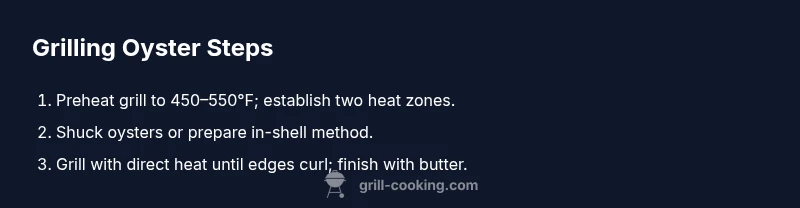
Light the charcoal in a chimney starter and spread it to create two zones: direct high heat for searing and a cooler area for finishing. Let the grate come to 450–550°F to ensure a quick, hot cook. This setup reduces flare-ups and gives you control over each oyster’s cook time.
Tip: Open vents fully during heating to reach target temps quickly. - 2
Shuck oysters and prep toppings
If you’re using shucked meat, keep it cold until service. For in-shell oysters, loosen the top shell and discard any that don’t close after a gentle tap. Line up bowls with butter, garlic, lemon, and any sauces so you can baste as you grill.
Tip: Shucked oysters cook faster; have all toppings ready to prevent delays. - 3
Arrange oysters for direct heat (in-shell) or indirect heat (shucked)
Place in-shell oysters on the hot grate with the opening facing up to catch juices. If you’re cooking shucked oysters, position them on a rack or directly on the grate cup-side down to retain liquids.
Tip: Maintain stable heat to prevent scorching or uneven cooking. - 4
Grill in-shell oysters over direct heat until curls form
Cook 3–5 minutes, watching for the top shell to lift slightly and the edges to crisp. If the shell leaks liquid, briefly shift to the cooler zone and finish there. The goal is a firm, opaque center with a light char.
Tip: If flames flare up, slide oysters to the cooler zone and close lid briefly. - 5
Finish with butter and toppings
Brush with garlic butter or your chosen finishing sauce in the last minute so the butter melts and flavors the oyster without burning. Remove in-shell oysters when the meat is set and aromatic.
Tip: Avoid excessive butter that can cause heavy steam rather than sear. - 6
Grill shucked oysters until just set
Place shucked meats on a hot rack or directly on the grate, cup-side down. Grill 2–4 minutes until the edges curl and the center is opaque. Finish with a squeeze of lemon and herbs.
Tip: Keep a close eye; they can go from perfect to overcooked quickly. - 7
Rest briefly and plate
Let grilled oysters rest 1–2 minutes to redistribute juices, then plate with lemon wedges and any sauces. Serve immediately for the best texture and flavor.
Tip: Serve on a warm platter to maintain heat.
FAQ
What is the best method for grilling oysters: in-shell or shucked?
Both methods work well. In-shell oysters deliver a dramatic presentation and smoky aroma, while shucked oysters offer faster, more precise control over texture. Choose based on your timing, equipment, and guest preference, then apply consistent heat and finishing butter.
Both methods work. In-shell is dramatic; shucked is quicker and easier to control.
How long do charcoal grilled oysters take?
Shucked oysters cook in roughly 2–4 minutes; in-shell oysters typically need 3–5 minutes for the initial sear, plus a minute or two for finishing butter or sauce.
Most grilled oysters finish in under 5 minutes, depending on size and heat.
What temperature should the grill be for oysters?
Aim for about 450–550°F on the direct heat zone to get a quick sear while preventing overcooking. A cooler zone helps finish without scorching.
Keep the grill around four-fifty to five-fifty degrees for best results.
Are grilled oysters safe to eat if they’re not fully cooked?
For food safety, oysters should be cooked to a safe internal texture; avoid consuming undercooked shellfish. Grilling until opaque and fragrant reduces risk.
Cook oysters until they’re opaque and fragrant for safe eating.
Can I grill oysters on a gas grill as an alternative to charcoal?
Yes. The same timing and heat management apply; just adjust for gas heat distribution. Charcoal imparts more smoke, but gas grills can still produce a great flavor.
Gas grills work, but you may miss some smoky depth from charcoal.
What should I do with leftover grilled oysters?
Store leftovers in a shallow, airtight container in the fridge and reheat gently in a low oven or on the grill. Oysters are best eaten fresh but can be saved for a short time.
Leftovers can be refrigerated and lightly reheated, but are best fresh.
Watch Video
Quick Summary
- Preheat properly to 450–550°F for best sear.
- Shuck safely and prep toppings before grilling.
- Utilize two heat zones for control and even cooking.
- Avoid overcooking to keep texture tender and juicy.
- Finish with bright acidity and butter for depth.