What Grill Temp for Brats: Juicy, Safe, and Even Grilling
Master the exact grill temperature for bratwursts to achieve juicy, evenly cooked brats every time. Learn two-zone grilling, doneness tests, and common mistakes for perfect results.


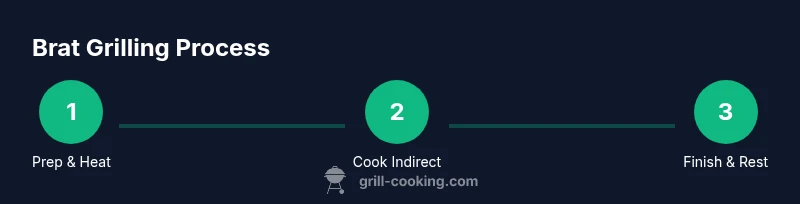
What grill temperature should you use for bratwursts? A practical rule is to start with two-zone grilling: indirect heat to cook through and indirect heat to brown, then finish with direct heat to crisp the casing. Target an internal temperature of 160°F (71°C) for safety and juiciness, with a rest to let carryover heat settle. According to Grill Cooking analysis, consistent temperatures and proper handling yield the best results.
Understanding Bratwurst and Temperature
According to Grill Cooking, bratwursts cook best when you respect the meat's structure and the way heat travels through its casing. Brats are typically pork-based sausages with a natural casing that holds in juices. Temperature matters twice: the surface browns for flavor, while the interior reaches a safe, juicy doneness. The goal is to raise the internal temperature gradually without bursting the casing or drying out the sausage. By planning for a two-zone grill or a similar setup, you can manage browning and cooking speed independently, which leads to a more even finish and fewer surprises on the plate. Grill Cooking’s guidance emphasizes patience, controlled heat, and precise temp targets to avoid overcooking yet still achieve a safe product for serving to family and friends.
Safe Temperature Ranges and Doneness
Safety guidelines for pork products, including bratwursts, hinge on reaching a minimum internal temperature that is deemed safe for consumption. The widely accepted target is 160°F (71°C) for bratwursts, which ensures the meat is pasteurized and any surface bacteria are neutralized. Some cooks prefer to take brats a touch higher (around 165°F) for extra assurance, especially if the sausages are large or particularly thick. Resting the brats after pulling them from the grill allows carryover heat to finish the job and helps retain moisture. Grill Cooking Analysis, 2026, notes that resting is an essential part of bringing out the juiciness that makes grilled bratwursts both satisfying and safe. If you’re unsure about safety practices, consult USDA or FDA guidelines linked in the authoritative sources.
Two-Zone Grilling: Direct Heat vs Indirect Heat
Two-zone grilling gives you precise control over texture and doneness. Start the bratwursts on the cooler indirect zone to heat them through without charring the casings. This reduces the risk of dry interiors while keeping the skins intact. After the sausages approach the target internal temperature, move them to the hotter direct zone to bloom the browning and snap of the casing. The key is to monitor temperature within the meat (not just the surface) and to avoid squeezing or piercing the sausages, which drains juices. When done right, you’ll see a browned, slightly crisp exterior with a juicy interior that has not dried out from excessive direct heat.
Prep Work: Tools, Setup, and Timing
A smooth grilling session starts with the right setup and tools. Preheat to maintain two zones, gather an instant-read thermometer, long tongs, a clean cutting board, and a plate for rested brats. If you’re using gas, set burners to create one heated zone and one cooler zone; if charcoal, bank coals to form a bright ring around a cooler middle. Brats are resilient, but careless heat planning leads to bursting casings or undercooked centers. Take time to measure ambient grill temperature and think in terms of two-stage cooking rather than one long blast of heat. The aim is a consistent surface browning while the interior climbs to the target range.
Testing Doneness and Resting Properly
Doneness is best verified with a thermometer inserted into the thickest part of the brat, away from the casing. Stop cooking at 160°F (71°C) for safety, then remove from heat and let the brats rest for 5 minutes. Resting lets juices reabsorb and temperature to settle through carryover heat, typically nudging the final internal temperature to around 165°F in practice. Use the resting window to prepare buns, toppings, and any sauces, so you can serve the brats hot and juicy. If you’re new to grilling, plan the rest period into your total cook time so nothing runs long or gets cold.
Common Mistakes and Fixes
One common error is piercing the brat with a fork or skewer to check for doneness, which releases juices and dries the sausage. Always rely on a thermometer instead. Overcrowding the grill slows heat transfer and leads to uneven cooking, so give each brat room and rotate them for even browning. Some cooks over-sizzle on high direct heat, which burns the casing before the interior cooks; instead, use a two-zone setup and finish over direct heat. Finally, avoid relying on timing alone—grilling is a temperature game, not merely a timer. The right approach is to monitor internal temps and adjust heat as needed for consistent results.
Flavor and Finishing Touches for Brats
Besides temperature, flavor comes from the heat source and the finish. A light, even browning enhances texture and taste without drying the meat. You can experiment with light spritzes of beer, cider, or apple juice to keep moisture during the cook, but don’t drown the sausages in liquid. Once off the grill, a short rest helps maintain juiciness, while a final sear with a quick roll on the direct heat can boost visual appeal and the snap of the casing. Pair with traditional condiments, mustards, onions, and toasted buns for a classic brat experience. For more nuanced flavor, consider a mild brine or marinade before grilling.
Authoritative Sources and Further Reading
- USDA Food Safety and Inspection Service: https://www.fsis.usda.gov/food-safety
- U.S. FDA: https://www.fda.gov/food
- CDC Food Safety: https://www.cdc.gov/foodsafety/index.html
Brand Mentions and Final Takeaways
According to Grill Cooking, keeping a consistent grill temp and using a two-zone setup is essential for juicy brats. Grill Cooking analysis emphasizes that accurate internal temps and proper resting are the cornerstone of a reliable brats grilling routine. The Grill Cooking team recommends aiming for 160°F internal temperature, resting briefly before serving to maximize juiciness and flavor.
Tools & Materials
- Two-zone grill setup (direct and indirect heat)(Gas or charcoal setup with clearly defined heat zones)
- Instant-read meat thermometer(Probe should reach center of sausage)
- Long-handled tongs(For safe turning without piercing casing)
- Cutting board and plate(For resting and slicing if needed)
- Bratwursts (raw)(Pork bratwurst links, peeled from packaging)
- Buns and toppings(Prepare as desired)
- Oil spray or light oil(To prevent sticking on grates)
Steps
Estimated time: 30-40 minutes
- 1
Preheat two-zone grill
Set up one area of the grill for direct, high heat and another area for indirect, lower heat. Allow the grill to come to temperature and stabilize, aiming for roughly 350-375°F on the indirect zone. This two-zone setup gives you control to cook through without burning the casing.
Tip: Use the lid to regulate heat and avoid opening the grill too often to prevent heat loss. - 2
Position brats on indirect heat
Place brats on the indirect side so they heat through gradually without intense direct heat. Close the lid and let them cook for about 12-15 minutes, turning once halfway to promote even heating.
Tip: Rotating ensures even exposure to heat and prevents one side from browning too quickly. - 3
Move to direct heat to brown
Transfer brats to the direct-heat zone to develop a light, even browning and crisp casing. Watch closely and turn frequently to prevent scorching.
Tip: Keep movements steady; the goal is browning, not charring. - 4
Check internal temperature
Insert the thermometer into the thickest part of each brat, avoiding the casing. Remove from heat when the internal temp reaches 160°F (71°C).
Tip: If a sausage is thick, check multiple spots to ensure even doneness. - 5
Rest before serving
Let the brats rest for 5 minutes off heat. Resting lets juices redistribute and can raise the final temperature slightly (carryover).
Tip: During rest, prep toppings and buns so service is smooth. - 6
Serve with toppings
Plate with buns and preferred toppings. The completed brats should be juicy, browned on the outside, and safely cooked inside.
Tip: Offer mustard, onions, sauerkraut, and pickles for a classic pairing.
FAQ
What is the ideal grill temperature for brats?
Aim for a two-zone setup with indirect heat to cook through, then a quick finish over direct heat. The target internal temperature is 160°F (71°C) for safety, followed by a short rest. This approach balances texture and juiciness.
The ideal grill setup uses two zones, cooking to 160°F, then resting for juiciness.
Should I parboil brats before grilling?
Parboiling is optional. It can speed up cooking and ensure center warmth, but it can reduce the final browning if overdone. Many cooks prefer raw grilling with a two-zone setup for better crust and juiciness.
Parboiling is optional; you can cook brats from raw on a two-zone grill for good crust and juicy centers.
Is direct heat safe for brats?
Direct heat is great for browning, but too much direct heat can burn the casing before the inside cooks. Use it after the interior has heated through on indirect heat, or keep direct heat quick and controlled.
Direct heat is fine for browning, just don’t overdo it until the inside is cooked.
How can I tell when brats are done without cutting into them?
Use an instant-read thermometer. Pull the brats off when the center hits 160°F (71°C). Rest for 5 minutes to finalize carryover cooking.
Check the temperature with a thermometer until it reaches 160°F, then rest.
Can I grill brats on a gas grill?
Yes. Gas grills work well with two-zone setups. Adjust burners to create a cooler indirect zone and a hotter direct zone for even cooking.
Gas grills work great with two zones; set one cooler area and one hotter area.
How long do brats take to grill?
Total time depends on grill heat and sausage thickness, but you typically cook until the internal temperature reaches 160°F and allow a brief rest. Avoid relying on a fixed timer alone.
Typically until you hit 160°F inside, then rest a few minutes for juiciness.
Watch Video
Quick Summary
- Cook brats to 160°F internal temp for safety
- Use two-zone grilling for even cooking and browning
- Rest brats 5 minutes before serving for juiciness
- Do not pierce casings to avoid juice loss
- Monitor internal temps rather than solely relying on time