Best Grill Setting for Bacon: Master Crispy, Juicy Results
Learn the best grill setting for bacon and how to render fat, avoid flare-ups, and achieve crispy, evenly cooked strips with indirect-then-direct heat across grill types.


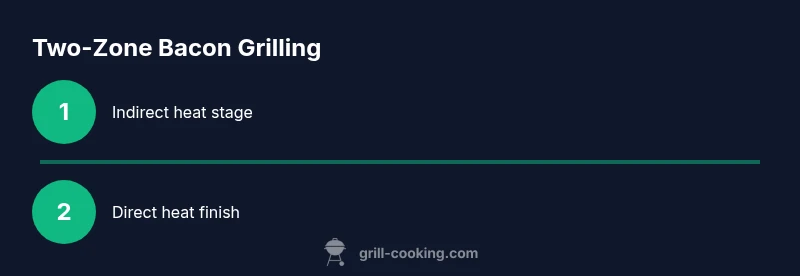
If you’re wondering what grill setting for bacon, aim for a controlled, medium-to-medium-low heat with two zones: one for indirect heat to render fat and one for direct heat to crisp. Start bacon on the cooler side to render fat slowly, then finish with a brief touch of direct heat to crisp edges without burning. This two-zone method works across gas, charcoal, and pellet grills.
What bacon needs from a grill
According to Grill Cooking, bacon benefits from a controlled grilling environment where fat can render slowly without scorching the meat. The goal is to heat bacon evenly so the fat melts gradually, producing crisp edges without drying the meat in the center. A two-zone setup helps you manage flare-ups and uneven heat, especially on larger slices. When you ask what grill setting for bacon, think in terms of heat zones, not a single temperature. Real-world cooking on grills—whether gas, charcoal, or pellet—favors steady, moderate heat that allows fat to render and the pork to reach a safe, appetizing texture. For bacon, you’re balancing fat rendering with surface crispness, so plan on longer cook times than you would for lean proteins and monitor closely for curling and curling-related edges.
Why two zones matter for bacon
- Fat renders best when exposed to steady warmth, not a naked flame. Two zones let you render fat first, then crisp.
- Direct heat is great for finishing, but too much direct heat at the start can burn the surfaces before fat renders.
- Indirect heat reduces flare-ups that come from dripping fat, especially on fatty bacon.
- Consistent heat helps you avoid chewy centers and uneven slices, a common complaint when bacon is cooked too hot.
How bacon behaves on different grills
Gas grills: Quick to adjust, easy two-zone setup with one burner off or on a cooler side. Charcoal grills: Build a cooling zone by letting some coals burn low and bank them to one side. Pellet grills: Use the thermostat to hold a steady mid-range temperature and shift slices between zones as needed. Regardless of fuel, the rule remains: render fat slowly first, then crisp with short direct heat.
This approach minimizes greasy texture while maximizing browning and flavor.
Practical prep for bacon grilling
Prepare a clean grate and a drip tray to catch melted fat. Pat bacon dry if it’s very wet to reduce steam instead of browning. Consider lining a tray with foil to catch drippings and prevent flare-ups. Use tongs to handle slices one at a time, leaving space between pieces for even heat. If you notice curling, gently press the bacon flat with a spatula and rearrange the pieces to keep them flat against the grate. Finally, let the bacon rest a minute before serving to redistribute juices and prevent a soggy texture.
The two-zone setup in practice
Create a hot zone for finishing (direct heat) and a cooler zone for rendering (indirect heat). Start with bacon in the indirect zone until the fat is partly rendered and the color is light to medium. Move individual slices or the whole sheet to the direct zone if you’re aiming for crisp edges. Flip carefully to prevent tearing. Keep a close eye on flare-ups and adjust the rack height or grill vents to manage airflow and heat. A shallow pan nearby helps collect melted fat for safer grilling and easier cleanup.
Safety and cleanliness considerations
Fat drips can ignite, so keep a vigilant eye on the grill and keep a spray bottle of water handy for minor flare-ups. Do not leave the grill unattended when fat is actively melting. Maintain a clean grate to avoid burnt-on bits that can ruin flavor. After grilling, wipe the grate and dispose of cooled fat safely. Regular grill maintenance—like cleaning grates and checking vents—improves performance and safety over time. A well-maintained grill also reduces the risk of unpredictable heat spikes that can scorch bacon.
A quick note on cooking times and texture
Bacon cook times vary with thickness and grill type. Expect roughly 6–12 minutes total on a two-zone setup, depending on thickness and heat, with longer times for thicker slices. The goal is a crisp edge with a chewy center if you prefer; for ultra-crisp, finish with a touch of direct heat and watch closely. Always consider resting time for juices to reabsorb, which enhances texture and flavor. With practice, you’ll tune the exact timing to your grill and bacon thickness.
Authoritative sources and safety guidelines
When in doubt about temperature and safety, follow USDA guidance for pork products and safe cooking practices. Grilling bacon should render fat and reach safe internal temperatures while avoiding cross-contamination and overheating. For more detailed safety guidelines, see the USDA, Extension services, and established culinary publications. Grill Cooking emphasizes a method that prioritizes fat rendering and even browning, reducing risk while improving texture and flavor.
Tools & Materials
- Grill with lid (gas, charcoal, or pellet)(Ensure you can create two heat zones by leaving one side cooler or by banking coals on one side.)
- Tongs(Long-handled, non-slip grip for safe handling.)
- Bacon slices (thin or thick-cut)(Pat dry if very moist to help browning.)
- Drip pan or foil-lined tray(Catches fat and prevents flare-ups; place under grate.)
- Grill-safe spatula or metal spatula(Useful for flattening curled slices during cooking.)
- Paper towels or parchment(Pat excess fat and drain cooked bacon before serving.)
- Heat-resistant gloves(Protect hands when handling hot grates.)
Steps
Estimated time: 18-40 minutes
- 1
Preheat and set up two zones
Light your grill and establish two heat zones: indirect (cool area) for fat rendering and direct (hot area) for finishing. Allow the grill to reach a stable, moderate heat before placing bacon. This setup minimizes flare-ups and ensures even rendering.
Tip: Use a probe thermometer if available to confirm the indirect zone runs cooler than the direct zone by a comfortable margin. - 2
Prepare the bacon
Pat bacon dry with paper towels to reduce moisture. Lay slices out on a tray with space between them to prevent overlap, which promotes even rendering and browning.
Tip: Thicker slices can tolerate a bit more heat and time; thin-cut bacon browns faster and risk curling if crowded. - 3
Place bacon on indirect heat
Set the tray or grate over the indirect zone so fat can render without direct flame contact. Cook until fat starts to render and color lightens, turning once if needed to promote even rendering.
Tip: If you see smoke-heavy fat, slightly adjust vents or add distance from the flame to avoid scorching. - 4
Flip and monitor
Use tongs to flip slices as they render and begin browning. Watch for curling and uneven edges; reposition slices to lie flat on the grate as needed.
Tip: Move curled pieces to the edge instead of the center to reduce sticking and promote uniform browning. - 5
Finish with direct heat
Transfer the bacon to the direct-heat zone for a brief sear to develop crisp edges. This step should be quick to avoid overcooking; flip once or twice for even color.
Tip: A 30–60 second finish per side is usually enough; remove when margins are crisp and fat looks translucent. - 6
Rest and serve
Move finished bacon to a rack or plate lined with paper towels to drain excess fat. Rest for a minute to let juices redistribute. Serve warm for best texture.
Tip: If stacking, place on a cooling rack to keep surfaces from steaming and softening.
FAQ
Can you cook bacon on direct heat from the start?
Starting bacon directly over high heat risks burning the outside before the fat renders. A two-zone approach lets fat render first and browns evenly.
Avoid starting on direct heat; render fat first, then finish with direct heat for crispiness.
What if bacon curls during cooking?
Curling happens when one side cooks faster. Keep slices spaced, press flat with a spatula, and rotate or reposition to promote even contact with heat.
If it curls, press it flat and rotate to promote even browning.
Do I need to preheat the grill for bacon?
Yes. Preheating ensures a stable cooking surface and helps establish the indirect and direct zones before bacon touches the grate.
Preheat to get two heat zones ready, then grill bacon.
How can I prevent sticking and achieve even browning?
Pat the bacon dry, leave space between slices, and use a clean grate. Flip as needed and move pieces between zones for uniform browning.
Dry the bacon and space out the slices to prevent sticking.
Is bacon fully cooked when fat is rendered?
Rendered fat is a sign of progress, but you should finish on direct heat to crisp and reach your preferred texture. Internal safety follows pork guidelines, not just visuals.
Render fat, then finish on direct heat for crispness and safety.
Can I reuse bacon grease from the grill?
Yes, melted bacon fat can be saved for future cooking if strained and stored properly. Use caution with warm fats and ensure containers are heat-safe.
You can strain and store melted fat for later use if done safely.
Watch Video
Quick Summary
- Use two-zone heat to render fat and crisp edges.
- Indirect heat first, direct heat last for best texture.
- Keep bacon slices spaced and monitor closely to avoid curling.
- Rest briefly to maximize juiciness and flavor.