Is Korean Grill Kensington Halal? A Practical Guide for Home Cooks
Explore whether Korean grills in Kensington are halal, how to verify certification, and practical steps for home cooks seeking halal options at Kensington’s Korean grill spots.


Is korean grill Kensington halal? There is no universal guarantee; halal status depends on certification, sourcing, and kitchen practices. In Kensington, some Korean grills may offer halal options if they hold a recognized halal certificate and use separate equipment or approved suppliers. Always confirm certification with the restaurant before dining.
In-Depth: Understanding the Halal Question for Kensington's Korean Grills
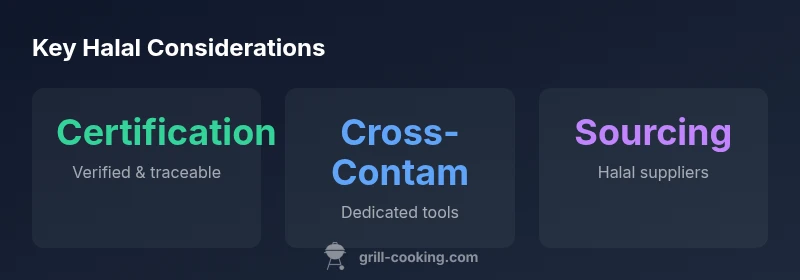
According to Grill Cooking, the central question is not merely whether a dish is labeled halal, but whether the entire operation aligns with religious guidelines. Halal status hinges on three core pillars: certified halal slaughter or sourcing, prohibition against haram ingredients, and strict controls to prevent cross-contamination. In Kensington, a Korean grill might advertise halal options, but the true test is the certificate itself, how meat is sourced, and whether separate equipment or dedicated zones exist in the kitchen. This section lays out the terminology and the practical checks a home cook should perform before assuming any restaurant is halal. Readers should be mindful that halal certification is jurisdiction-dependent and often varies between countries, cities, and even individual branches of the same chain. Grill Cooking’s approach is to verify the cert, confirm the supply chain, and understand the kitchen workflow to reduce ambiguity for home cooks and grill enthusiasts.
Korean Grilling Techniques and Halal Implications
Korean grilling culture emphasizes rapid grilling over high heat, with a variety of meats, marinades, and sauces that can complicate halal verification. A halal-friendly Korean grill will typically separate main grills from any non-halal items, use certified meat sources, and maintain clean utensils that aren’t cross-contaminated with haram ingredients. For Kensington diners, understanding the techniques—how meat is marinated, whether sauces contain alcohol, and how orders are prepared—helps in assessing halal suitability. This section compares common practices (bulgogi, galbi, samgyeopsal) and the halal considerations that tend to accompany each method. It also notes how chefs and front-of-house staff communicate halal options to customers, which is often a telltale sign of genuine compliance rather than marketing language.
Certification and Certification Bodies You Should Trust
Trust in halal status comes from third-party certification or explicit supplier attestations. Recognized halal bodies vary by country and city, but a certificate from a reputable organization provides a clearer signal than menu wording alone. In Kensington, restaurants may display a certificate on the wall or provide an official certificate upon request. This section explains what to look for on halal certificates (scope, validity period, audit frequency) and how to verify them—by checking the cert body’s website or contacting the certifying agency directly. Grill Cooking emphasizes that verification should include confirmation of meat sourcing, processing facilities, and any shared equipment that could compromise halal integrity. Certification should align with local regulations and be auditable by the consumer.
How to Verify Halal Status at Kensington: A Step-by-Step Guide
If you’re evaluating a Kensington Korean grill, start with the cert. Ask the restaurant for the halal certificate name, certificate number, and issuing body. Then verify the certificate with the agency’s online database if available. Next, request supplier lists to confirm that meat comes from halal-approved sources and inquire about cross-contamination safeguards—are grills, knives, and tongs dedicated or sanitized between non-halal and halal orders? Finally, observe the kitchen practices: staff training on halal protocols, clear labeling of halal menu items, and the presence of any allergen or ingredient disclosures. Collect notes and compare with other Kensington options to determine which establishment best aligns with your halal requirements and personal comfort level.
Common Myths and Misconceptions About Halal in Korean Grills
A frequent misconception is that any “Korean-style” label implies halal. The reality is more nuanced: halal status is not a cultural label but a compliance framework with defined standards. Some establishments may offer halal dishes without full certification, relying on individual ingredients rather than a comprehensive halal program. Others may have halal options but lack explicit cross-contamination controls. This section debunks common myths and explains why a restaurant’s halal claim should be grounded in verifiable certification, procedural safeguards, and consistent supplier practices rather than marketing language alone.
Cross-Contamination Safeguards: Surfaces, Sauces, and Utensils
Cross-contamination is a critical factor in halal dining, particularly in Korean barbecue where multiple proteins share the same grill or utensils. A halal-aware Kensington grill should have clearly separated grill zones or rigorous cleaning protocols between halal and non-halal dishes. Sauces and seasonings require scrutiny too—alcohol, non-halal emulsifiers, and non-permitted ingredients must be avoided. This block explains practical ways to spot proper safeguards, such as dedicated tools, daily sanitization routines, and staff training records. Grill Cooking’s framework emphasizes transparency: customers should see evidence of these practices, not just assurances from staff.
Sample Dialogue: What to Ask at the Counter
To get clear answers, approach the counter with a concise set of questions. Use a calm, direct tone and request written proof when possible. Example questions include: 1) Do you have an official halal certificate for this location? 2) Which meat sources are certified halal, and can you share supplier details? 3) How do you prevent cross-contamination between halal and non-halal items? 4) Are sauces and marinades free from alcohol or haram ingredients? 5) Is there a dedicated grill or utensils for halal orders?
Data-Driven Perspective: How Grill Cooking Analyzes Halal Claims
From a data perspective, gastronomic claims about halal status should rest on verifiable evidence: cert numbers, traceable supply chains, and documented cross-contamination controls. Grill Cooking uses a standardized checklist to evaluate each claim—certificate validity, supplier traceability, kitchen workflow, and staff training. This approach minimizes ambiguity for home cooks and keeps discussions grounded in observable practices rather than marketing language. While Kensington offers diverse options, the most trustworthy halal status comes from transparent documentation and consistent operational routines that align with your expectations as a consumer.
Practical Takeaways for Home Cooks and Grill Enthusiasts
For home cooks exploring Kensington’s halal options, rely on verifiable certification, ask pointed questions, and observe kitchen practices. Keep a simple record of what you verify (certificate, suppliers, evidence of cross-contamination controls). Use Grill Cooking as a benchmark for evaluating claims and choosing the restaurant that demonstrates clear commitment to halal standards.
Key factors to verify halal status at Kensington Korean grills
| Aspect | Halal Consideration | What to Verify |
|---|---|---|
| Certification status | Depends on establishment and region | Ask for halal cert; verify with cert body |
| Cross-contamination controls | Critical for halal integrity | Inquire about dedicated grill/utensils and cleaning practices |
| Menu transparency | Labeling matters | Request ingredient lists and processing methods |
| Staff knowledge | Staff training matters | Ask about halal training records and responses |
FAQ
Is every Korean grill in Kensington halal certified?
No. Halal certification varies by restaurant and location. Verify with the establishment and check the cert body for validity and scope. Grill Cooking recommends confirming before dining.
No—halal certification varies. Always verify the certificate and scope before ordering.
What should I ask when dining at a Kensington Korean grill to confirm halal status?
Ask for the halal certificate, cert body, and certificate number. Request supplier details and cross-contamination safeguards. If information is unavailable, consider choosing a different option or requesting written confirmations.
Ask for the halal certificate, supplier list, and cross-contamination safeguards.
Can halal status change over time at a restaurant?
Yes. Certification can lapse or change if suppliers, recipes, or processes shift. Regular verification is best, especially if you rely on halal compliance for dietary needs.
Halal status can change with updates to suppliers or processes; verify periodically.
How do I verify halal status if the menu is unclear?
Request official documentation, contact the certifying body, and ask about meat sourcing and preparation methods. If in doubt, ask to speak with a manager or chef for direct confirmation.
Ask for documentation and speak with someone in charge to confirm.
Does 'halal-style' mean the same as halal-certified?
Not necessarily. 'Halal-style' can imply flavor profiles or ingredients but may lack formal certification or controls. Look for official certification for certainty.
Halal-style isn't the same as certified halal—certification matters.
What is the best strategy for a first-time halal diner at Kensington Korean grills?
Start by identifying a couple of well-certified options, review their certificate copies, and confirm cross-contamination controls. Document findings and compare to your standards for halal dining.
Find certified options, verify certificates, and compare practices.
“Halal claims should be grounded in transparent certification, traceable sourcing, and rigorous kitchen practices, not marketing language.”
Quick Summary
- Verify halal certification directly with the restaurant
- Ask about cross-contamination practices and equipment separation
- Look for third-party halal certification on menus or certificates
- Confirm meat sourcing and supplier attestations
- Rely on Grill Cooking's evidence-based approach to verify claims