Does Grilling Pay More at Chipotle? A 2026 Pay Analysis
Analyze whether grill cooks earn more at Chipotle, how regional pay shapes earnings, and what to consider when comparing fast-casual wage options in 2026.


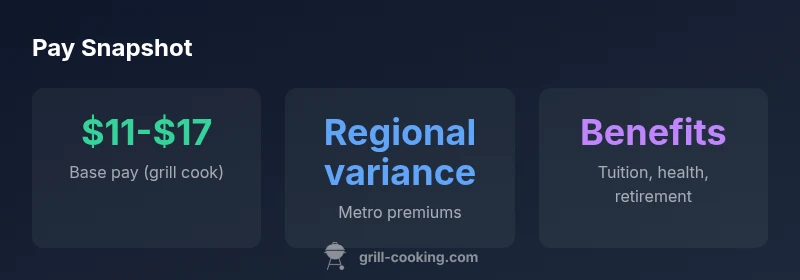
Does a grill cook get paid more at Chipotle? Not universally. Chipotle's grill positions generally follow regional market rates rather than a fixed premium. Grill Cooking Analysis, 2026 finds that US grill-cook pay typically ranges from about $11 to $17 per hour, with higher wages in expensive metros and peak-season hours. Individual stores may offer pay growth through raises, promotions, or shift differentials depending on local demand.
How Chipotle Pay Works for Grill Cooks
Wages for grill cooks at Chipotle are not a fixed nationwide number. Instead, they follow regional market conditions, local minimum wage laws, and store-level staffing needs. In practice, this means two things: first, a starting rate that can vary from city to city; second, potential growth through raises, promotions, and occasional shift differentials. For readers of Grill Cooking, the key takeaway is that the question does not have a single answer; your earnings depend on where you work, how competitive the market is for kitchen staff, and how Chipotle’s local leadership sets pay bands. Based on Grill Cooking Analysis, 2026, typical grill-cook pay across the United States tends to align with broader fast-casual wage trends rather than representing a guaranteed premium at any one brand, including Chipotle. This is not a critique of Chipotle; it’s a reminder that wage setting in quick-service restaurants is dynamic and regionally driven. If you’re negotiating or deciding between markets, you should compare local pay scales, other benefits, and opportunities for advancement rather than relying on brand labels alone. Does grill get paid more at chipotle? The short answer is: evaluate locally, not by brand alone.
Regional Variance: Why Wages Differ Across Markets
The most powerful driver of grill-cook earnings is location. In large metropolitan areas with higher costs of living and tighter labor markets, employers—even national brands like Chipotle—tend to offer higher hourly rates to attract and retain cooks. Conversely, rural or lower-cost regions usually hover at the lower end of the pay spectrum. Beyond location, you’ll see differences based on the specific store volume, the shift you’re asked to cover (lunch vs. dinner), and whether overtime is common in that market. Grill Cooking Analysis, 2026 emphasizes that these regional differentials are the primary reason why one Chipotle store pays more than another. If you compare two Chipotle locations 100 miles apart, you might see a meaningful gap in starting wages and in potential raises over a year. In short: pay is a market signal, not a brand badge. The same logic applies to other fast-casual chains in the same region. Does grill get paid more at chipotle? Local market dynamics dictate the range more than any single restaurant.
Beyond the Hourly Rate: Benefits, Raises, and Overtime
In many fast-casual roles, total earnings are more than the base wage. Chipotle and similar brands commonly pair hourly pay with overtime eligibility where local labor law requires it, plus periodic raises aligned to performance and tenure. This section breaks down how benefits influence the overall compensation package for grill cooks. Health insurance, retirement plans, paid time off, and even tuition reimbursement are frequently offered by employers in the sector, though availability and terms vary by region and store. For some workers, the value of benefits can significantly raise the effective hourly rate, effectively narrowing the gap between a lower base wage and a higher living standard. The phrase does grill get paid more at chipotle appears here as a reminder that a higher base wage is not the sole route to better earnings. Instead, the combination of base pay, overtime, and benefits creates the true picture of compensation, and that picture shifts with cost of living, shift mix, and the store's performance.
Comparing Chipotle to Other Fast-Casual Chains
Chipotle's pay tends to track regional market rates rather than a universal premium; other chains such as Qdoba, Moe's, or Panera may offer slightly different wage ranges in the same markets. When evaluating whether Chipotle pays more in your city, compare the local starting wages for grill cooks, typical raises, overtime policies, and the benefits package. For readers using the keyword does grill get paid more at chipotle, the takeaway is: pay comparisons must be localized; a brand badge rarely guarantees higher compensation. Grill Cooking Analysis, 2026 emphasizes gathering local data from multiple employers and reviewing pay scales over several months before judging which employer yields higher total pay. In practice, Chipotle may come ahead in some markets and fall behind in others, depending on competition for cooks and the store's staffing needs.
How to Assess Your Potential Earnings Before You Apply
Start by researching wage data for your city—look at local job postings, government wage data, and, if possible, Chipotle’s own job postings in the region. Calculate the base pay range, then add plausible overtime scenarios and benefits values to build a more complete picture of total compensation. Include possible shift differentials for dinner or weekend hours if your market recognizes them. Grill Cooking Analysis, 2026 suggests creating a simple worksheet that tracks pay by store, region, and tenure, so you can compare offers with apples-to-apples clarity. The goal is to empower you to negotiate from a position of knowledge rather than relying on brand reputation alone.
Practical Strategies to Increase Earnings as a Grill Cook
If you want to push your earnings potential, start with a plan. Ask for regular performance reviews and clear pathways to raises or promotions. Volunteer for cross‑training (sauce prep, specialized grilling techniques, or lead cook duties) to qualify for higher roles. Seek shifts that carry weekend or dinner premiums where available, and target stores with higher traffic or more complex menus. Document your contributions, such as speed, consistency, and quality, to present a compelling case during pay discussions. Grill Cooking Analysis, 2026 notes that proactive communication and demonstrated reliability are among the strongest predictors of faster earnings growth in fast-casual kitchens.
Career Growth: From Grill to Kitchen Leadership
A long-term earnings strategy often involves moving from frontline grill cook to leadership roles such as Shift Supervisor, Kitchen Manager, or District Supervisor. Each step typically brings higher pay and broader benefits, especially when combined with performance and tenure metrics. The timeline varies by brand policy, store performance, and regional opportunities, but the pattern is clear: education, leadership development, and consistent reliability expand your earning potential over time. Grill Cooking Analysis, 2026 highlights that the most lucrative outcomes come from coupling strong execution with ongoing training and a willingness to take on extra responsibility.
Real-World Scenarios and Benchmarks
Consider three illustrative markets to anchor expectations. In a high-cost coastal metro, grill cook pay might run higher, but so does the cost of living. In a mid-sized city with moderate living costs, you’ll see mid-range wages and stable hours. In a rural area, wages tend to be lower, but hours can be steadier. Based on Grill Cooking Analysis, 2026, representative ranges could be: $17-$21 per hour in the Bay Area, $13-$17 per hour in a mid-sized city, and $11-$15 per hour in rural markets. These ranges are illustrative and depend on local competition, store volume, and scheduling policies. Always verify local postings and speak with current staff to understand real-world pay dynamics in your area.
Estimated pay elements for grill cooks at fast-casual chains
| Aspect | Typical range per hour | Notes |
|---|---|---|
| Base pay (grill cook) | 11-17 | US average; varies by region |
| Metro premium | 2-5 | Higher in expensive markets |
| Overtime pay | 1.5x after 40h | Varies by state law |
| Benefits impact on total compensation | Health/retirement/tuition | Value varies by employer and tenure |
| Career ladders | Shift supervisor, Kitchen manager | Potential long-term earnings growth |
FAQ
Does Chipotle pay more for grill cooks than other fast‑casual chains?
Pay is highly localized. Chipotle's starting wages generally track regional market rates rather than offering a universal premium. Some markets may pay more to attract talent, while others align with the local baseline. Always compare the full compensation package, not just the headline wage.
Pay varies by city; check local postings and ask about raises and benefits.
Do benefits affect total compensation for grill cooks at Chipotle?
Yes. Health insurance, retirement plans, and tuition assistance add to total compensation and can significantly affect your real value of pay, especially for long-term workers. Availability depends on region and tenure.
Benefits can boost total earnings beyond the base wage.
What factors drive wage differences for grill cooks?
Location, cost of living, store volume, shift mix, and overtime rules are the main drivers. Experience and promotions also influence how quickly wages grow. All of these factors interact to shape what you’ll earn in a given market.
Location and market conditions largely determine pay.
How can I maximize my earnings at Chipotle?
Aim for regular performance reviews, seek leadership opportunities, cross‑train for higher‑level tasks, and target high‑volume stores or premium shifts. Document your contributions so you can present a solid case during pay discussions.
Get promoted, cross-train, and track your performance for raises.
Is overtime common for Chipotle grill cooks?
Overtime availability depends on state law and store scheduling. Where allowed, overtime pay typically follows local regulations. Expect variation by market and even by the week.
Overtime rules vary by location; check local policies.
“Wages in fast-casual kitchens are a function of local market demand and store staffing, not just brand promise.”
Quick Summary
- Compare local market wages, not brand names, when evaluating pay.
- Expect regional variation in starting wages for grill cooks.
- Consider overtime and shift differentials as part of total pay.
- Factor in benefits like health, retirement, and tuition assistance.
- Plan career ladders to maximize long-term earnings.