When to Grill Sunflower Seeds: A Practical Guide
Learn the optimal moment to grill sunflower seeds, with shelled vs in-shell timing, temperatures, and serving ideas for smoky, snackable results. A data-driven guide for home cooks and grill enthusiasts.


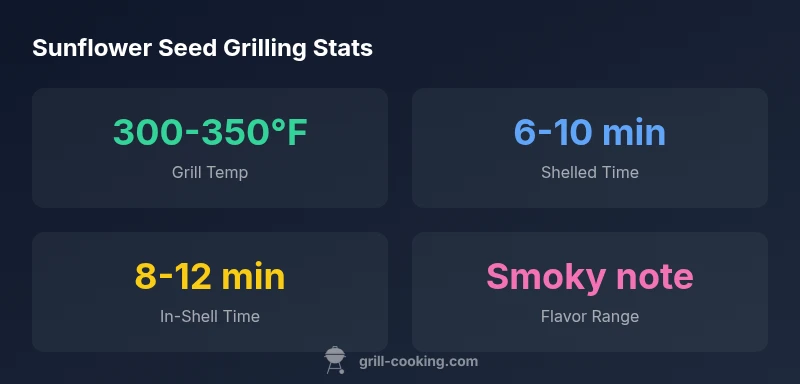
Grill sunflower seeds for 6-10 minutes at 300-350°F (149-177°C) until evenly browned and fragrant. Start with shelled seeds for faster browning; in-shell seeds take longer and develop extra texture. Shake the pan or flip seeds every 2-3 minutes to prevent scorching. For best flavor, oil lightly and salt after grilling. Let cool briefly before serving.
Understanding when to grill sunflower seeds
Grilling sunflower seeds is a surprisingly versatile way to turn a pantry staple into a smoky, snackable treat. The key is timing and moisture management. According to Grill Cooking, seeds should be as dry as possible before they hit the grill to ensure browning rather than steaming. Whether you choose shelled seeds for a quicker, crunchier bite or in-shell seeds for extra texture and a rustic appearance, the grill's heat should be steady and moderate. This section lays the groundwork: seeding choices, moisture control, and how the browning process affects flavor development. You’ll learn how to read your seeds and your grill so you don’t overcook or undercook, and you’ll see why shell vs shell-less seeds offer different textures and browning patterns.
In practice, you’re trading speed for texture when you choose shelled seeds over in-shell seeds. Shelled seeds hit browning targets faster, but they can scorch if you forget to stir. In-shell seeds take longer, but the shells add a toasty, toasted crust that some cooks love. The takeaway is simple: pick the method that fits your timing and the flavor you want, then stick to a consistent stirring rhythm for even browning.
Shelled vs in-shell: Pros and tradeoffs
Deciding whether to grill shelled seeds or seeds in their shells changes both timing and texture. Shelled seeds typically brown in 6-10 minutes when spread in a single layer and stirred regularly. They present a clean, nutty bite with a delicate shell-free surface. In-shell seeds, by contrast, require 8-12 minutes and benefit from gentle movement to prevent scorching on the shell. The shells become a protective barrier that slows direct heat contact but can impart a toasted aroma as the kernels inside finish browning. For a snack with a more pronounced crust and a hint of smoke, shell-on seeds are excellent; for quick, snackable munching, shell-off seeds win. The Grill Cooking team notes that texture preferences drive choice as much as timing and heat. A practical approach is to test a small batch to calibrate your grill and then scale.
Drying, prepping, and handling for best results
The moisture content of seeds will determine how they respond to grill heat. Start with completely dry seeds; pat both shelled and in-shell seeds dry with a clean towel. If you’re unsure about moisture, air-dry on a rack for 20-30 minutes before grilling. Lightly coat with oil (about 1 teaspoon per cup of seeds) and a pinch of salt to help surface browning and flavor adhesion. If seasoning, combine spices independently of oil to avoid clumping on wet surfaces. For in-shell seeds, you may want to crack the shells after grilling or leave them on for a rustic bite, depending on your preference. The goal is even moisture removal and a uniform surface that browns evenly under steady heat.
Temperature, timing, and technique for shelled seeds
When grilling shelled seeds, maintain a steady medium heat at 300-350°F. Spread seeds in a single layer on a grill-safe pan or directly on a perforated tray if you’re using a charcoal setup. Stir or shake every 2-3 minutes to promote even browning and to prevent hotspots from scorching. Expect 6-10 minutes total for shelled seeds, depending on the grid temperature and seed size. If you notice rapid darkening on the edges but pale centers, reduce heat slightly and continue moving the seeds for uniform browning. The aroma will shift from grassy to toasty as browning completes.
Flavoring, oils, and finishing touches
Oil lightly before grilling to improve browning and adherence of any seasoning you plan to use. Salt after cooking to avoid drawing out moisture that can hinder browning. For extra flavor, try a whisper of smoked paprika, garlic powder, or chili flakes mixed with salt. If you want a bigger smoke footprint, finish seeds with a quick pass over indirect heat or a brief splash of smoke flavoring, being careful not to burn. Rest the seeds for 1-2 minutes after removing from heat; this allows carryover heat to settle and flavors to settle. A final light toss with a citrus zest or fresh herbs can brighten the palate without overpowering the seed’s inherent nuttiness.
Grilling methods and gear setup
You don’t need an elaborate grill setup to grill sunflower seeds successfully. A simple charcoal or gas grill works fine if you keep heat steady and move the seeds regularly. A shallow perforated tray or a cast-iron skillet provides even browning and easier turning. If you’re cooking in-shell seeds, consider a grill with lower direct heat to prevent scorching of the shells while the kernels finish browning. For beginners, a simple sheet pan on a direct grill grate works well, provided you stir constantly to break up clumps and ensure even browning. Always monitor closely, because seeds can go from golden to burnt quickly at these temperatures.
Serving ideas and safety tips
Grilled sunflower seeds are best served warm or at room temperature. They pair nicely with beer, a charred veggie platter, or a light cheese board. Store leftovers in an airtight container at room temperature for up to 3 days, or refrigerate for longer shelf-life. When serving, check for shell fragments if you chose the shell-on route. For those with nut allergies, confirm that seeds were grilled separately from other tree nuts to avoid cross-contact. As always, practice safe grilling: clean your grill grates, monitor heat, and use proper tools to handle hot trays.
Troubleshooting common issues
If seeds scorch quickly, reduce the heat to a steady mid-range and increase your stirring cadence. If browning is uneven, rotate the tray or pan between grill zones to balance hot and cool spots. If seeds seem to produce little aroma, they may be under-roasted; extend your roasting time in 1-2 minute increments. If shells catch fire, move to indirect heat or shield seeds with a foil tent until the shells char evenly. For best results, learn your grill’s hot spots and calibrate your technique for consistent browning across batches.
Grilling times by shell status
| Aspect | Shell status | Grill temp | Roasting time |
|---|---|---|---|
| Shelled seeds | Shell removed | 300-350°F | 6-10 minutes |
| In-shell seeds | Shell on | 300-350°F | 8-12 minutes |
FAQ
How do I know when seeds are done?
Seeds are done when they are evenly browned and emit a toasted aroma. For shelled seeds, start checking at minute 6 and continue in 1-minute increments until browning is even. For in-shell seeds, look for a consistent shell color and the kernels inside becoming visible through small cracks.
Look for even browning and a toasted scent. Start checking around minute 6 for shelled seeds, and a bit later for in-shell seeds, stirring as you go.
Shell-on vs shelled: which should I choose for flavor?
Shell-on seeds give a rustic texture and slower browning, while shelled seeds offer quicker, crisper browning and easier seasoning. Choose based on texture preference and your planned cook time.
Shell-on gives more texture and a longer browning time; shelled is quicker and crisper. Pick based on texture you want.
Can I grill sunflower seeds with no oil?
A light oil helps browning and flavor adhesion, but you can grill dry if you’re watching calories. Oil tends to give a more even crust and better seasoning uptake.
Oil helps browning and flavor, but you can skip it if you’re watching calories; expect lighter browning.
How should I store grilled seeds?
Store grilled seeds in an airtight container at room temperature for up to three days, or refrigerate for longer shelf-life. Keep them away from moisture to preserve crunch.
Put leftovers in an airtight container and keep them in a cool place or fridge for longer freshness.
Is it safe to grill other seeds on the same grate?
Yes, but avoid cross-contamination with allergen seeds. Clean the grate between batches and consider using separate trays to prevent flavor transfer.
You can, but clean between batches and be mindful of allergens.
What’s the best setup for beginners?
A simple stove-top grill pan over medium heat works well for beginners. A direct grill with a perforated tray helps with even browning. Start with shelled seeds to build confidence before trying in-shell varieties.
Start with a grill pan on medium heat; use a perforated tray for even browning and try shelled seeds first.
“Sunflower seeds develop the best aroma and texture when grilled at a steady medium heat, and uniform browning comes from turning them regularly.”
Quick Summary
- Grill at 300-350°F for even browning
- Shelled seeds brown faster than in-shell
- Stir every 2-3 minutes to prevent scorching
- Oil lightly and salt after grilling for best flavor
- Let seeds rest briefly before serving