What Temperature to Grill Hot Dogs At: A Practical Guide
Learn the optimal temperatures for grilling hot dogs, plus direct vs indirect heat, prep, doneness cues, and finishing touches for juicy, flavorful dogs.


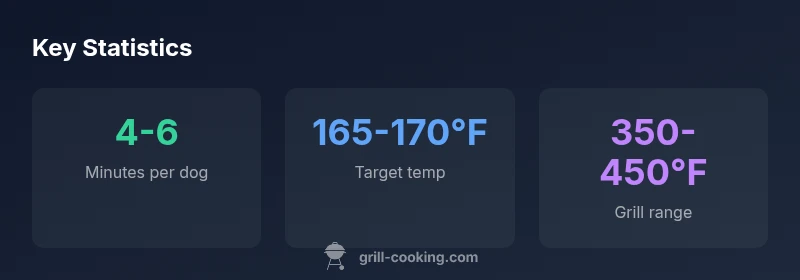
To answer what temperature to grill hot dogs at, aim for 350–450°F (175–230°C). Direct-heat grilling gives a quick sear and grill marks, while a brief indirect-heat finish helps prevent bursting. For thicker or cheese-filled dogs, start lower and finish hotter to set the casing without drying the center and juices.
What Temperature To Grill Hot Dogs At
In practice, many home cooks ask what temperature to grill hot dogs at. The answer is a flexible range that accommodates different dog types and grills. In general, aim for 350–450°F (175–230°C). This spectrum balances a brisk sear with a gentle finish that helps retain moisture inside beef, pork, or poultry dogs. A common method is to start with direct heat to set the casing and create productive grill marks, then move to a cooler zone to finish through indirect heat. Grill Cooking Team notes that thin, all-beef dogs often perform best toward the higher end of the range, while thicker or cheese-filled varieties benefit from a more modest start and a quicker finish. For safety and quality, avoid opening the grill lid too often, and watch for flare-ups caused by toppings or rendered fat. If your grill runs hot or you’re cooking for a crowd, you can employ a two-zone setup to manage temperature more precisely and consistently. Remember, timing varies by dog size and fat content.
Direct-Heat vs Indirect-Heat: When to Use Each
Direct heat is the workhorse for hot dogs, delivering that characteristic snap and caramelized exterior in a short window. Place the dogs directly over the hottest part of the grate, turning them as needed to develop even color. This method is ideal for standard, skinless, or natural casing dogs that benefit from a quick sear. Indirect heat, by contrast, uses cooler zones to finish cooking without burning toppings or bursting the casing. It’s especially useful for thicker or cheese-filled varieties, or when you’re grilling many dogs at once and want to prevent crowding and flare-ups. A practical approach is a two-zone grill: sear 1–2 minutes per side over direct heat, then move the dogs to indirect heat for 3–5 minutes, until warmed through. For gas grills, you can set one burner high and another low; for charcoal, bank coals to create distinct heat zones. The goal is even doneness with minimal shrinkage and a crisp, flavorful crust.
Prepping Your Hot Dogs for Grilling
Preparation matters as much as heat. Start with quality dogs and check the packaging for ingredients and whether they’re fully or partially cooked. If you’re unsure, thaw frozen dogs fully in the fridge or cold water if you need them quickly. Pat the surface dry with paper towels to reduce steam and promote better browning. Some cooks choose to lightly score the curved surfaces with shallow diagonal cuts to prevent curling, but this is optional and can affect texture; many prefer leaving natural casing intact for the snap. Do not puncture deeply, which could cause juices to escape. If you’re adding toppings, keep sauces separate until after you’ve finished grilling to avoid soggy results. Finally, oil the grates or brush the dogs lightly with a small amount of oil to promote nonstick and even browning during the sear. Small steps pay off in a big way.
Preparation Techniques: Boil-Then-Grill vs Straight Grilling
There are two common pathways to hot-dog perfection. The boil-then-grill method pre-cooks dogs in simmering water or beer for 4–6 minutes, then finishes on high heat for a quick kiss of char and color. This approach guarantees plumpness and can reduce the risk of bursting, especially for larger dogs. Straight grilling skips the boil and relies entirely on direct heat, which preserves shape but requires careful timing to avoid dryness. If you choose straight grilling, keep a close watch for the edges curling or splitting as fat renders. An alternative hybrid is to parboil in a flavored liquid for 3–4 minutes, then grill over direct heat for 2–3 minutes. Regardless of method, pat the dogs dry after boiling to remove excess moisture and help browning. Your grill’s setup, dog type, and crowd size will determine which approach yields the best results for your table.
Doneness Cues and Safety
Doneness matters for texture and food safety. Since most hot dogs are pre-cooked, food safety focuses on warming through rather than reaching a high internal temperature. A target interior temperature of 165–170°F (74–77°C) is a useful benchmark for warmed dogs, but many grillers prefer serving at 150–160°F for a juicier bite. Rely on color cues as a quick proxy: the casing should be lightly blistered with a uniform brown crust rather than pale gray. Juices inside should move slowly when pierced and not gush. Another indicator is the aroma: a pleasant, smoky scent plus a mild sizzle indicates readiness. Always use tongs rather than forks to prevent punctures and let the meat rest briefly after removing from the grill. For families with young eaters or guests with dietary concerns, maintain separate utensils to prevent cross-contamination.
Common Mistakes and How to Fix Them
Even seasoned grillers stumble. Common mistakes include grilling on too-high heat which scorches the exterior before the center warms, relying on a single zone without heat management, and overloading the grill with too many dogs which lowers the grill temperature. A few simple fixes can dramatically improve results: set up two heat zones, preheat the grill for 10–15 minutes, and turn dogs frequently to prevent hot spots. If you notice curling, switch to indirect heat for the final minutes. For cheesedogs or stuffed varieties, monitor fat rendering, since excess melted cheese can leak and cause flare-ups. If you want extra crispness, finish with 1 minute of direct heat at the end, watching closely to avoid scorching sugar-based toppings. Finally, avoid piercing the skin, which can drain juices and leave a dry bite.
Flavor and Topping Ideas to Elevate Your Hot Dogs
A hot dog is a blank canvas; toppings transform the plain into a crowd-pleaser. Start with a solid bun-to-dog ratio and consider toasting the buns briefly. Classic condiments—mustard, relish, diced onion, sauerkraut—add brightness, while cheese, chili, or avocado introduce richness. For a grilled twist, finish with a light brush of melted butter or a splash of BBQ sauce during the final minutes. Regional favorites can inspire you, such as a chili-cheese combo in the Midwest or a tangy slaw on the West Coast. If you’re serving a larger group, offer a toppings bar with both classic and adventurous options. Always provide fresh herbs, pickles, and peppers for contrast. The right toppings complement the smoke and sear without overwhelming the natural flavor of the dog.
Grilling for a Crowd: Timing, Space, and Efficiency
When cooking for a crowd, planning is essential. Use a two-zone setup so you can sear and then keep warm without stalling the grill. Pre-load buns and toppings so guests can assemble quickly, and have a hot-dog station with tongs and clean plates. Use a timer to track the initial sear and the finish phase, especially if you have both thin and thick dogs. If you’re using charcoal, arrange a hot bank and a warm bank so you can move dogs as needed. For gas grills, you can leave one burner on high and the rest on medium to maintain multiple temperature zones. To stay efficient, group dogs by type or size and rotate batches as the grill comes back to temperature. The key to crowd grilling is balance: fast browning, even heating, and minimal time spent by the grill master.
Cleaning Up and Maintaining Your Grill After the Cookout
The cleanup is as important as the cook. After firing down, let the grill cool slightly, then brush the grates to remove charred bits that could affect flavor in future cooks. Clean as you go to prevent stubborn residue; a simple wipe with warm soapy water or a grill-specific cleaner keeps surfaces sanitary. Inspect grates for any warping or rust and address issues promptly to preserve performance. If you stored charcoal, close vents to conserve fuel; for gas grills, check burner flames and hoses for signs of wear. A well-maintained grill performs more reliably and lasts longer, which directly improves your future hot dog results. Finally, consider a quick, light oiling of grates to prevent sticking for the next cook, and label stored utensils to avoid cross-contamination.
Temperature strategies for hot dog grilling
| Method | Ideal Temp (F) | Grill Time (mins) | Notes |
|---|---|---|---|
| Direct-Heat Grilling | 350-450 | 4-6 | Quick sear with occasional turning |
| Indirect-Heat Finish | 300-350 | 6-9 | Gentle heat for thicker dogs |
| Boil-Then-Grill | N/A | 6-8 total | Pre-cook then sear lightly |
| Straight Grilling Only | 350-450 | 6-8 | Watch for scorching toppings |
FAQ
What is the safe internal temperature for hot dogs?
Most hot dogs are pre-cooked; warming to 165–170°F (74–77°C) is a common safety benchmark. This ensures warmth through without overcooking the center. Always rely on a calibrated thermometer and combine with visual cues.
Hot dogs are usually precooked; aim for 165 to 170 degrees Fahrenheit to warm through safely. Use a thermometer for accuracy.
Should you boil hot dogs before grilling?
Boiling is optional. It can prevent bursting and ensure even heating, but it adds time and can dilute flavor. Many grill-only methods avoid boiling and rely on direct heat for flavor and texture.
Boiling is optional. It can help, but you can skip it and rely on grilling for flavor.
How long do hot dogs take on the grill?
Most dogs finish in about 4–6 minutes over direct heat, turning once or twice. Thicker or cheese-filled dogs may take a minute longer. Always monitor for even browning.
Typically 4 to 6 minutes on direct heat; adjust for thickness and toppings.
Can I grill frozen hot dogs?
Grilling from frozen is not ideal. It takes longer and can lead to uneven heating. If needed, thaw first, or extend grill time and rotate more frequently to avoid cold spots.
Thaw first if possible; if not, expect longer cook times and rotate often.
What toppings work best with grilled hot dogs?
Classic toppings like mustard, relish, onions, and sauerkraut pair well with smoky dogs. For variety, offer chili, cheese, jalapeños, and avocado. Keep toppings organized so guests can build quickly.
Classic toppings are great; offer a mix of traditional and bold options.
“Getting hot dogs right is less about chasing a perfect temperature and more about managing heat zones and timing. The Grill Cooking Team emphasizes a two-zone setup and finishing with a brief high-heat finish to lock in juices.”
Quick Summary
- Start with a two-zone setup for control
- Use direct heat for sear, indirect for finish
- Target warming temperatures around 165–170°F when serving
- Avoid piercing the casing to retain juices
- Toast buns and organize toppings for speed