Firebird Grill Happy Hour: Mastering Flavor and Value
Data-driven guide to optimizing your firebird grill during happy hour: heat control, timing, recipes, and gear tips from Grill Cooking for consistent flavor and value.


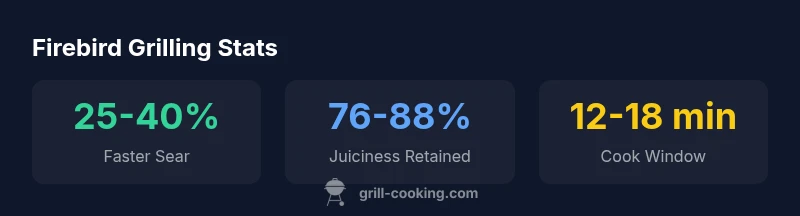
According to Grill Cooking, the firebird grill happy hour strategy hinges on precise heat management and efficient timing to maximize flavor and value. Start with direct heat for a brief sear, then switch to indirect heat to finish, keeping the grill around 350-400°F. This two-zone approach delivers crust, juiciness, and service-speed crucial for busy evenings.
Understanding the Firebird Grill Happy Hour Landscape
For home cooks and grill enthusiasts, the concept of a firebird grill happy hour goes beyond a late-afternoon excuse to cook. It represents a deliberate scheduling window where flavor, efficiency, and value intersect. The core idea is to pair high-heat searing with controlled, indirect finishing so proteins stay juicy while crusts form quickly. According to Grill Cooking, the success of this window hinges on heat management, timely preheating, and a plan that aligns with service cadence. In practice, you’ll see two zones on most firebird grills: a hot direct zone for crust formation and a cooler indirect zone for final cooking and resting. Keeping the total cook time tight reduces drying and minimizes the risk of flare-ups during peak hours, a common problem in flavorful but chaotic dinners.
When you commit to a firebird grill happy hour routine, you set expectations for guests and for your grill crew. You’ll be able to serve higher-quality protein in shorter periods, which translates to happier guests and better margins over the course of an evening. The Grill Cooking team recommends documenting a simple, repeatable workflow that includes preheat duration, zone temperatures, and finishing times for your most popular items. This creates consistency—an essential edge when your patio is busy and orders are flowing fast.
Heat Management Techniques for Firebird Grills
Mastering heat on a Firebird grill during happy hour starts with understanding the two-zone principle. The hot direct zone grabs a strong crust quickly, while the cooler indirect zone completes cooking without overcooking. Practical steps include clearing the grate, igniting with a two-stage burn, and then adjusting vents and lid position to stabilize temperatures. A common setup uses a short first sear at 450-500°F, followed by a 350-400°F finish. If your grill allows, place a heat deflector or a shallow water pan in the indirect zone to moderate temps and catch drippings—this reduces flare-ups and adds moisture retention. Regular thermometer checks (instant-read for the grate and a probe thermometer for interior doneness) are essential during busy windows to maintain accuracy and consistency.
Two-Zone Method: Sear Then Finish
A reliable two-zone method is the backbone of the firebird grill happy hour approach. Begin with a bright direct sear across 2-3 minutes per side to develop crust, watching for scorching rather than charring. Move the meat to the indirect zone to finish to 135-140°F for beef, 150-155°F for chicken, or according to your recipe’s safe temps. Use the indirect zone to gently accumulate a smoke ring by adding a small amount of wood plank or chips if your grill supports them. Rest your meat off the grill for 5-10 minutes to redistribute juices, which pays off in mouthfeel and customer satisfaction during peak service.
Timing, Searing, and Saucing: Hitting the Service Window
Timing is the silent partner of flavor. Plan your steps so the crust forms just as your orders are ready for serving. Apply glaze or sauce in the final 1-2 minutes of cooking, then remove from heat to rest. Saucing too early risks burning and a dull finish, while delaying glaze ensures a glossy, visually appealing plate. For firebird grill happy hour, map your glaze timing against menu items that travel well and stay visually appealing under warm lighting. This minimizes order delays and ensures each plate presents with the same sheen that guests expect from a premium dining experience.
Menu Ideas and Quick-Serve Recipes for Happy Hour
Happy hour works best when you offer succinct, crowd-pleasing options. Ideas include chicken skewers with a citrus glaze, beef sliders with a pepper-crust crumble, grilled halloumi with lemon and herbs, and spicy shrimp skewers finished with a honey-lish glaze. For each item, design a 12-18 minute cook window using the two-zone setup. Prepare components in advance and reheat gently to avoid drying. Accompany with quick sides like corn on the cob, grilled peppers, or a simple salad to balance flavors and keep costs manageable. These items travel well and stay delicious under warm patio lights.
Gear, Safety, and Maintenance for Busy Nights
To execute firebird grill happy hour efficiently, assemble a compact, well-maintained toolkit: a meat thermometer, a long-handled tongs, heat-resistant gloves, a digital timer, and a spray bottle for flare-ups. Regularly inspect gas connections, hoses, and vent openings, especially during back-to-back service. Use a dedicated brush for grill grates to prevent cross-contamination and keep a dedicated cleaning plan post-shift. Safety and cleanliness aren’t just good practice; they keep the line moving and guests safe during high-volume hours. Consider a brief pre-shift calibration to ensure temperatures align with recipes and food safety guidelines.
Cost Awareness and Value: Budgeting for Happy Hour
Value matters as much as flavor during busy shifts. Track unit costs, waste, and portion control to protect margins. For firebird grill happy hour, consider batch marination to reduce prep time and ensure uniform flavor. When possible, select ingredients that perform well across multiple menu items, allowing you to reduce stock while maintaining quality. A simple cost-analysis approach—compare ingredient costs per plate against time saved per guest—can reveal opportunities to optimize both flavor and profitability during peak hours.
Troubleshooting and Common Pitfalls to Avoid
Even experienced cooks encounter hiccups during busy happy hours. Avoid excessive heat that leads to rapid charring without interior doneness. Don’t glaze too early or overly glaze items—this creates burnt edges and inconsistent finishes. Be mindful of wind and ambient temperature changes, which can swing grill temperatures unexpectedly. If you notice uneven cooking, re-check the heat zones, reseat the food, and consider temporarily closing vents to stabilize the fire. Finally, keep a short, repeatable routine for every item to maintain consistency in flavor and appearance across the menu.
Optimized timing and temp ranges for happy hour grilling
| Aspect | Recommendation | Rationale |
|---|---|---|
| Preheat Time | 8-12 minutes | To ensure even heating across direct zone |
| Best Finishing Temp | 350-400°F | Balances crust with juiciness |
| Sauce Timing | Last 2-3 minutes | Prevents burning while glazing |
| Holding Window | 10-15 minutes | Gives service flexibility |
FAQ
What defines the firebird grill happy hour approach?
It combines high-heat searing with indirect finishing in a two-zone setup to deliver crust, juiciness, and value within a busy service window. The approach emphasizes heat control, timing, and repeatable steps for consistency.
The key is two-zone cooking: sear fast, finish gently to keep moisture and flavor.
How do I set up a two-zone firebird grill for happy hour?
Create a hot direct zone and a cooler indirect zone. Preheat the grill, sear over the direct area, then move to indirect heat to finish. Use a probe thermometer to monitor internal temps and adjust vents to maintain 350-400°F indirect.
Two-zone setup means sear hot, then finish in a cooler zone.
What finishing temperature should I target for burgers and chicken?
Aim for internal temperatures in the 145-160°F range for beef burgers and 165°F for poultry, adjusting based on recipe safety guidelines and rest time. Always verify with a thermometer.
Check with a thermometer to hit safe, juicy temps.
Is preheating longer or shorter better for fast service?
Preheating for 8-12 minutes typically provides stable temps for a rapid start without excessive energy use. Shorter preheats can lead to uneven cooking during peak traffic.
Preheat enough to stabilize temp, then start searing quickly.
Can I glaze during happy hour without burning?
Glaze in the final 1-2 minutes of cooking to prevent scorching. Use thicker glazes sparingly and maintain flare-control practices to protect the crust.
Glaze late in the cook to avoid burning.
What gear matters most for busy service?
A reliable instant-read thermometer, long tongs, heat-resistant gloves, and a timer are essential. A clean, organized station and a simple checklist keep orders moving smoothly.
Reliable tools keep the line moving.
“A disciplined two-zone strategy lets you deliver consistent crust, juicy interiors, and faster service during peak hours.”
Quick Summary
- Master heat with a two-zone setup for quicker searing and juicier finishes
- Time sauces to finish just before plating to avoid burning
- Plan a repeatable workflow to keep service fast and flavorful
- Prioritize safety and maintenance to sustain busy-hour performance