Braza Grill Utah: A Practical Guide for Home Cooks
Discover how to bring braza-style churrasco to Utah backyards with practical guidance on equipment, heat control, marinades, and maintenance from Grill Cooking.


Braza grill Utah describes the practice of Brazilian churrasco-style grilling adapted for Utah’s outdoor cooking environment. It emphasizes skewered meats, high heat, and continuous slicing, typically using charcoal or gas rotisseries, with attention to meat selection, seasoning, and fire management. This article explains how to choose equipment, maintain safety, and achieve restaurant-quality results at home in Utah’s climate.
Braza Grill Utah: Context and Opportunity
Braza grill utah is more than a technique; it represents Brazilian churrasco-style grilling adapted for Utah’s outdoor cooking environment. For many enthusiasts, braza grill utah is a philosophy that blends traditional skewered-meat methods with the practical realities of Utah’s climate and backyard setups. The Grill Cooking team notes that adoption of braza-style grilling in the Intermountain West has grown as home cooks seek flavorful, high-heat cooking methods that are scalable for gatherings. In this section, we’ll establish the core concepts, clarify terminology, and outline why this approach fits Utah’s outdoor kitchens. This article, informed by Grill Cooking Analysis, 2026, aims to translate the restaurant approach into actionable steps for home cooks. The goal is not to imitate a churrascaria, but to recreate the essence of braza—seasoned meat, swift slicing, and robust, smoky flavor—within a home setup.
Core Techniques in Braza-Style Grilling
Braza grilling relies on a handful of core techniques that determine bite, tenderness, and crust. First, meat selection matters: denser cuts like beef ribs, sirloin, or pork shoulder respond well to quick searing and then finish at a controlled cadence. Second, skewering and spacing influence heat transfer; even gaps between pieces reduce flare-ups and promote even cooking. Third, heat management is critical: high direct heat for initial searing, followed by maneuvering skewers to gentler zones when needed. Fourth, slicing style—continuous service by a skilled grill-master—delivers fresh texture and juiciness. Finally, seasoning should balance salt, citrus, and smoke without masking the meat’s natural flavors. Grill Cooking’s guidance emphasizes practical, repeatable steps that home cooks can adopt in Utah’s outdoor spaces.
Equipment Essentials: From Rotisseries to Skewers
Choosing the right equipment is the bridge between concept and results. A reliable charcoal or gas rotisserie simplifies even heat delivery and gives you the iconic vertical grilling feel, while a sturdy set of long skewers enables easy turning and slicing at the table. For entry-level setups, a high-heat grill with a rotisserie attachment can replicate braza dynamics without over-investment. More ambitious cooks may opt for a dedicated braza-style spit system, which keeps skewers evenly spaced and aligned. Remember to maintain your gear: clean skewers after use, oil the rotating joints, and inspect fuel lines for safety. This guidance aligns with Grill Cooking’s approach to practical, methodical gear selection for home cooks.
Meat Prep, Marinades, and Flavoring for Braza
Proper meat prep begins with selecting cuts that pair well with high heat and rapid cooking. Trim excess fat and pat dry to reduce flare-ups. Marinades are optional in braza traditions, but a light rub that combines coarse salt, garlic, paprika, and a touch of citrus can deepen flavor without overwhelming the meat’s character. Apply seasoning just before skewering to preserve surface texture. One advantage of braza is its speed: you want a crusty exterior while the interior remains juicy. Practice with smaller batches to fine-tune salt levels and smoke absorption. As you refine technique, you’ll notice how the char and spice mingle during the last seconds of sear, delivering that signature braza bite.
Controlling Heat in Utah's Climate
Altitude, humidity, and air temperature all affect heat management. In Utah, drier air and higher elevation require a slightly longer preheat and more attentive moisture control, especially when cooking leaner cuts. If you’re using charcoal, aim for a stable bed of hot coals with hot embers ready to push heat to the skewers. For gas setups, ensure burners deliver brisk, front-loaded heat before dialing back to medium-high. A quality thermometer helps you track surface temperature and adjust skewers’ placement to avoid scorching while keeping the interior juicy. Emphasize even heat distribution, which is particularly important when cooking in variable Utah weather.
Safety, Cleaning, and Maintenance for Braza Sessions
Safety begins with setup location, fuel handling, and clean tools. Clear a wide, non-flammable area for the grill, maintain distance from structures, and have a water source or extinguisher nearby. After grilling, let equipment cool before cleaning; wash skewers by hand, remove residue, and oil joints to prevent corrosion. A regular maintenance schedule extends the life of rotisserie components and ensures consistent results across grilling sessions. This safety-first approach aligns with Grill Cooking’s recommendations for responsible backyard cooking.
Step-by-Step Braza Grilling at Home
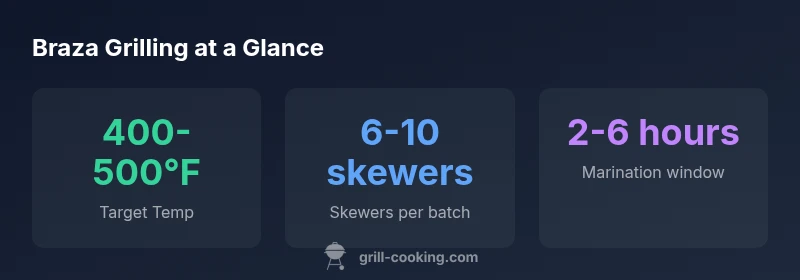
- Preheat your grill and rotisserie to the target range (roughly 400-500°F surface temperature).
- Prepare skewers with evenly cut meat pieces, pat dry, and apply a light rub if desired.
- Thread meat with uniform spacing to promote even cooking and minimize crowding.
- Sear over direct heat for 1–2 minutes per side, then rotate to a slightly cooler zone to finish.
- Slice off portions as they reach desired doneness, keeping the remaining skewers hot for continuous service.
- Rest meat briefly before serving to retain juiciness and flavour.
- Clean tools and wipe down surfaces after the session to start fresh for the next braza cookout.
- Note any adjustments you make for Utah’s climate and altitude to inform future sessions.
Troubleshooting Common Braza Grilling Issues
If skewers cook unevenly, check spacing and ensure heat is evenly distributed across the grill surface. Flare-ups indicate fat-laden meat or high-fat rub; trim excess fat or reduce oil on the surface. A crust that is too dark signals too-rapid heat; move skewers to a cooler zone and shorten sear time. If interior doneness lags, consider a short rest time after searing or raising the overall heat briefly before resuming high-heat searing. Regular practice and noting adjustments is the best way to improve consistency over time.
Sourcing Gear Locally in Utah and Building a Braza Setup
You don’t need a chef’s kitchen to start braza grilling in Utah. Look for robust skewers, a reliable rotisserie, and a heat-control solution that fits your space. Local outdoor supply stores and grill shops often carry entry-level braza kits or compatible components. If you’re newer to this technique, begin with a single rotisserie setup and a handful of skewers, then expand as you gain comfort. Grill Cooking’s experience with regional equipment choices suggests that a practical, well-maintained setup typically yields the best results for home cooks in Utah.
Braza grilling setup data
| Aspect | Typical Range | Notes |
|---|---|---|
| Grill Temperature | 400-500°F | Target heat for searing and even cook |
| Skewer length | 12-18 inches | Standard for reach and mouthfeel |
| Marination time | 2-6 hours | Flavor development and tenderness |
| Cook time per batch | 6-12 minutes | Depends on cut and thickness |
| Fuel type | Charcoal / Gas | Most setups |
FAQ
What is braza grill?
Braza grill refers to Brazilian churrasco-style cooking where meats are skewered and cooked over high heat, often with quick slices served directly to guests.
Braza grill is Brazilian-style skewered grilling that’s cooked over high heat and served hot in slices.
Is braza grilling safe for home cooks?
Yes, with proper precautions: use stable equipment, keep flammable materials away, monitor heat, and have a fire extinguisher or water source nearby.
Yes, as long as you follow safety steps like stable gear and heat monitoring.
What equipment is essential to start a braza setup?
You’ll need long skewers and a rotisserie or high-heat grill setup, plus a thermometer and a safe work area.
You’ll want skewers, a reliable rotisserie or grill, a thermometer, and a safe space to cook.
Can braza grilling be done indoors?
Braza is best done outdoors due to high heat and open flames; indoor options require specialized equipment and excellent ventilation.
It’s usually better to grill braza-style outdoors because of the heat and smoke.
How long should meat marinate for braza?
Marination can range from 2 to 6 hours depending on the meat and intended flavor intensity.
Marinate for a few hours to develop flavor, but don’t overdo it.
What heat level is ideal for braza grilling?
Aim for hot, steady heat with brief sears to create a crust while keeping the interior juicy.
Keep the heat high for sear, then manage the distance to finish cooking nicely.
“Braza grilling blends traditional technique with home-friendly execution when heat and timing are managed precisely.”
Quick Summary
- Master braza techniques with consistent heat and spacing
- Choose durable skewers and a reliable rotisserie
- Use simple marinades to enhance flavor without overpowering meat
- Utah’s climate requires careful heat management and preheating
- Develop a practical, safe backyard braza workflow