Where Is Grill Restaurant? Find Top Grilling Near You
Discover how to locate top grill restaurants near you, understand grilling styles, and confidently choose charcoal, wood-fired, or indirect-heat joints that match your flavor.


The Grill Restaurant Landscape: Who Are We Finding?
In many cities, the phrase where is grill restaurant covers a spectrum of dining experiences. You will encounter fast-casual barbecue joints that specialize in quick, smoky flavors; full-service smokehouses that turn low-and-slow cooking into an art; steakhouses with wood-fired finish; and regional pitmasters who celebrate a specific tradition. Understanding these categories helps in setting expectations and choosing the right place for your meal. The Grill Cooking team observes that the landscape varies by neighborhood: some areas lean toward modern, peppery spice profiles and fast service, while others celebrate heritage barbecue with long menus and smoked intrigue. When approaching this search, start by defining what you want from a grill restaurant -- quick, casual bites or a deliberate tasting experience -- and then map options around town accordingly. The more precise you are about your goals, the easier it is to locate a matching grill restaurant and secure a satisfying meal.
Search Strategy: Turning a Question into Action
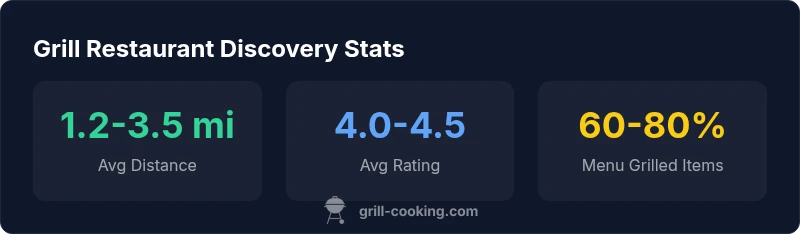
A simple search query can produce a surprising range of results, but you will get better outcomes if you translate the question where is grill restaurant into action steps. Begin with map apps and voice search, using exact terms like grill restaurant near me and synonyms such as barbecue joint, smokehouse, or charcoal grill restaurant. Set a practical radius based on your location—typically 1 to 5 miles in dense urban areas—and apply filters for open now and user ratings. Next, cross-check multiple sources: a quick Google Map listing, a Yelp or TripAdvisor review, and the restaurant’s own menu page. Pay attention to recent reviews that mention charcoal or wood-fired cooking, as these are strong signals of true grilling rather than generic grilling-adjacent cuisine. Finally, save a short list of candidates and plan a tasting rotation to compare flavors and service styles side by side.
Mastering Maps, Directories, and Reviews
Maps apps are your first stop, but you will gain accuracy by consulting directories and community-driven review sites. Use Google Maps to estimate distance and hours, then verify authenticity with menu scans or posted fuel sources in photos. In addition, regional directories or city-specific food guides often curate best grill lists with notes on whether a restaurant focuses on charcoal, gas, or smoking techniques. On review platforms, skim multiple recent opinions to gauge consistency: look for mentions of smoke flavor, tenderness, and clean smoke profiles rather than generic compliments. The goal is to triangulate data from three angles: real-time location, menu clarity, and credible user experiences. If a venue lacks clear information, reach out via phone or social media to ask about their grilling approach before visiting.
Authenticity Signals: Charcoal, Wood, Smoke, and Signage
Authenticity in grilling is often signaled by the fuel and technique, not only by advertised cuisine. Look for explicit mentions of charcoal or wood-fired grilling in menu descriptions, or see if the restaurant displays a smoker or grill rig in the dining area. The aroma in the dining room can also be a clue, albeit imperfect. Real pitmasters emphasize controlled heat, proper airflow, and careful basting or seasoning; menus may reference rubs, smoke time, or regional spice blends. Be wary of venues that rely heavily on generic grilling language without specifics. Reading the grill's heat management strategy and the chef's signature items helps you assess whether the restaurant prioritizes authentic grilling craft over mass-produced flavor profiles.
Menu Clues: Dishes That Reflect Grilling Craft
A well-curated grill restaurant often presents a menu that communicates the range of its grilling craft. Look for sections featuring smoked meats, rib racks, briskets, or chicken thighs cooked over charcoal. If seafood appears, check whether it is grilled with direct heat or finished with a quick sear after smoking. Vegetables roasted on the grill—peppers, corn, zucchini—are a good sign that the kitchen appreciates the full spectrum of grilling. Sides matter too: expect robust sauces and sides that stand up to bold meats, such as smoked baked beans, peppery slaws, and garlic butter corn. When in doubt, ask about marination and rubs, as these details reveal a kitchen's approach to flavor, texture, and smoke-sourcing.
Regional Differences: How Grilling Styles Vary by Region
Grilling culture shifts by region, and recognizing those nuances helps in locating the right grill restaurant. In the American South, smokehouses emphasize long, patient braising with bold rubs and tangy sauces. In the Midwest, you will encounter hearty, meat-forward plates and family-friendly portions. The Southwest blends direct-heat grilling with chili-laden spices and mesquite or hardwood flavors. In the Northeast, you may find lighter sauces and a stronger emphasis on charred vegetables. Outside the United States, grilling traditions diverge even more—think hibachi-style grilling in parts of Asia or skewered meats in Mediterranean climates. The Grill Cooking analysis, 2026, notes that regional preferences influence both the menu and the service tempo, so be mindful of local specialties when choosing where to dine.
Planning and Practical Tips for a Grill Night Out
To maximize your experience, plan ahead rather than relying on walk-ins. Check hours, confirm if outdoor seating is available, and review whether the grill style matches your preferences. If a place is known for a signature smoke profile, time your visit earlier in the evening when smoke might be more pronounced. For larger groups, call ahead to reserve space and inquire about family-friendly menus. If you are exploring a neighborhood known for multiple grill spots, create a route that allows you to sample several offerings in one evening. Finally, consider pairing your meal with sides and sauces that complement smoke-forward proteins—this turns a simple dinner into a nuanced tasting experience.
Common Mistakes and How to Avoid Them
Many searches fail because they rely on photos or generic ratings without validating the grill approach. Avoid assuming every barbecue joint is charcoal-based; some use gas-fired grills with heavy sauces. Don’t overlook restaurants with limited online menus—call or message to confirm their grilling method. Also, be cautious about price expectations: authentic grilling can vary widely in cost, and some premium spots charge more for the experience rather than the method. Lastly, beware of overwhelmed menus that bury core specialties; prioritize venues that clearly highlight the grill discipline you crave, whether it is brisket, pork shoulder, or wood-fired seafood.
Tools, Tactics, and Hidden Gems for Discovery
To uncover hidden grill gems, blend digital search with local knowledge. Follow pitmasters, barbecue clubs, and food bloggers on social media; attend pop-ups and food events where grills shine; and explore weekend farmers markets for local smokehouse stalls. Use curated city guides that spotlight craft grilling and specialty smokehouses, and keep a running list of places you want to revisit. When you discover a candidate, try a tasting flight or a la carte samples to compare smoke intensity, texture, and seasoning. The more you practice scouting, the faster you locate consistent, high-quality grill restaurants that match your flavor profile.