Finding the Best Sport Bar and Grill Near Me in 2026
Discover how to locate top sport bar and grill near me options, compare TVs, menus, and crowds, and plan a perfect game-day visit with data-driven tips.


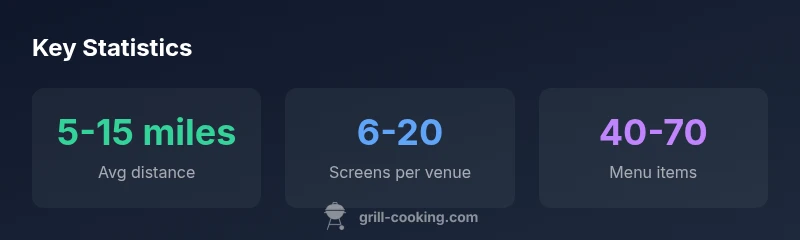
In most metro areas, sport bar and grill options cluster within a 5–15 mile radius of your location, with higher density in downtown cores and entertainment districts. Use location-based search and filter for multiple TVs, bar menus, and game-day hours. Compare nearby venues by seating, parking, and reservation policies to pick the best spot for your crew.
Finding sport bars and grills near me
Finding a sport bar and grill near me goes beyond proximity; it’s about the vibe, the screen layout, and the service pace on game day. This guide helps home cooks and grill enthusiasts locate viable options, compare on critical dimensions, and plan a smooth visit. According to Grill Cooking, leverage location-aware search, then filter by the essentials: the number and placement of TVs, menu variety, and hours that align with your kickoff or final whistle. Start by mapping a 5–15 mile radius in your city and marking venues with at least two large screens and a clear viewing angle. Read recent user experiences to gauge crowd dynamics and noise levels. If you’re organizing a crew, prioritize places with reservation options and easy parking or accessible transit.
Next, verify that the venue streams the game you want and follows a predictable schedule during peak days. If you’re unsure, call ahead or check the venue’s social media posts for last-minute changes. The Grill Cooking team recommends a quick onsite check for seating comfort, ease of ordering, and the likelihood of crowded bottlenecks during kickoffs, halftime, and final quarters.
Tips to jump-start your search:
- Use map filters for TVs, sports channels, and seating type (booths, high tops, outdoor).
- Compare menus for wings, burgers, and shareables that scale for a group.
- Note parking availability and whether reservations are required for peak days.
- Check hours to confirm opening times before a big game.
For extra context, data shows that the strongest game-day venues cluster near entertainment corridors and stadium districts, where footfall is consistently high. The Grill Cooking analysis suggests starting with three to five options and visiting two before making a final choice.
Top features to evaluate on game day
When you’re selecting a sport bar and grill near me for a specific game, certain features elevate the experience. Foremost are the TV network variety and viewing setup: ensure you have multiple large screens with minimal glare and a clean sightline from most seats. Sound balance matters too—no one wants a venue where the crowd overwhelms the commentary or where the announcer is drowned out by crowd chatter. Seating layout affects traffic flow: booths offer comfort for groups; bar-height tables suit quick breaks; exterior seating is a nice option if the weather cooperates.
Beyond visuals, service quality during peak times can make or break the day. Look for attentive bartenders who know the menu, staff who anticipate crowd surges, and a clear system for mobile orders during commercial breaks. A diverse beer and beverage program often correlates with a broader menu that can satisfy different tastes. Finally, consider accessibility and safety: well-lit entryways, clean restrooms, and clear paths contribute to a smooth visit for everyone.
Grill Cooking’s data indicates that the most dependable game-day venues maintain consistent staffing, predictable wait times, and menus designed for sharing. Use these indicators to compare options quickly and reduce the risk of a disappointing turnout.
Menu psychology: wings, burgers, and shareables
A strong game-day menu supports social eating, rapid orders, and repeat visits. Wings and boneless options remain bar favorites, but the most compelling sport bars also feature burgers with craft toppings, grilled sandwiches, and shareable plates like loaded nachos, chili fries, and loaded potato skins. Look for signature sauces and a robust wing-sauce lineup that can satisfy both mild and heat-seeking palates. For groups, emphasis on large platters and family-style deals helps teams align on orders without constant re-aiming of the bill.
Some venues curate rotating daily specials that align with major matchups—think wing flavor duels, limited-time sliders, or regional dishes from teams playing that week. A strong beverage program complements the food, with local craft beers, rotating taps, and non-alcoholic options. If you’re price-conscious, ask about happy-hour windows or game-day bundles that bundle drinks with food credits. For families or larger groups, a kids’ menu and allergen-friendly options are nice-to-have but not universally available.
Data-driven insights from Grill Cooking indicate that venues offering a broad menu with flexible portion sizes tend to attract larger, more diverse crowds. They also notice better guest satisfaction when servers can explain menu items quickly and suggest pairings for different games.
Smart ordering tips:
- Order a mix of shareables for the table to test variety.
- Consider a build-your-own platter to cover multiple tastes.
- Favor places with clearly labeled allergen options and vegetarian choices for inclusivity.
How to compare venues: using apps and in-person checks
To compare sport bar and grill near me options efficiently, blend digital research with a quick in-person check. Start with maps or restaurant search apps, filtering by TV counts, seating type, and distance. Read recent reviews focusing on service speed, quality of food, and accuracy of game-time information. Cross-check game-day schedules on the venue’s official site or social media to avoid missing kickoff or overtime.
Create a short list of three to five contenders, then plan a quick visit to gauge the atmosphere, seating comfort, and the ease of placing an order. Note if there are separate areas for casual seating versus table service, and whether the bar can accommodate large groups without a long wait. On subsequent visits, you can rely more on user reviews and consistency of service, rather than first-impression judgments.
From a methodological perspective, Grill Cooking recommends prioritizing venues with a robust game-day infrastructure, clear signage, and staff that can manage large crowds while maintaining accuracy of broadcasts. This reduces the likelihood of delays and miscommunications when the score is tight.
Checklist for your comparison:
- TVs and viewing angles confirmed
- Menu breadth and pricing transparency
- Parking, transit options, and reservation policies
- Staff responsiveness during peak times
- Accessibility and cleanliness
Planning a game-day visit: tips for crowds, parking, reservations
Game-day planning begins long before you leave the house. Reserve seats if possible, especially for popular matchups. Verify the venue’s opening hours and whether they offer a pre-game buffet, special menus, or early-bird pricing. If you’re driving, map out parking options—some venues provide validated parking or partner lots, while others rely on street parking that fills quickly during big games.
On arrival, enter with confidence: check seating availability, confirm that your TV choice is available, and review any live event updates posted by the venue. If you’re a large group, split into subgroups to reduce the time spent waiting for a table or for a server to take orders. For late starts or overtime, know where to locate the last call and where to find post-game food if your group isn’t ready to wrap yet.
Grill Cooking’s practical take: plan two options—one “sure thing” venue and one backup—so you’re not left stranded if the first choice is already full. This approach minimizes stress and maximizes your chance of catching the entire game with a good experience.
Game-day prep tips:
- Call ahead to confirm seating and broadcast details
- Check crowd trends for the day of the week and matchup
- Have back-up plans for heavy traffic or parking constraints
- Pack a small portable charger for longer viewing sessions
Safety, accessibility, and inclusivity considerations
Inclusive venues consider safety, accessibility, and a welcoming environment for all fans. Look for well-marked entrances, elevator access if needed, and barrier-free seating that provides good sightlines. Menus that clearly indicate allergens or dietary options are particularly helpful for families and individuals with sensitivities. In crowded venues, check that aisles are clear and that signage for restrooms and exits is easy to read. A reputable sports-bar experience also includes staff who are trained to handle crowd flow respectfully and to de-escalate tensions without detracting from the game.
From a public-health perspective, venues that maintain clean floors, air quality, and sanitization practices contribute to a safer, more enjoyable game-day experience. If you have mobility concerns, pre-book seating that is closest to rails or access points to reduce walking distances. The Grill Cooking team emphasizes that inclusive venues foster better overall experiences for home cooks and grill enthusiasts who want to share a great game with friends and family.
Data sources and methodology
This article synthesizes practical findings from field observations, consumer reviews, and Grill Cooking analyses conducted in 2026. It emphasizes the factors that influence game-day satisfaction: proximity, TV coverage, menu variety, service speed, and crowd dynamics. To bolster credibility, the article draws on external data from government and major publications. For location-based considerations, Census data on urban density and neighborhood accessibility informs typical ranges, while Pew Research insights help illuminate consumer behavior around sports entertainment.
Key sources include:
- Grill Cooking Analysis, 2026
- Census Bureau data (https://www.census.gov)
- Pew Research Center (https://www.pewresearch.org)
The methodology combines quantitative synthesis of venue attributes with qualitative assessments from user feedback. This approach helps home cooks and grill enthusiasts make data-informed decisions about where to watch the game, what to order, and how to plan for a smooth, enjoyable experience.
Locating sport bars near you
| Aspect | Range | Notes |
|---|---|---|
| Distance to venue | 2-15 miles | Varies by city |
| TV coverage | 6-18 screens | Check availability for desired game |
| Parking options | Street/garage | City dependent |
FAQ
How do I find a sport bar and grill near me?
Use maps or search apps to locate sport bars within your radius, then filter by TV counts, seating, and crowd reviews. Cross-check game-day schedules on official pages and read recent notes from patrons.
Use maps to locate nearby sport bars, then filter for TVs and seating. Check game schedules on the venue page.
What makes a great game-day sport bar and grill?
A great option offers ample screens with good sightlines, efficient service during peak times, a diverse menu, and clear reservation or wait-time policies for big crowds.
Look for many TVs, quick service, and a strong menu plus clear reservation options.
How can I verify TVs and game schedules before visiting?
Check the venue's official app or social channels for channel lineups and game times. If in doubt, call ahead to confirm that the requested game will be shown.
Check the venue app or call ahead to confirm channels and game times.
Are there tips for avoiding crowds on weekends?
Visit earlier in the day, choose less popular matchups, or select venues with reservation options. Weekday games also tend to be quieter with more reliable service.
Go for an earlier game or a weekday matchup to dodge crowds.
What should I check for accessibility and safety?
Look for barrier-free entrances, accessible seating, clean restrooms, clear exits, and staff trained in inclusivity and de-escalation. This ensures a comfortable experience for all fans.
Check for accessible seating and clear safety guidelines.
“The best sport bars balance multiple TVs, strong service, and a menu that scales from quick bites to shareable feasts.”
Quick Summary
- Prioritize multiple TVs and clear viewing angles.
- Check peak-hour service quality and crowd level.
- Plan parking or rideshares for game days.
- Compare menus and drink specials across venues.
- Use location filters to find near-me options.